Magazine / Travel / Explore India / West India / Maharashtra
Sea wind,
monsoon green,
carved stone.
West India · City, caves and the Ghats
Maharashtra
A great sea city, ancient rock-cut caves, monsoon hills and hilltop forts.
Mumbai, Ajanta and Ellora, Pune, Lonavala, Mahabaleshwar, Nashik and the Konkan.
Maharashtra is one of India’s largest states. Mumbai sits on its coast; behind it the Western Ghats rise steeply, and beyond them the Deccan plateau stretches east. The state holds more UNESCO World Heritage Sites than almost any other in India, from the Ajanta and Ellora Caves to Mumbai’s Victorian and Art Deco architecture and the Maratha forts.
Most first trips combine Mumbai with either the caves or the hills, or continue south along the Konkan coast to Goa.
First edition · Practical details last checked 31 October 2026
At a glance
Ideal length · 3 days for Mumbai; 6–7 days to add Ajanta and Ellora or the Ghats
Gateways · Mumbai (two airports), Pune and Chhatrapati Sambhajinagar (Aurangabad)
Best time · November to February; the monsoon (roughly June to September) is spectacular in the Ghats but disruptive
Know before · Ajanta is usually closed on Mondays and Ellora on Tuesdays
On this page: Places · Mumbai · The caves · The Ghats · Culture & food · Plan your trip · Itineraries · Safety & access · Stories · Sources
Where to go
Places in Maharashtra
Mumbai and the coast, the Ghats behind them, and the Deccan cave sites to the north-east.
Mumbai
- The Gateway of India, the Fort district and Chhatrapati Shivaji Maharaj Terminus.
- The Oval Maidan, Marine Drive and the UNESCO-listed Art Deco ensemble.
- Elephanta Caves by ferry. See Mumbai.
Ajanta and Ellora
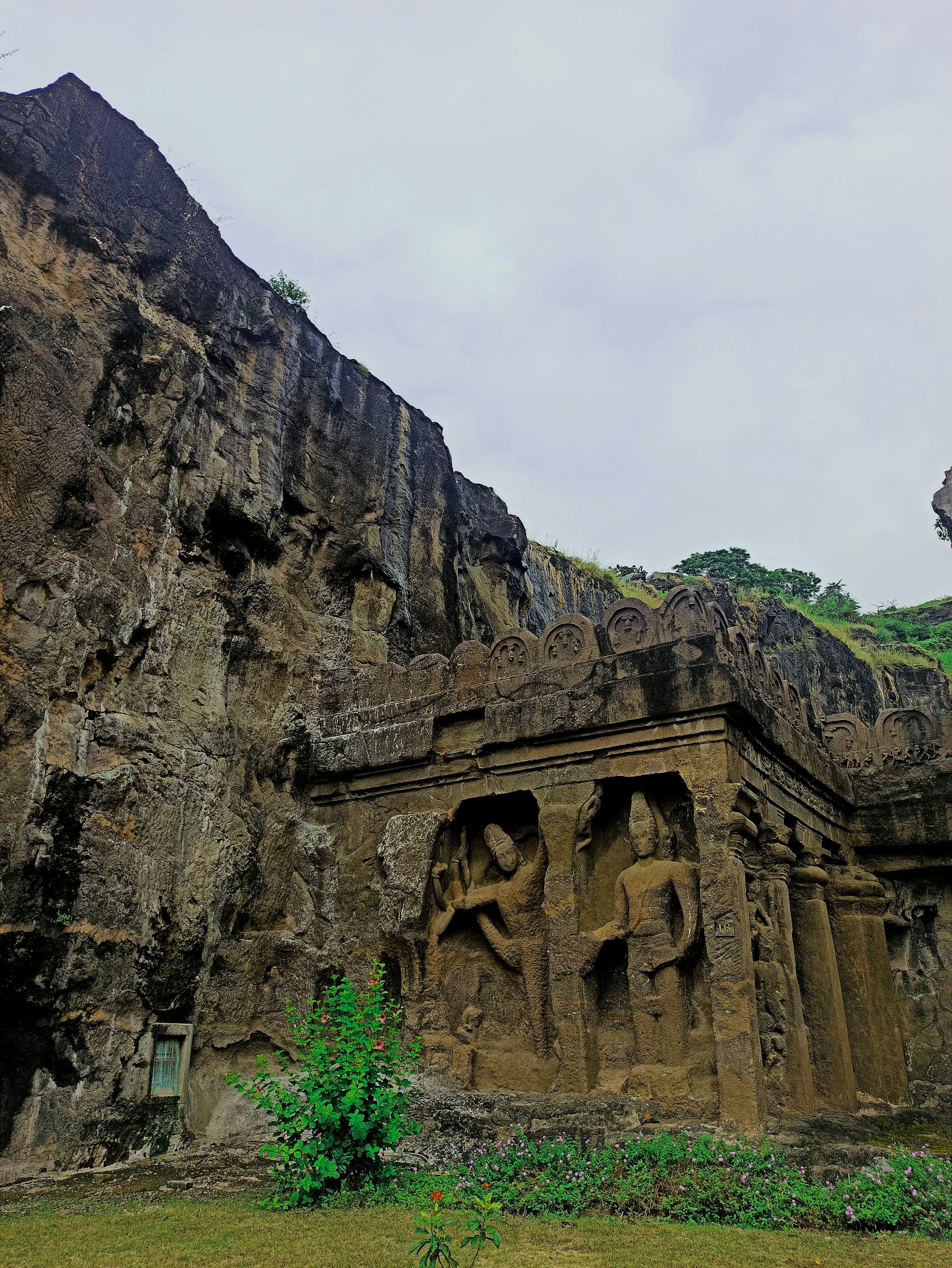
- Two UNESCO-listed rock-cut cave sites near Chhatrapati Sambhajinagar.
- Ajanta’s Buddhist paintings; Ellora’s Buddhist, Hindu and Jain caves.
- See the caves.
Pune
- A university city and former seat of the Peshwas.
- Shaniwar Wada and the Aga Khan Palace.
- A good base for the Ghats and forts.
Lonavala and Khandala
- Twin hill towns between Mumbai and Pune.
- Karla and Bhaja caves nearby.
- Busy at weekends and in the monsoon.
Mahabaleshwar
- The best-known hill station in the Ghats, with Panchgani nearby.
- Viewpoints and winter strawberries.
- Reached by road from Pune.
Nashik
- A pilgrimage city on the Godavari, one of the four sites of the Kumbh Mela.
- Vineyards and wineries in the surrounding countryside.
- Trimbakeshwar temple nearby.
The Konkan coast
- A long coast of beaches, creeks and fishing towns south of Mumbai.
- Sea forts, including Vijaydurg, part of the Maratha Military Landscapes.
- Followed by the Konkan Railway towards Goa.
Mumbai
Start at the southern tip: the Gateway of India, the Fort district and the great Victorian Gothic railway station, Chhatrapati Shivaji Maharaj Terminus. Walk around the Oval Maidan, with Gothic buildings on one side and Art Deco on the other, then follow Marine Drive at dusk. Take a morning ferry to Elephanta, and an evening in Bandra or at Juhu Beach.
Read a first few days in Mumbai.
Ajanta and Ellora
Ellora’s 34 caves, carved between about AD 600 and 1000, include the astonishing Kailasa temple, cut from a single mass of rock. Ajanta, further north, is famous for its Buddhist wall paintings. Base yourself in Chhatrapati Sambhajinagar and give each site its own day.
Read how to visit Ajanta and Ellora.
The Western Ghats
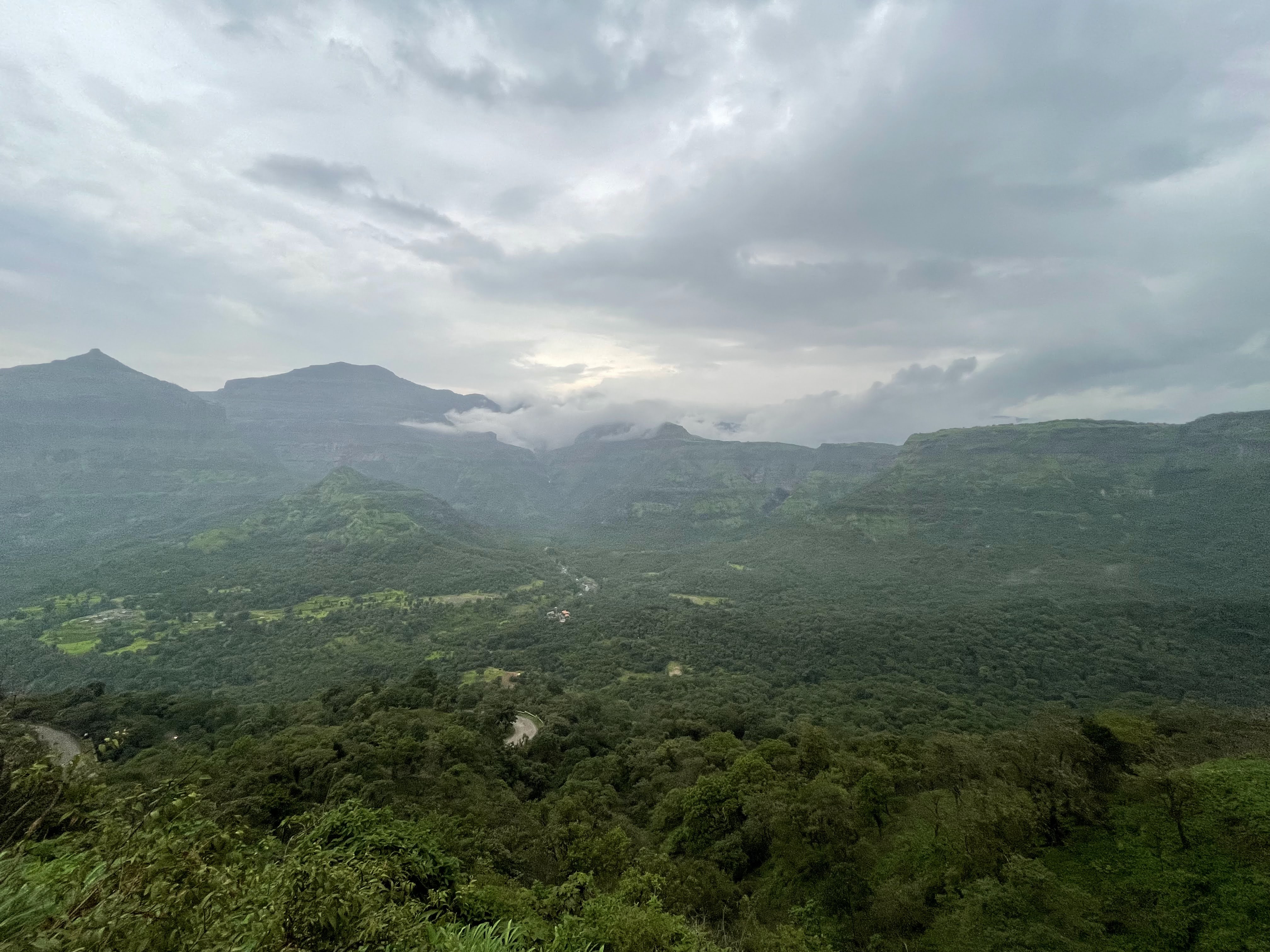
The Ghats give Maharashtra its hill stations, its monsoon drama and many of its forts. Twelve forts were inscribed as the Maratha Military Landscapes of India in July 2025, eleven of them in Maharashtra, including Raigad.
Read into the Western Ghats.
Culture & food
Food
- Vada pav, pav bhaji, misal pav and bhel puri.
- Konkan and Malvani seafood, with coconut and kokum.
- Puran poli at festivals; modak for Ganesh Chaturthi.
Festivals
- Ganesh Chaturthi, in August or September, especially in Mumbai and Pune.
- Gudi Padwa, the Marathi new year, in spring.
- Diwali in October or November.
Heritage
- Rock-cut caves from Ajanta and Ellora to Elephanta and Karla.
- Victorian Gothic and Art Deco Mumbai.
- Maratha hill and sea forts.
Etiquette
- Remove shoes at temples; some caves ask for this too.
- No flash photography inside the painted caves.
- Ask before photographing people.
Plan your trip
How many days?
- 3 days: Mumbai.
- 6 days: Mumbai plus Ajanta and Ellora.
- 8–10 days: add the Ghats or travel down the Konkan to Goa.
When to go
- November to February is the most comfortable time.
- March to May is hot, especially inland.
- June to September is the monsoon: very heavy rain on the coast and in the Ghats, with occasional flooding in Mumbai.
Getting around
- Mumbai’s suburban trains and metro, app cabs and taxis.
- Trains and flights to Pune and Chhatrapati Sambhajinagar.
- A car with a driver for the Ghats and forts.
Where to stay
- Heritage hotels in south Mumbai, or Bandra for a livelier base.
- Hotels in Chhatrapati Sambhajinagar for the caves.
- Hill-station hotels in Lonavala and Mahabaleshwar.
Sample itineraries
Starting points, not fixed packages. Adjust for weather, crowds and current advisories.
Mumbai and the caves · 6 days
Starting point: Mumbai · Style: city and heritage
- Days 1–2 · Mumbai: the Fort district, the Oval and Marine Drive; Elephanta.
- Day 3 · Travel to Chhatrapati Sambhajinagar.
- Day 4 · Ellora (avoid Tuesdays).
- Day 5 · Ajanta (avoid Mondays).
- Day 6 · Return to Mumbai.
Limitations · Check the weekly closures and plan the order accordingly.
Mumbai and the Ghats · 5 days
Starting point: Mumbai · Style: city and hills
- Days 1–2 · Mumbai.
- Day 3 · Drive or train to Lonavala; Karla caves.
- Day 4 · Continue to Mahabaleshwar.
- Day 5 · Return via Pune.
Limitations · In the monsoon, allow extra time and avoid ghat roads after dark.
Safety and current access
Last checked 31 October 2026. This is a summary, not a safety assurance.
- Ajanta and Ellora: Ajanta is usually closed on Mondays and Ellora on Tuesdays. Arrangements are set by the Archaeological Survey of India; check before you go.
- Elephanta: ferries from near the Gateway of India can be suspended in rough weather, especially in the monsoon.
- Monsoon: landslides can close ghat roads, and some forts and waterfalls are closed to visitors for safety.
- Airports: Navi Mumbai International Airport began commercial operations on 25 December 2025, alongside Chhatrapati Shivaji Maharaj International. Check which one your flight uses.
From the journal & traveller stories
Lifelately guides to Maharashtra, researched from official and published sources. We have not yet received a firsthand traveller story from here.
- A first few days in Mumbai: heritage buildings, the sea and the food
- Ajanta and Ellora: how to visit Maharashtra’s great rock-cut caves
- Into the Western Ghats: Maharashtra’s hill stations, forts and monsoon roads
- West India itineraries: four routes through Goa, Maharashtra and Gujarat
Travelled here? Lifelately publishes reader stories with the writer’s approval and full credit. Share your travel story →
Official resources
- Maharashtra Tourism (Government of Maharashtra).
- Archaeological Survey of India: protected monuments.
- India Meteorological Department: forecasts and monsoon warnings.
- GOV.UK travel advice (or your own government’s equivalent).
Sources & last checked
Time-sensitive details were checked on 31 October 2026:
- Ellora and Ajanta · UNESCO: Ellora Caves; UNESCO: Ajanta Caves; weekly closures: Lokmat Times (2021)
- Mumbai heritage · UNESCO: Victorian Gothic and Art Deco Ensembles of Mumbai; Chhatrapati Shivaji Terminus; Elephanta Caves
- Maratha Military Landscapes · UN in India
- Navi Mumbai International Airport · Business Today, 25 December 2025
Background on history, culture and food is drawn from general reference sources. Spotted something out of date? Let us know.
Photography (stock images, not the author’s own): via Unsplash, under the Unsplash License: Arundhati Pathak (carvings at the Ellora Caves). Via the WordPress Photo Directory, CC0: Bigul Malayi (Gateway of India, Mumbai), Krupa Nanda (Malshej Ghat, Western Ghats).
A little something
for your inbox.
Stories, finds and inspiration, occasionally — and a note when new destination guides go live.
More life, always. © 2026 Lifelately · Privacy

