Same goddess. Same nights. Two completely different ways of getting dressed.
Every autumn, India celebrates the same nine nights in very different ways. In Gujarat and across much of the west and north, Navratri means garba circles that go on until long after midnight. In Kolkata and across the east, the same days bring Durga Puja — pandal-hopping, anjali in the morning, and some of the most beautiful sarees you’ll see all year. Both honour the goddess Durga, but as historians of the festival point out, they are not the same festival — and they certainly aren’t dressed the same.
The dates for 2026
- Navratri: Sunday 11 October to Monday 19 October, with Dussehra (Vijayadashami) on Tuesday 20 October (Brut).
- Durga Puja: Mahalaya on 10 October, with the main days beginning on Maha Shashthi, Friday 16 October. Calendars differ by a day on Ashtami and Dashami, so check with your local pandal (one calendar, another).
Navratri: dressing to move
Garba is a dance, and the clothes follow the dance: skirts that flare when you turn, mirrors and embroidery that catch the light, jewellery that makes a little noise. The practical rule is simple — if you can’t spin in it for three hours, it’s the wrong outfit.
Many people also follow a colour for each day. As Gulf News notes, this is a modern tradition rather than a religious requirement — which is part of the fun. Because Navratri starts on a Sunday this year, the list runs:
11 Oct orange · 12 Oct white · 13 Oct red · 14 Oct royal blue · 15 Oct yellow · 16 Oct green · 17 Oct grey · 18 Oct purple · 19 Oct peacock green
Durga Puja: dressing to be seen — and to walk
Pujo dressing is less about movement and more about occasion, day after day. Many people save their best sarees for Ashtami morning, when anjali is offered — often the biggest dressing day of the five. By Dashami, red and white come out for the farewell to the goddess.
The practical rule here is different: you will walk. Pandal-hopping means crowds, queues and long evenings on your feet, so the most stylish choice is often the one you can still enjoy wearing at midnight.
What both have in common
Our read
Festive dressing is one of the few times a year when wearing something old is not just accepted but celebrated. A mother’s saree, a grandmother’s jhumkas, a chaniya choli from three Navratris ago — this is the season where borrowed and inherited pieces carry the most meaning. If September’s fashion weeks taught us anything, it’s that the rest of the world is only just catching up to that idea.
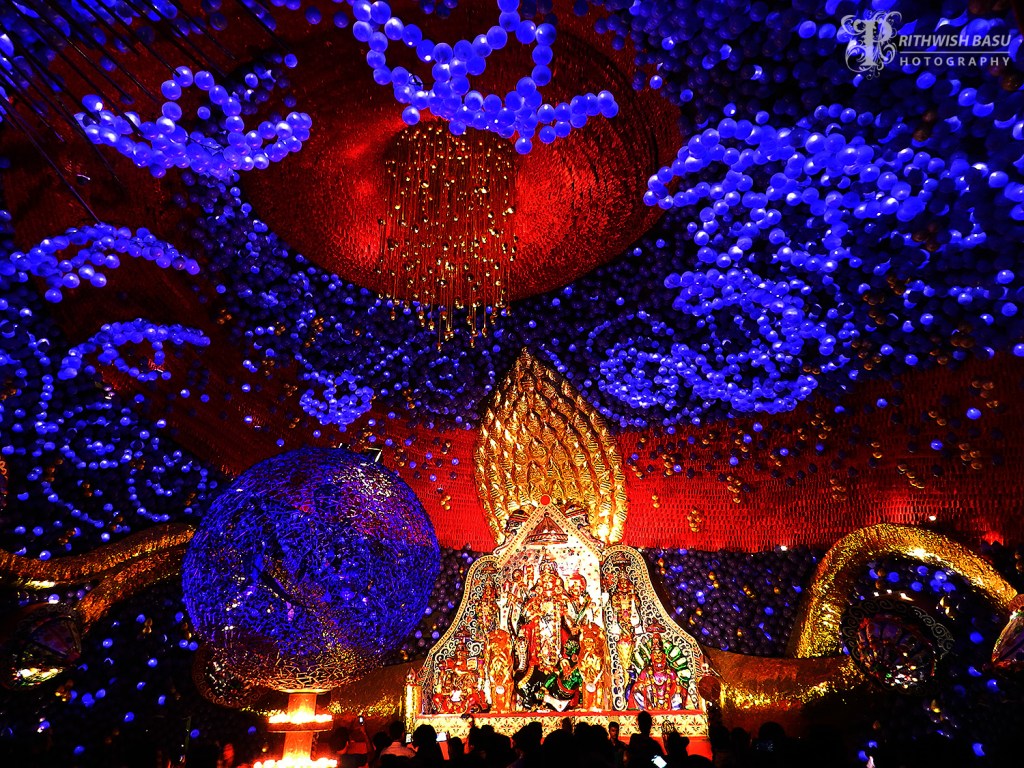
Lead image: a Durga Puja pandal at Kashi Bose Lane, Kolkata (2014). Photo: Prithwish Basu, CC BY 2.0, via Wikimedia Commons.
Garba or pujo — what are you wearing this year, and who did it belong to first? Share your festive look.


