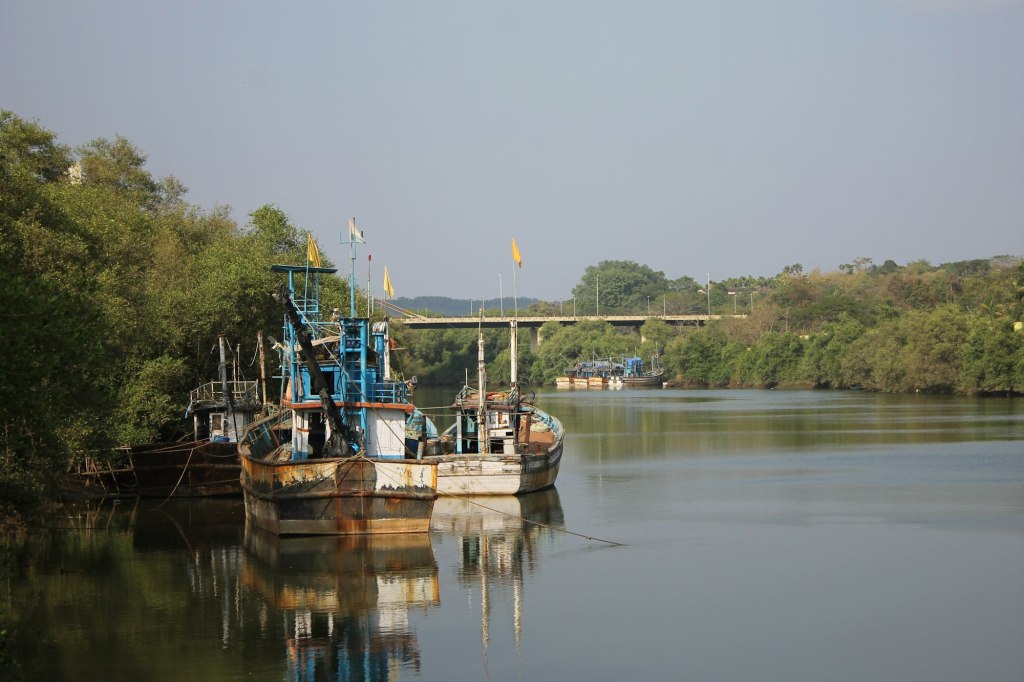
Ask most people about Goa and they describe a beach. But the state’s quieter side is inland, along its tidal rivers, where whitewashed chapels stand among paddy fields, bakers still deliver bread by bicycle, and a ferry ride is the fastest way to a different pace. This is a guide to slowing down there.
Cross the river to Divar
Divar is an island in the Mandovi river, a short ferry ride from the mainland near Old Goa. Ferries carry foot passengers, scooters and cars, and the crossing takes only minutes, but the island feels much further away: narrow roads, rice fields, old houses with deep verandas, and a hilltop church at Piedade with views over the river. Rent a scooter or bicycle and simply wander.
Divar is known for Bonderam, a festival of flags and processions held in August. Check the date locally if you want to see it.
Mangroves on Chorao
Next door, Chorao island is home to the Dr Salim Ali Bird Sanctuary, a small estuarine mangrove reserve of about 1.8 square kilometres. Reach it by ferry from Ribandar, then explore by boat through the mangrove channels, looking for herons, kingfishers, mudskippers and fiddler crabs. The sanctuary is open from 6 am to 6 pm, and October to March is the best season for birds.
Villages of the north
In Bardez, villages such as Aldona, on the Mapusa river, and Saligão, with its tall Gothic-style church, are places of old houses painted in strong colours and long, quiet roads that are a pleasure on two wheels. Go in the morning, stop for tea, and resist the urge to plan.
Salcete’s mansions
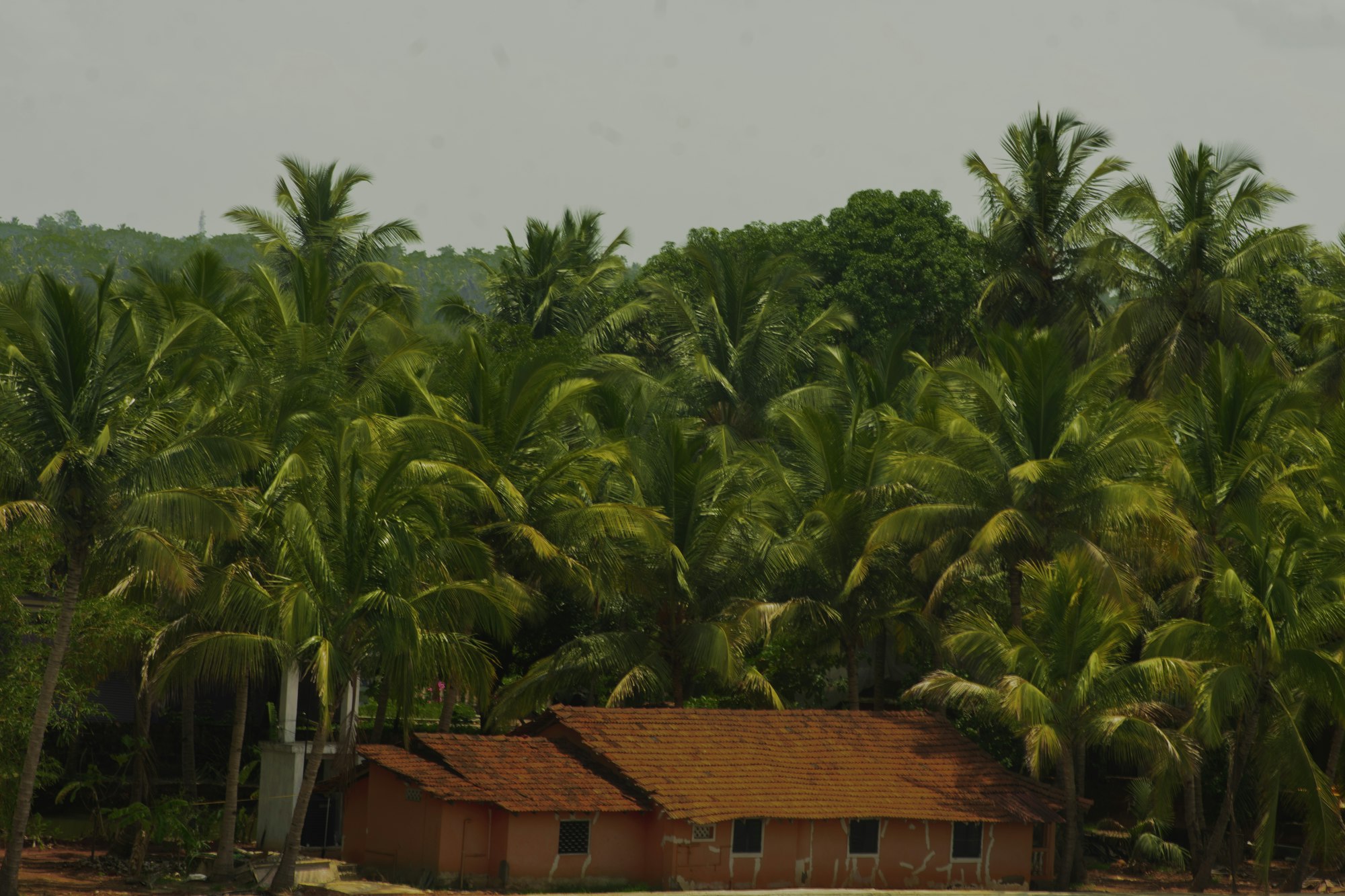
In the south, the villages of Chandor and Loutolim are known for their grand Indo-Portuguese houses, built by landowning families over centuries. Some are private homes that open to visitors, often for a donation; ask locally, and be respectful, as families still live in many of them.
Fontainhas, Panaji’s Latin quarter
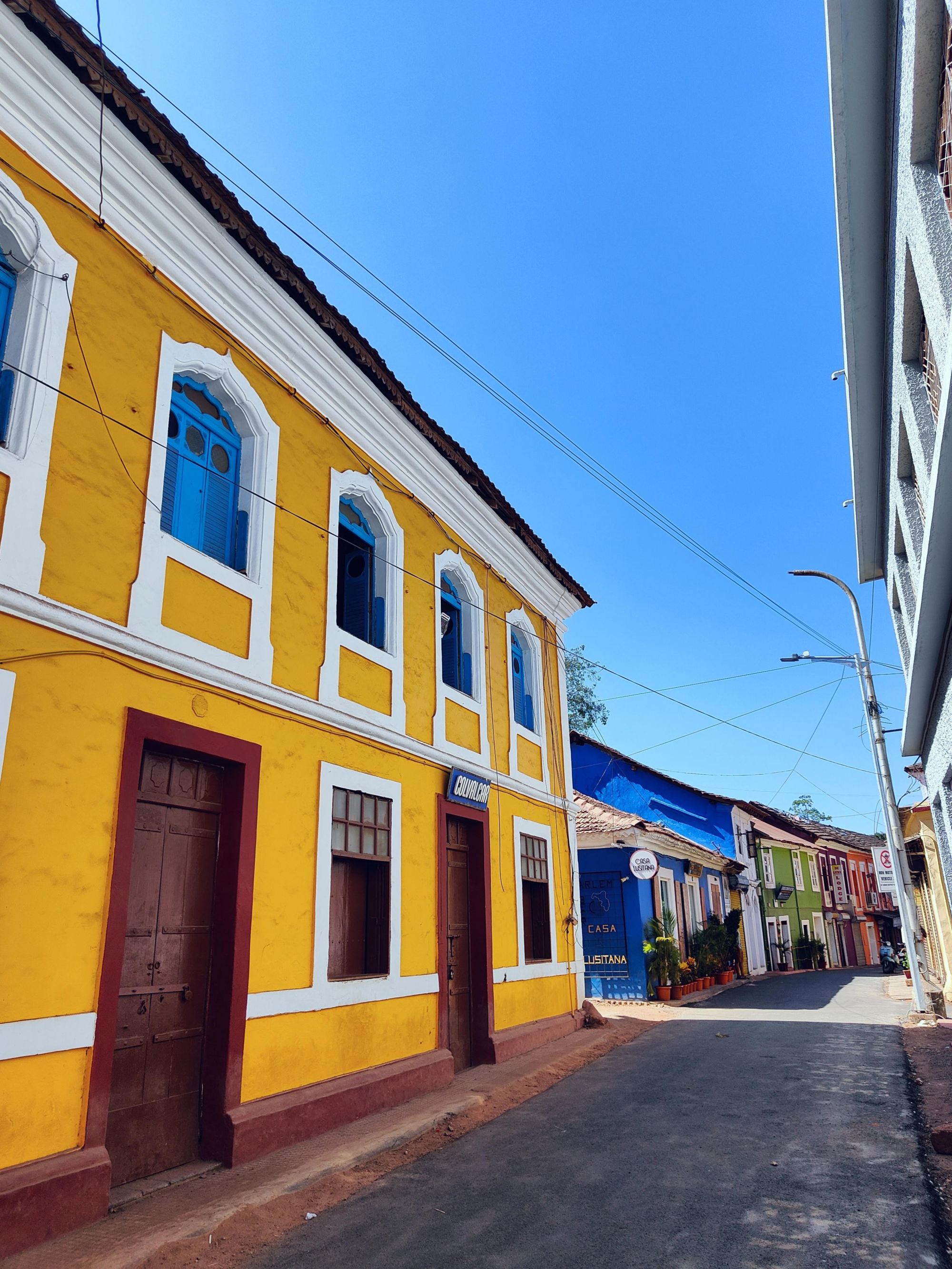
Panaji’s old quarter of Fontainhas is a grid of narrow lanes and ochre, blue and yellow houses. Walk it early in the morning, when the light is soft and the streets are empty. Our Old Goa and Panaji guide has a walking route.
Seasons of a slower Goa
- Cashew season (roughly March to May): cashew apples ripen and feni is distilled in the villages. Goa’s cashew feni has had a Geographical Indication since 2009.
- The monsoon (June to September): Goa turns emerald, the fields fill with water and the tourist crowds thin out. The sea is off-limits for swimming, but this is the best time to see village life. São João, on 24 June, is celebrated with flower crowns and, in some villages, jumps into wells and ponds.
- Winter (November to February): the easiest weather for cycling and walking, and the best season for birds.
How to travel slowly in Goa
- Stay in one village for several nights rather than moving every day.
- Rent a bicycle or scooter from a licensed operator, and carry your licence and helmet.
- Use the river ferries; timings vary by route, so check at the jetty.
- Eat a fish thali at lunchtime and buy bread from the village bakery in the morning.
- Dress modestly in villages and churches, and ask before photographing people or homes.
Frequently asked questions
How do you get to Divar island?
By a short river ferry from the mainland near Old Goa; ferries carry foot passengers, two-wheelers and cars. Check timings at the jetty.
Is Goa worth visiting in the monsoon?
Yes, for green landscapes, villages and quiet, but not for the beach: the sea is rough and swimming is strongly discouraged from June to September.
Where is the Dr Salim Ali Bird Sanctuary?
On Chorao island in the Mandovi river, reached by ferry from Ribandar near Panaji. It is open from 6 am to 6 pm, and best from October to March.
What is the best area in Goa for a quiet stay?
Inland villages in Bardez and Salcete, or the quieter beaches of the far north and south. See our guide to choosing between North and South Goa.
Keep reading
- Old Goa and Panaji: churches and the Latin quarter
- The best beaches in Goa for every kind of traveller
- North or South Goa? How to choose
- A West India food guide
Planning your stay? Start with our Goa guide.
Sources and image credits
Facts that can change were checked on 8 November 2026:
- Incredible India: Dr Salim Ali Bird Sanctuary
- Government of Goa: ferry services notice (Divar)
- Gomantak Times: cashew and feni season in Goa
- Herald Goa: monsoon advisory against entering the sea
Photography: Aakash Ghadge via Unsplash (Unsplash License); Dr Kishan Patel via Unsplash (Unsplash License); vgnavada via the WordPress Photo Directory (CC0). Stock images, not the author’s own.
Ferry timings, festival dates and access to private houses change. Check locally before you go.