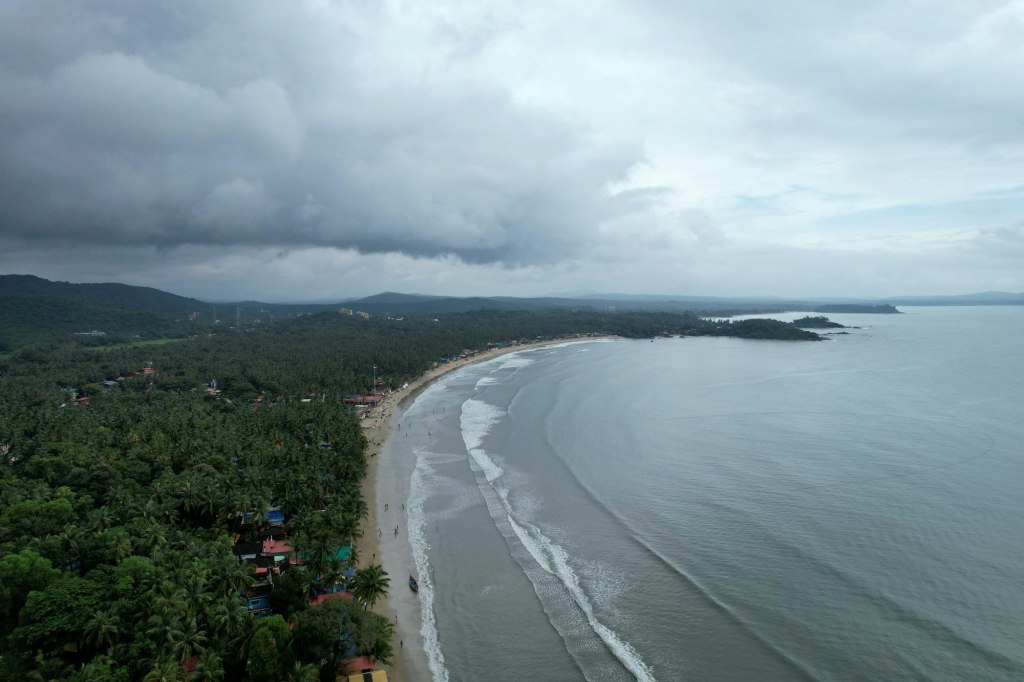
Goa’s coastline runs for little more than a hundred kilometres, but its beaches have very different personalities. Some are lively from breakfast to midnight; others are so quiet that the only sound is the sea. The best beach is the one that suits your trip. This guide sorts them by the kind of holiday you want, then covers safety, turtles and the seasons.
If you are still deciding which half of the state to base yourself in, start with our guide to choosing between North and South Goa.
For first-timers and nightlife: Calangute, Baga and Candolim
The central stretch of North Goa is the busiest: Calangute and Baga have shacks, water sports, restaurants and nightlife close together, and plenty of places to stay at every budget. Candolim, just south, is a little calmer, with the 17th-century Portuguese Fort Aguada on the headland at its southern end.
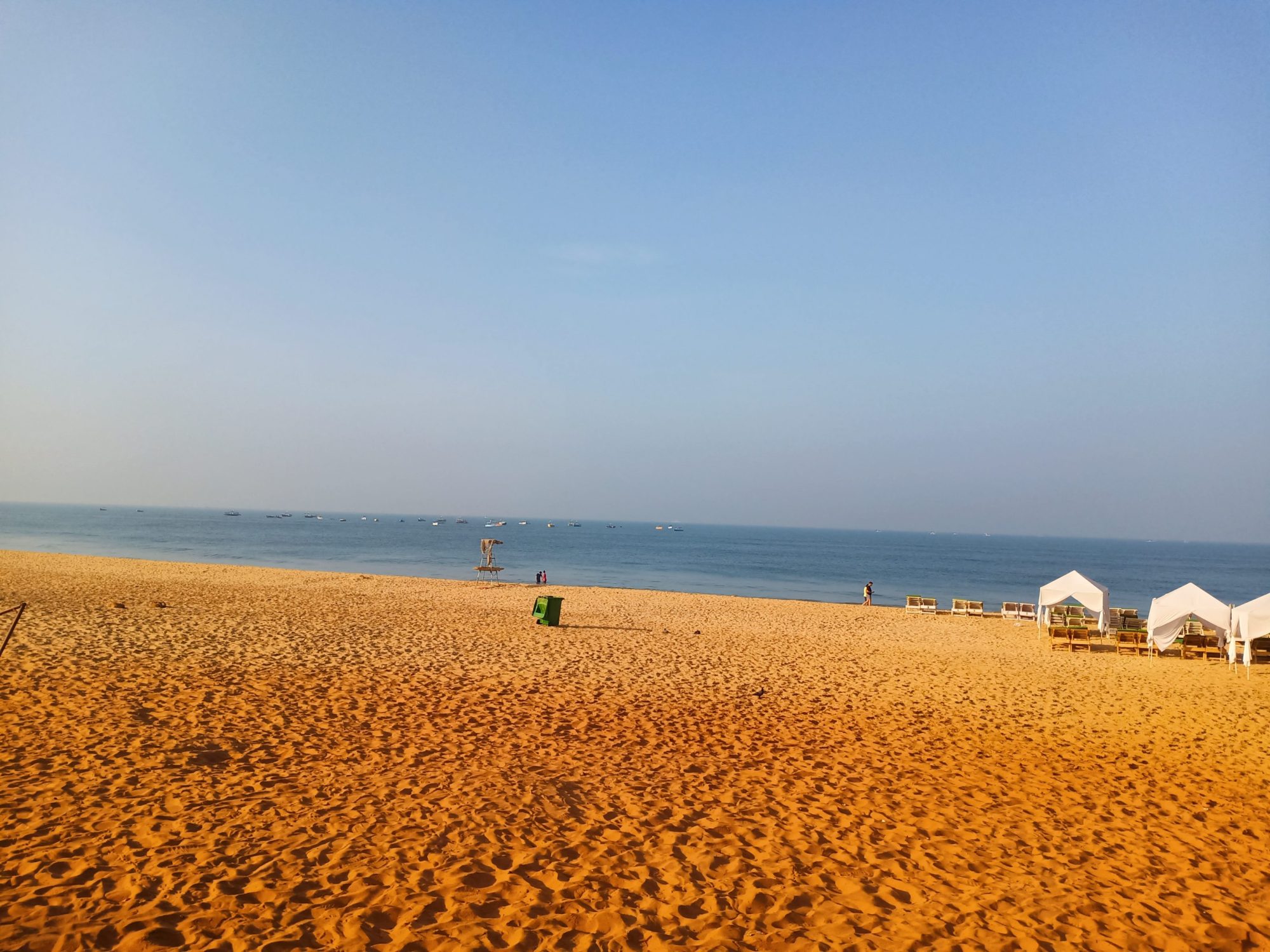
For cafés and a younger scene: Anjuna and Vagator
North of Baga, Anjuna and Vagator are framed by red laterite cliffs. The area is known for cafés, music and markets, including Anjuna’s long-running weekly flea market. Above Vagator, the ruins of Chapora Fort give wide views of the coast.
For a quieter north: Morjim, Ashwem, Mandrem and Arambol
Across the Chapora river, the far north is slower and more spread out. Morjim is one of Goa’s olive ridley turtle nesting beaches, Ashwem and Mandrem have long, peaceful stretches of sand, and Arambol, near the Maharashtra border, has a laid-back community feel and a freshwater lake behind the beach.
For families and long walks: Colva, Benaulim, Varca and Cavelossim
South Goa’s Salcete coast is one long, wide beach broken into named stretches. Colva is the busiest; Benaulim, Varca and Cavelossim are quieter, with gently shelving sand that is good for walks. Behind Cavelossim, the Sal river winds through mangroves.
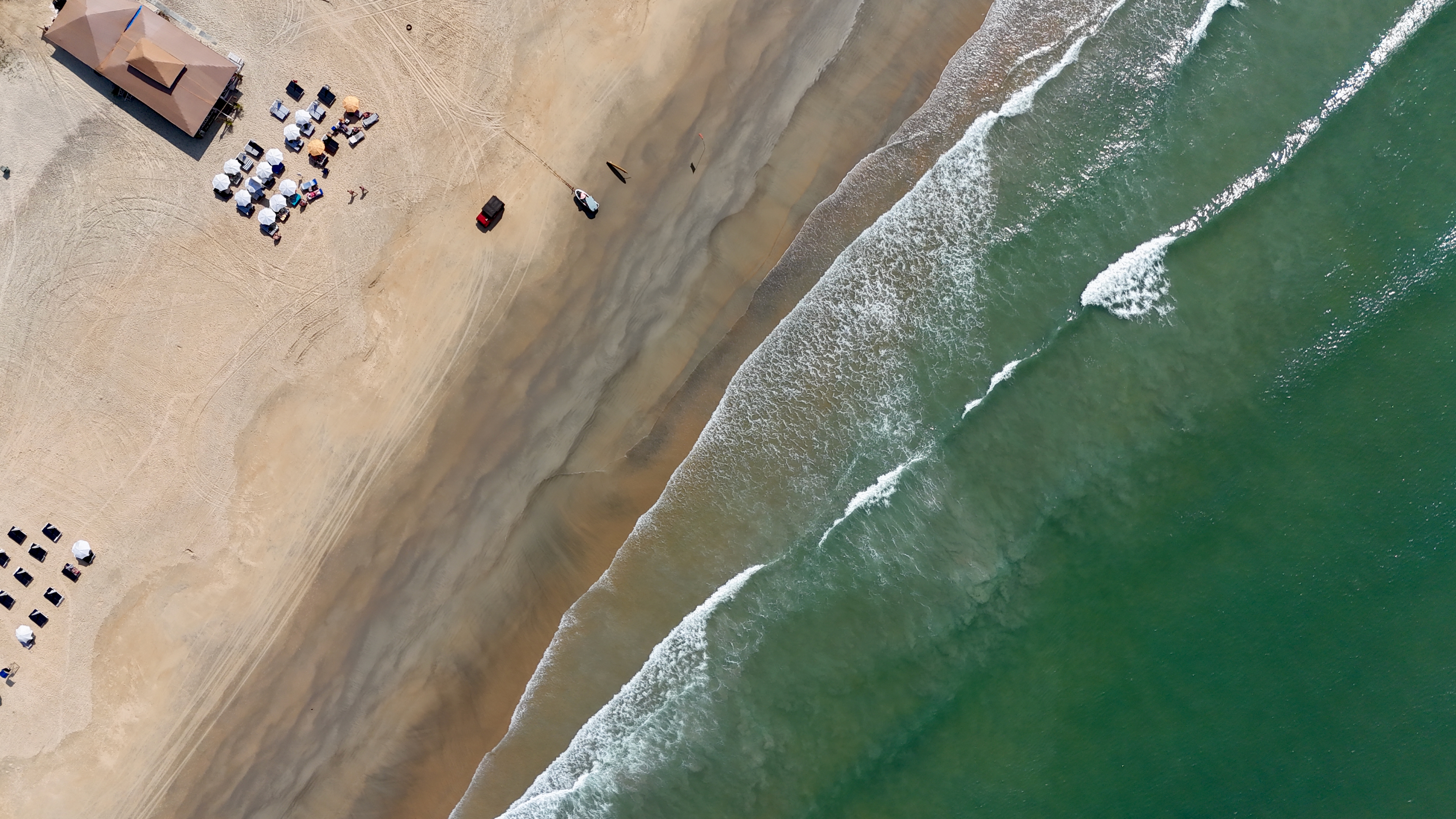
For a postcard bay: Palolem, Patnem and Agonda
In Canacona, the far south, Palolem curves around a sheltered bay backed by palms, with calm water in season. Patnem, next door, is smaller and quieter. Agonda, to the north, is long and peaceful and is another turtle nesting beach. Nearby Galgibaga, sometimes called Turtle Beach, has a fully protected turtle zone on its northern side, and its nesting stretch is kept dark at night.
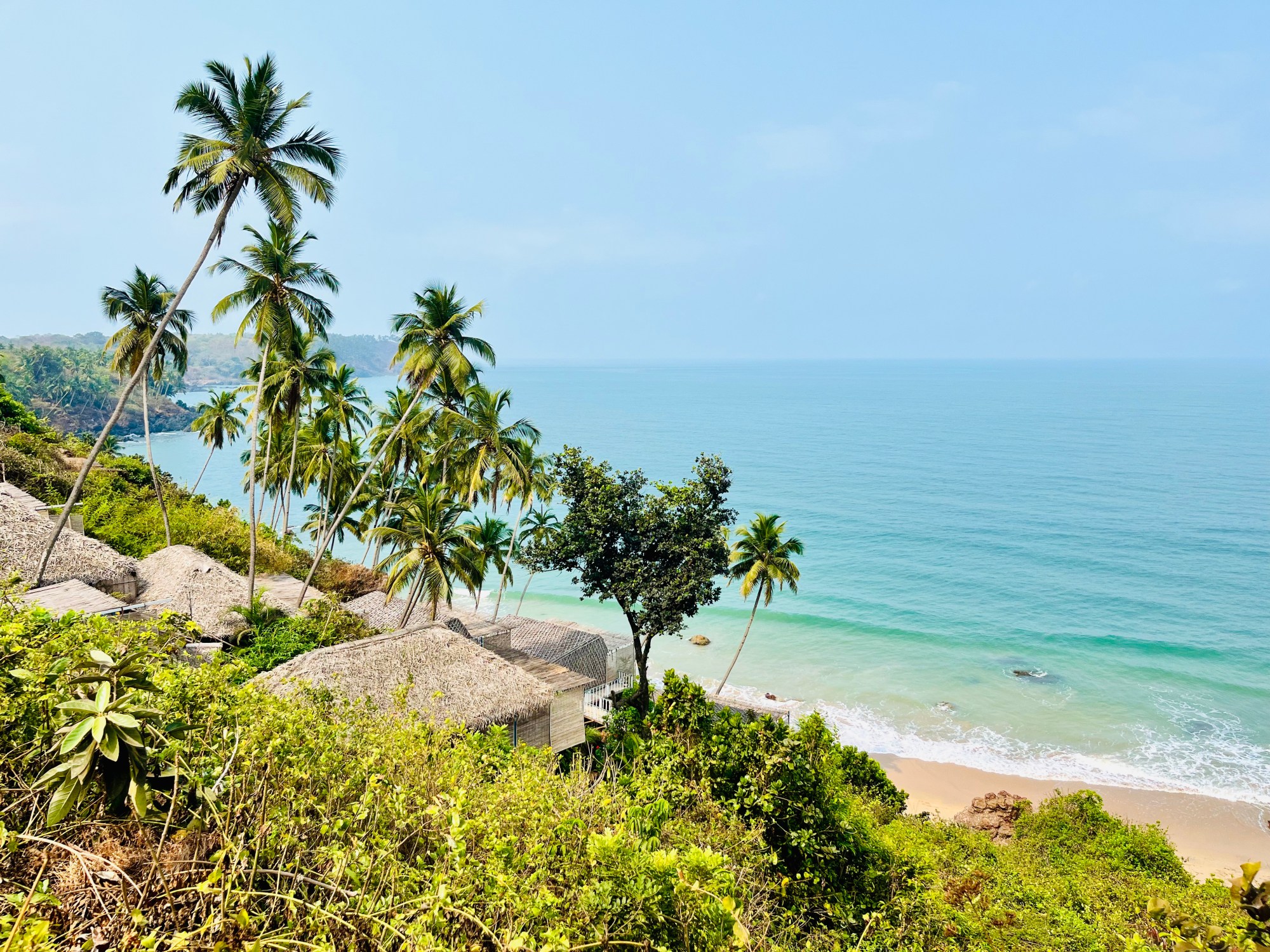
Swimming safely
- Swim only where lifeguards are on duty and in zones marked safe with flags. A red flag means no swimming.
- Rip currents can be strong even on calm-looking days. If you are caught in one, swim parallel to the shore, not against it.
- During the monsoon, usually from June to September, the state’s lifeguard agency advises visitors not to enter the sea at all.
- Do not swim after drinking, and keep a close eye on children.
Turtle beaches: how to behave
Olive ridley turtles nest on beaches including Morjim, Galgibaga, Agonda and Talpona. The season has recently tended to run from around January into spring. Nesting sites are marked by the Forest Department and guarded by local watchers.
- Keep away from marked nests and do not touch turtles, eggs or hatchlings.
- Avoid torches and phone lights on nesting beaches at night.
- Keep noise down, and never use flash photography near turtles.
When to go
November to February brings dry, sunny weather and the calmest seas; this is peak season, with Christmas and New Year the busiest weeks. March to May is hot and humid but quieter. The monsoon usually arrives in early June and withdraws in mid-October; shacks close and the beaches are for walking, not swimming.
Getting there
Goa has two airports: Manohar International at Mopa, best for North Goa, and Dabolim, nearer South Goa. Thivim and Madgaon are the main railway stations on the Konkan Railway. See getting around West India for more.
Frequently asked questions
Which is the best beach in Goa for families?
The wide, gently shelving beaches of South Goa, such as Benaulim, Varca and Cavelossim, suit families well. Palolem is good in season for its sheltered bay. Always swim between the flags.
Which Goa beach is best for nightlife?
Baga and Calangute in North Goa have the most nightlife, with Anjuna and Vagator nearby for cafés and music.
Is it safe to swim in Goa in the monsoon?
No. From about June to September, seas are rough and the state lifeguard agency advises visitors not to enter the water.
Should I stay in North or South Goa for a first visit?
North Goa is livelier and has more choice; South Goa is quieter and more relaxed. Our North or South Goa guide compares the two in detail.
Keep reading
- North or South Goa? How to choose your stretch of coast
- The quiet charm of Goa: river islands and villages
- Old Goa and Panaji
- A West India food guide
Plan the rest of your trip with our Goa guide.
Sources and image credits
Facts that can change were checked on 8 November 2026:
- Herald Goa: lifeguard advisory against entering the sea till September
- Gomantak Times: turtle nesting in Goa and where to find it
- IMD: normal monsoon dates (Panaji)
- Wikipedia: Galgibaga Beach
Photography: Zoshua Colah via Unsplash (Unsplash License); Sahib Khan via the WordPress Photo Directory (CC0); Hardeep Asrani via the WordPress Photo Directory (CC0); Meet Makadia via the WordPress Photo Directory (CC0). Stock images, not the author’s own.
Beach conditions change daily. Follow lifeguards’ flags and instructions, and local rules on turtle beaches.