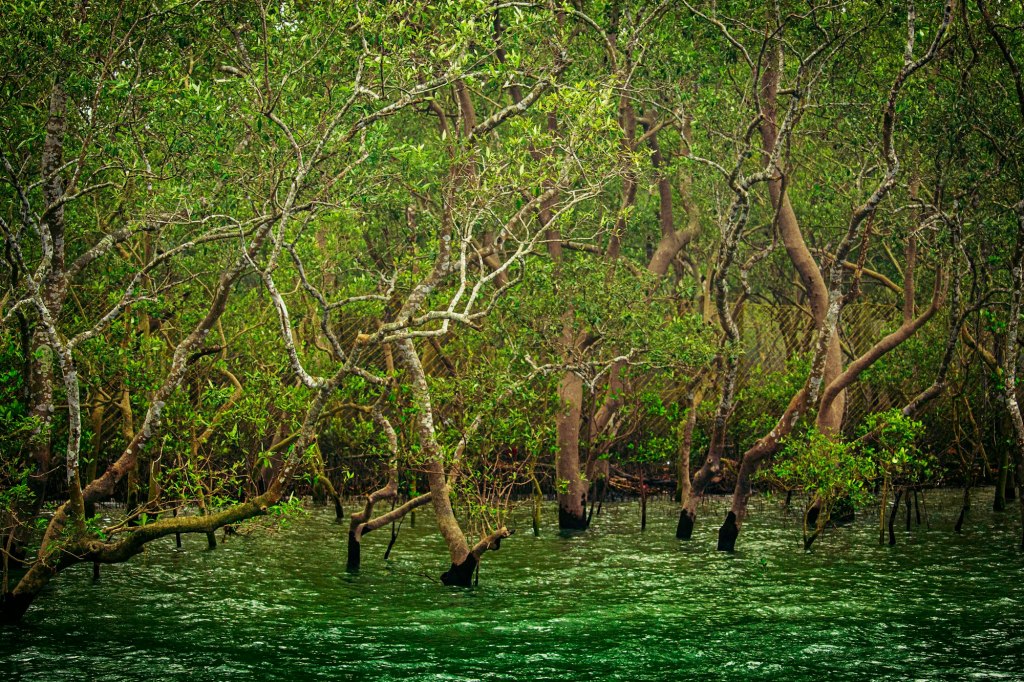
Where the Ganges and Brahmaputra meet the Bay of Bengal, the land dissolves into a maze of islands, tidal channels and mangrove forest. This is the Sundarbans, the largest mangrove forest in the world, shared between India and Bangladesh. The Indian part is a UNESCO World Heritage Site and a tiger reserve.
What you will see
Most of a Sundarbans trip is spent on the water, moving slowly along creeks lined with mangroves whose roots rise from the mud at low tide. Birdlife is rich, and you may see crocodiles, spotted deer, monitor lizards and, with luck, dolphins. The forest is home to tigers, but they are elusive in dense mangrove, and most visitors do not see one.
Permits and access
Entry to the Sundarban Tiger Reserve requires permission from the Field Director’s office in Canning or the Sonakhali, Bagna or Sajnekhali offices, with entry, boat and camera fees. Only boats and launches are allowed inside the reserve. Foreign visitors need a special permit from the state Forest Department. In practice, most travellers join a tour with a licensed operator or the West Bengal Tourism Development Corporation, who arrange permits.
Choosing an operator
- Ask exactly what the permit, boat and guide arrangements are, and what is included.
- Prefer operators who employ local guides and boat crews.
- Check that life jackets are on board and that the boat does not play loud music.
- Avoid anyone promising tiger sightings.
When to go
The cooler months, roughly October to March, are the most comfortable. The monsoon brings heavy rain, and the Bay of Bengal can produce cyclones, most often around May and October–November. Follow India Meteorological Department warnings.
For the wider region, see our West Bengal guide.
Sources and image credits
Facts that can change were checked on 31 October 2026:
- UNESCO: Sundarbans National Park
- Sundarban Tiger Reserve: booking and permits
- India Meteorological Department
Photography: Maitheli Maitra via Unsplash (Unsplash License). Stock images, not the author’s own.
Permit rules, fees and closures can change. Check with the Sundarban Tiger Reserve or your operator before you travel, and do not travel during cyclone warnings.