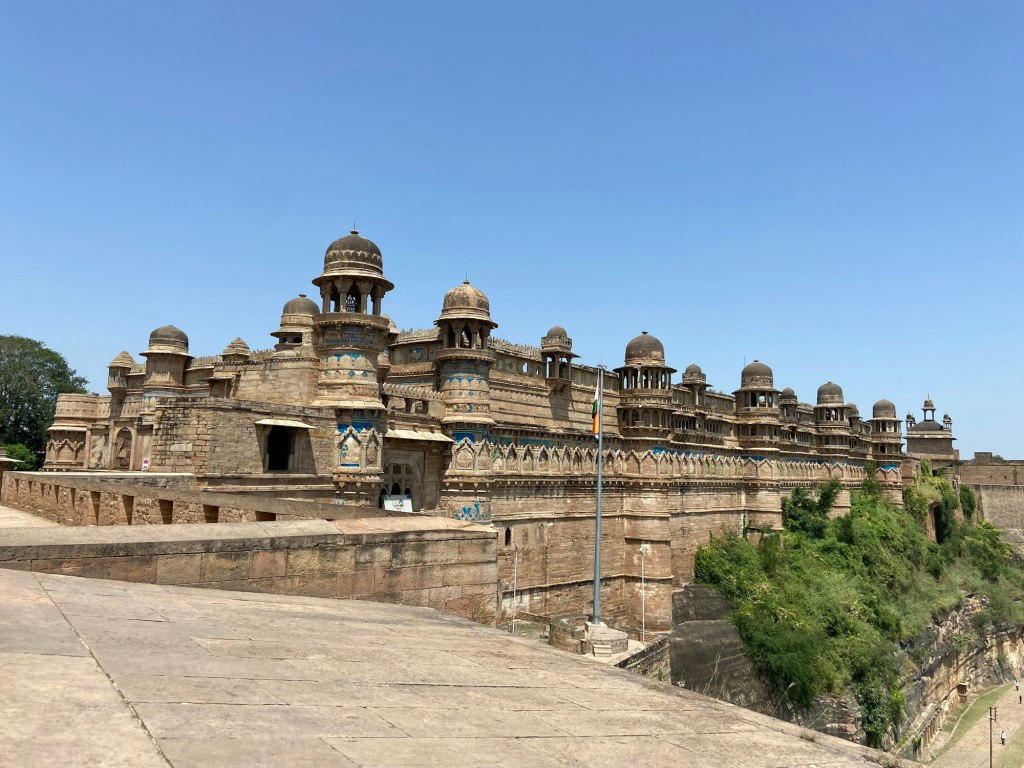
Central India is big. Madhya Pradesh alone is the second-largest state in the country, and distances between its highlights are long. The trick is to choose a theme and a region rather than trying to see everything: the northern heritage towns, the tiger reserves, the Malwa plateau, or Chhattisgarh’s forests and waterfalls.
When to go
- October to March: the best all-round season. Pleasant days, cold nights in December and January, and the tiger reserves’ core zones are open.
- April to June: very hot across the plains. Good for wildlife at waterholes if you can handle the heat; Pachmarhi is a cooler escape.
- July to September: the monsoon. Core zones of the tiger reserves are closed, but waterfalls (Chitrakote, Pachmarhi) and green landscapes (Mandu) are at their best.
Timing a safari
If wildlife is the point of your trip, fix your safari dates first and build the rest of the route around them. Permits for Madhya Pradesh’s reserves are sold on the official MP Forest portal and popular zones sell out early. See our Kanha and Bandhavgarh guide for the details.
How many days?
- 5 days: one region, such as Orchha, Gwalior and Khajuraho, or Bhopal with Sanchi and Bhimbetka.
- 7–8 days: heritage plus one tiger reserve.
- 10–14 days: a longer loop across Madhya Pradesh, or Madhya Pradesh plus Chhattisgarh.
Getting there and around
- Gateways: Bhopal, Indore, Jabalpur, Gwalior and Khajuraho airports in Madhya Pradesh; Raipur and Jagdalpur in Chhattisgarh. Delhi and Mumbai have the most connections.
- Rail: Bhopal, Jhansi (for Orchha), Gwalior, Jabalpur, Katni and Raipur are on major lines. Trains are a comfortable way to cover long distances; book ahead.
- Road: a car with a driver is the most practical way to reach smaller places and parks. Road journeys often take longer than the map suggests.
Sample routes
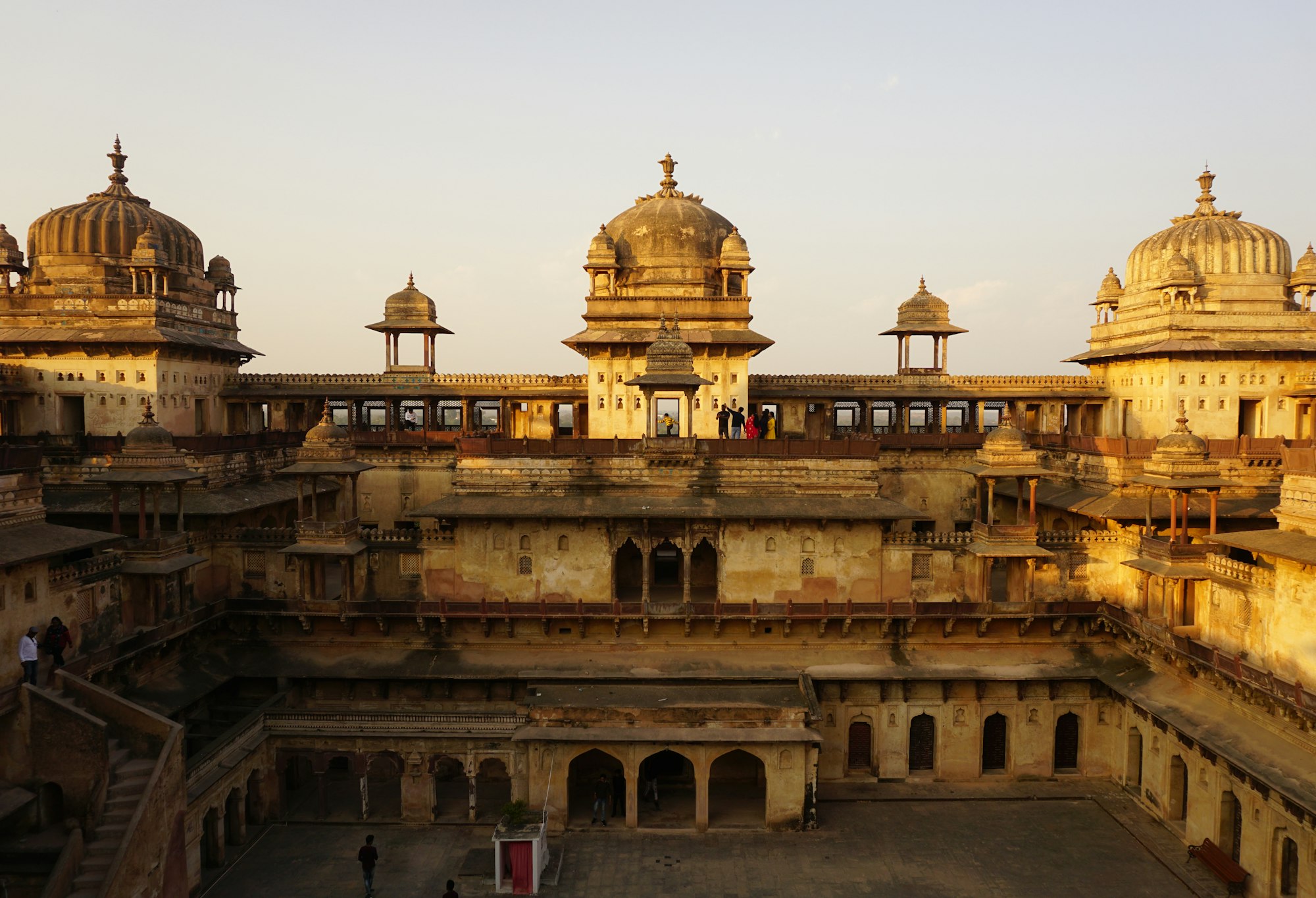
Northern heritage, 5 days · Gwalior (1 day) → Orchha (1–2 nights) → Khajuraho (2 nights). Start in Gwalior; end at Khajuraho’s airport or carry on to Panna.
Heritage and tigers, 8 days · Khajuraho (2 nights) → Bandhavgarh (3 nights, 4–5 safaris) → Jabalpur and Bhedaghat (1 night) → Kanha (2 nights).
Malwa and the Narmada, 6 days · Indore (1 night) → Ujjain (1 night) → Mandu (1–2 nights) → Maheshwar (1–2 nights) → back to Indore.
Bhopal and the Satpuras, 5 days · Bhopal with Sanchi and Bhimbetka (2–3 nights) → Pachmarhi (2 nights).
Chhattisgarh, 6 days · Raipur and Sirpur (2 nights) → Jagdalpur for Chitrakote, Tirathgarh and Kanger Valley (3–4 nights). Check current advice for Bastar first.
Practical advice
- Dress modestly at temples, mosques and in villages; carry a scarf.
- Carry cash for small towns and markets, though digital payments are widely used.
- Bring layers for winter safaris: open vehicles at dawn are cold.
- Book heritage hotels and lodges near parks early for the winter peak and festival dates.
Start with the Central India collection, or go straight to Madhya Pradesh or Chhattisgarh.
Sources and image credits
Facts that can change were checked on 31 October 2026:
- MP Forest Department safari booking portal
- Madhya Pradesh Tourism
- Chhattisgarh Tourism
- GOV.UK foreign travel advice: India regional risks
- India Meteorological Department
Photography (stock images, not the author’s own): via Unsplash, under the Unsplash License: Ishan Jain (Gwalior Fort), Shruti Singh (Orchha Fort complex).
Itineraries are editorial suggestions, not fixed packages. Check current transport services, safari permits and travel advice before you book.