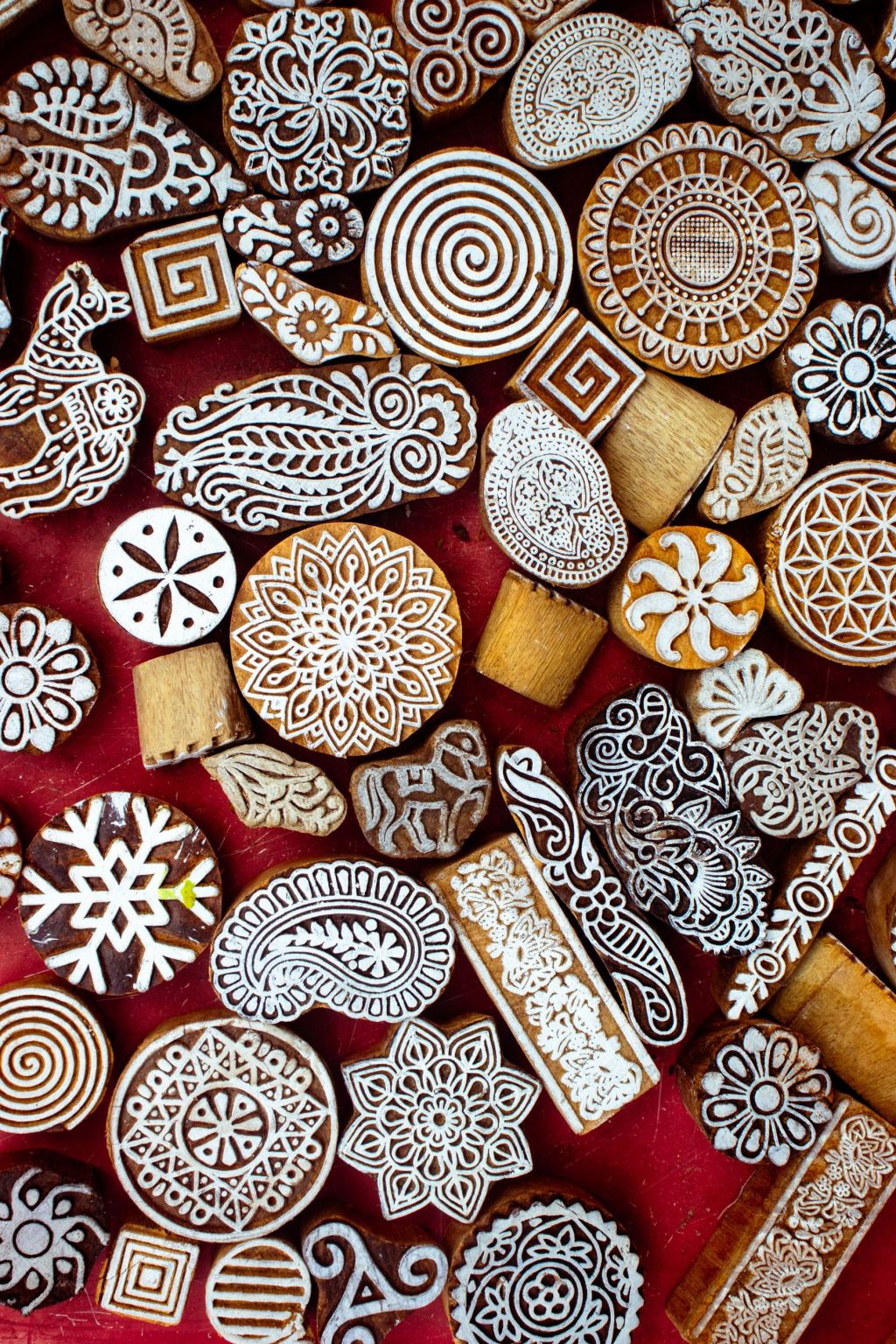
A hand-block print begins with a piece of wood. A carver cuts a design into a block of teak or rosewood, a printer dips it into dye and presses it onto cloth with a firm strike of the fist, then repeats the movement hundreds of times, lining up each impression by eye. Around Jaipur, two towns in particular, Bagru and Sanganer, have made the craft famous.
Two protected traditions
Both towns’ prints are registered Geographical Indications: Sanganeri hand block printing in 2009–10 and Bagru hand block print in 2011–12. Sanganer is often associated with fine motifs on white or light grounds. Bagru, where the Chhipa community of printers and dyers has worked for at least 400 years, is especially known for earthy natural colours and for dabu, a mud-resist technique.
The blocks
A single design usually needs several blocks: one for the outline, called the rekh, and others to fill in colour, such as the gudh and datta. Teak is valued for being durable yet workable, while sheesham, or Indian rosewood, suits intricate detail. Carving one block can take a day or two.
Dabu and natural dyes
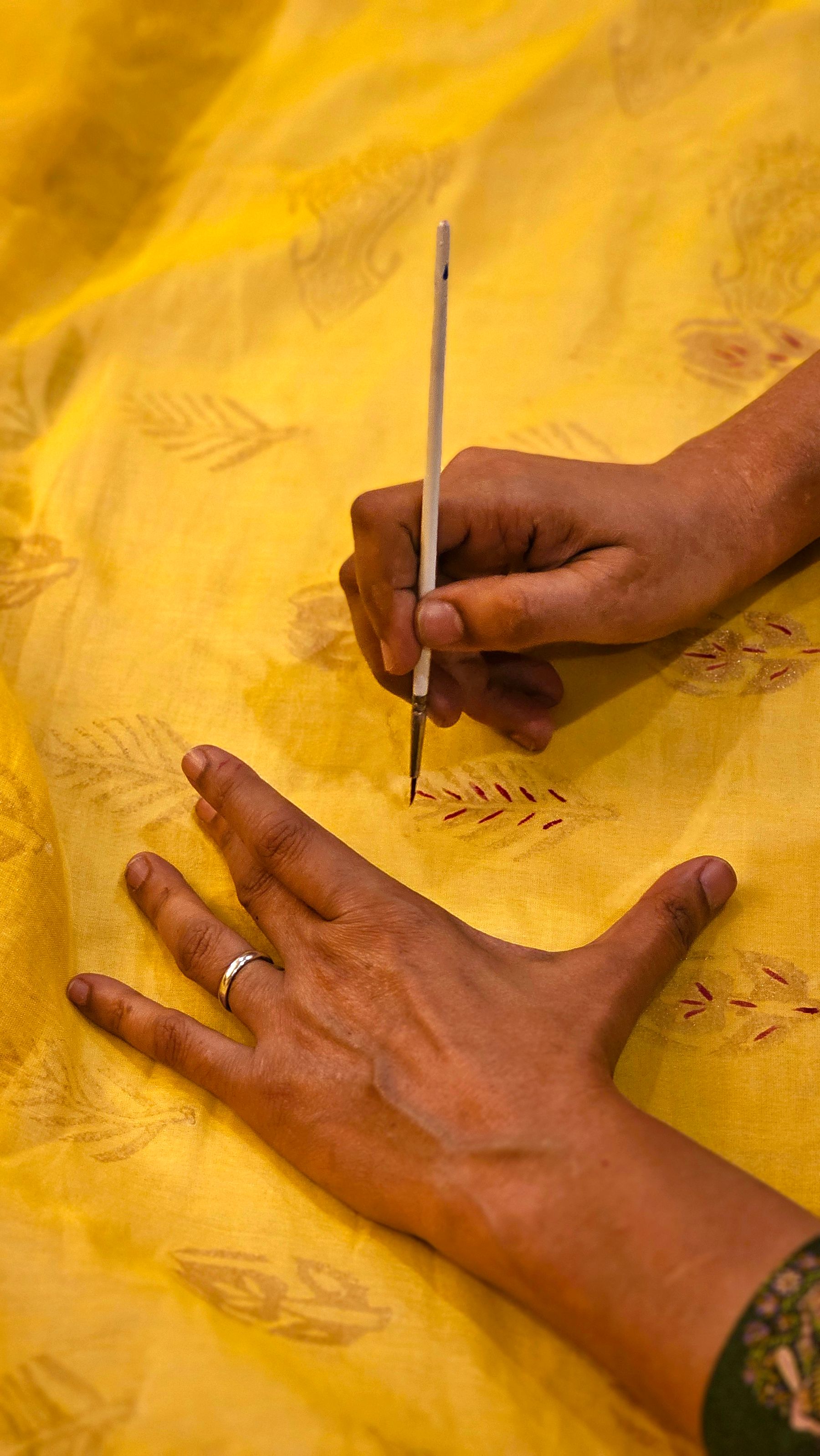
Dabu is a resist paste made from black clay, wheat flour, gum and lime. Printed onto fabric and dusted with sawdust so it does not stick, it stops dye from reaching the areas underneath, leaving pale motifs on a dark ground once the cloth is dyed and washed. The process can be repeated to build up layers of tone.
Traditional Bagru colours come from plants and minerals:
- Harda (myrobalan) is used as a mordant, helping colours bind to the fabric and giving it a yellowish tint.
- Indigo produces the blues, often dyed in deep vats.
- Madder and alum give reds and related shades.
- Syahi, made from fermented iron and jaggery, gives black.
Some printers also use non-toxic synthetic dyes for brighter colours, so it is worth asking how a particular piece was dyed if natural colour matters to you.
Pressures on the craft
Block printing depends on water for washing and dyeing, and on sun for drying. In Bagru, declining rainfall and a falling water table are serious long-term concerns, and work traditionally slows during the monsoon. Cheaper screen-printed and digitally printed imitations also compete with handmade cloth.
Where to see it
The Anokhi Museum of Hand Printing, opened in 2005 in a restored haveli in Amber near Jaipur, explains the history and techniques of block printing, and visitors can often watch a block carver or printer at work. Bagru and Sanganer are both within easy reach of Jaipur. Check the museum’s current opening days and hours before you go.
Sources
- List of geographical indications in India
- Bagru block printing, The Kind Craft
- Anokhi Museum of Hand Printing
Lead photo: H / Pexels. Facts checked against the sources above in October 2026.