If you have ever bought a handwoven textile from a state emporium, watched a performance supported by the Sangeet Natak Akademi or browsed a crafts fair, you have probably benefited from the work of Kamaladevi Chattopadhyay. Few people shaped India’s cultural institutions as much as she did, yet she is far less widely known than she deserves.
Early life and politics
Kamaladevi was born on 3 April 1903 in Mangalore, in present-day Karnataka. She was drawn early into the freedom movement. In 1926 she stood for election to the Madras Provincial Legislative Assembly, becoming the first woman in India to contest a legislative seat. She lost by just 55 votes.
The following year she was a founding member and the first Organising Secretary of the All-India Women’s Conference. In 1930, during the Salt Satyagraha, she was one of seven volunteers chosen by Gandhi to lead the making of salt on the Bombay beachfront.
Rebuilding after Partition
After Partition, she turned to the rehabilitation of refugees. Through the Indian Co-operative Union, which she helped set up, she led the creation of a new township at Faridabad, near Delhi, which rehabilitated more than 50,000 people. Co-operative work and livelihoods, rather than charity, were central to her approach.
A home for India’s crafts
Kamaladevi believed that India’s artisans were a living national resource, and that they needed markets, recognition and institutions to survive industrialisation. She became the first chairperson of the All India Handicrafts Board, helped establish the Crafts Council of India and was instrumental in setting up the Central Cottage Industries Emporium. She also wrote about the subject, including a book titled Indian Handicrafts (1963).
Theatre, dance and the arts
Her influence extended to the performing arts. She helped found the Indian National Theatre in Bombay in 1944, chaired the National School of Drama, headed the Sangeet Natak Akademi and founded the Natya Institute of Kathak and Choreography in Bangalore in 1964.
Recognition
She received the Padma Bhushan in 1955, the Ramon Magsaysay Award for Community Leadership in 1966, a Sangeet Natak Akademi Fellowship in 1974 and the Padma Vibhushan in 1987. She died in Bombay on 29 October 1988, aged 85.
Why she still matters
Many of today’s conversations about slow fashion, fair pay for makers and preserving traditional skills echo arguments Kamaladevi made decades ago. Her memoir, Inner Recesses, Outer Spaces (1986), is the best place to hear about her life in her own words.
Sources
- Kamaladevi Chattopadhyay
- Chattopadhyay, Kamaladevi, Ramon Magsaysay Award Foundation
- Kamaladevi Chattopadhyaya, Nehru Archive
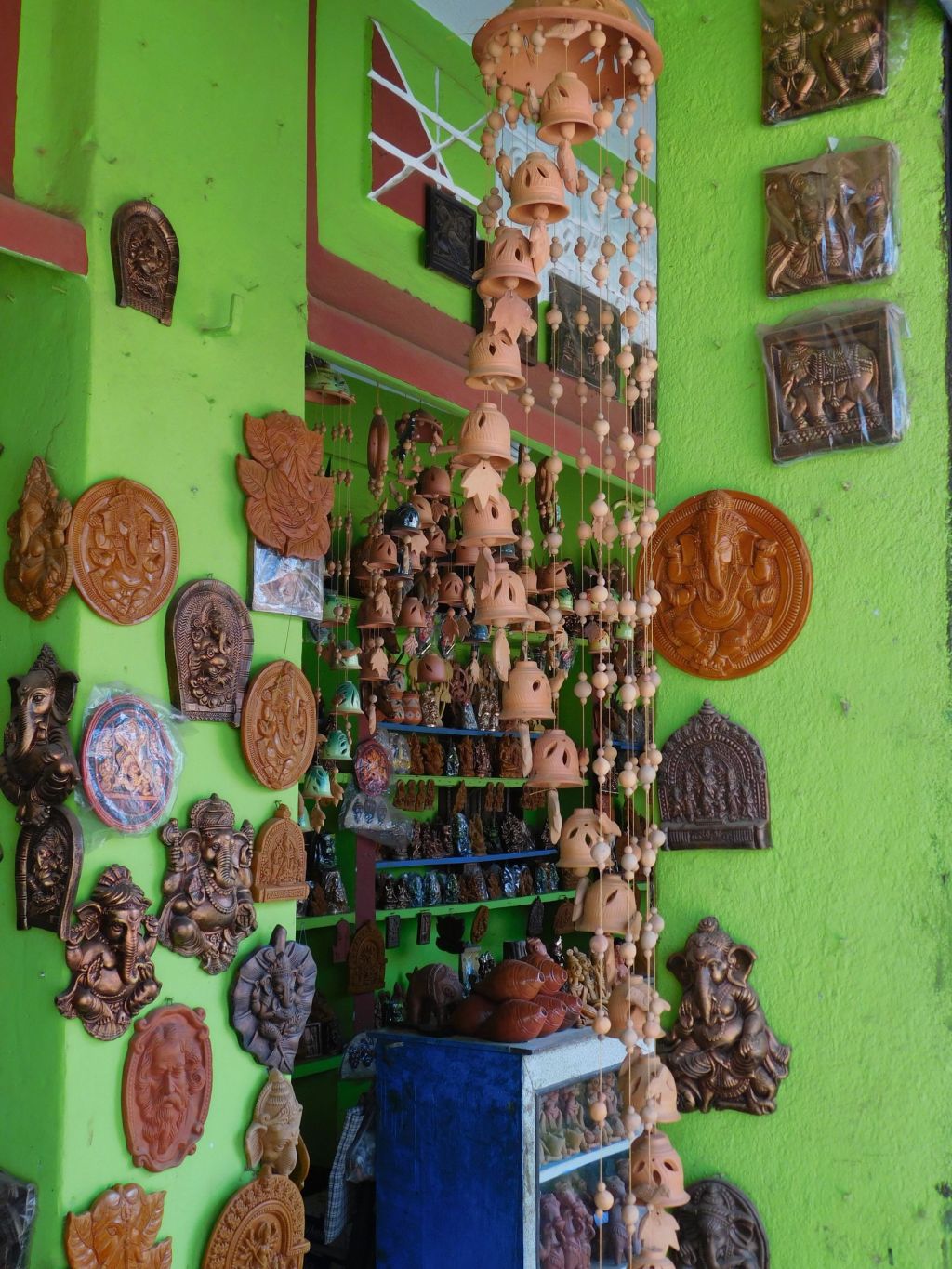
Lead photo: handicrafts at an Indian market, Samar L. / Pexels (not related to the institutions named in this article). This profile is based on published sources; it contains no interview material. Facts checked against the sources above in October 2026.