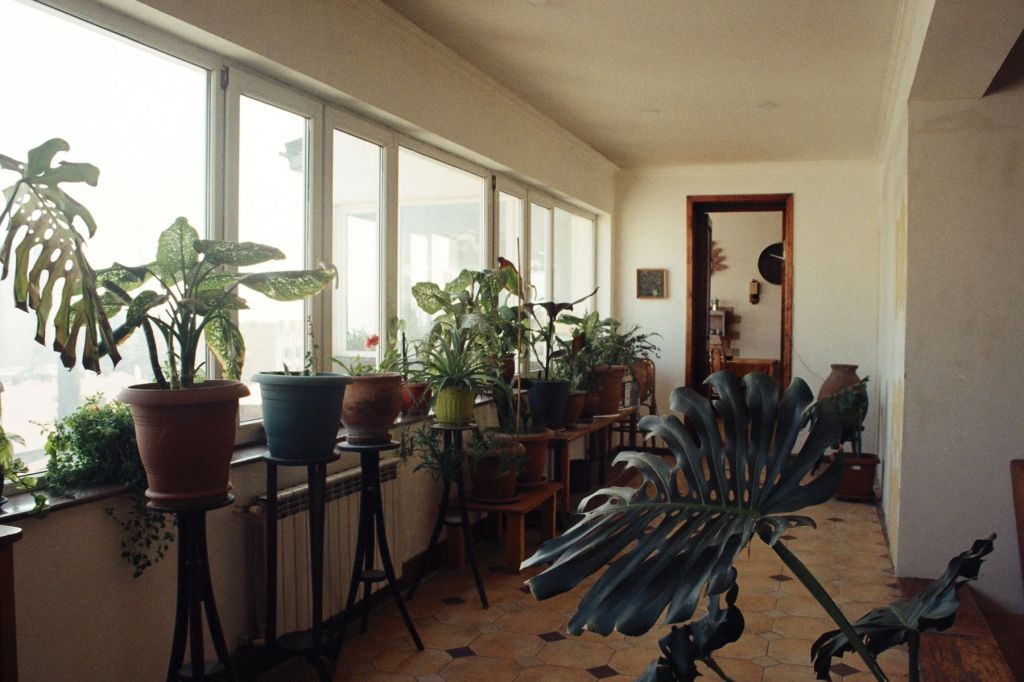
A few plants can change how a room feels: they soften hard corners, bring colour to a bookshelf and give you something to tend. But the internet is full of claims that plants will purify the air in your home. This guide covers plants that cope well with typical Indian flats, how to keep them alive, and what the evidence actually says.
The air-purifying claim
The idea comes largely from a 1989 NASA study, which found that some plants removed chemicals from the air inside small, sealed chambers. In 2019, researchers Bryan Cummings and Michael Waring at Drexel University reviewed a dozen studies spanning 30 years and published their analysis in the Journal of Exposure Science and Environmental Epidemiology. They concluded that normal ventilation in buildings dilutes indoor pollutants far faster than plants can remove them. To match a building’s air exchange, you would need somewhere between 10 and 1,000 plants per square metre of floor space.
So grow plants because you like them. For cleaner air, ventilation, reducing smoke indoors and, where outdoor pollution is high, a purifier will do far more.
Five forgiving plants
- Money plant (pothos). Grows fast in water or soil, tolerates lower light and recovers well from neglect. It is toxic to cats and dogs if chewed.
- Snake plant. Handles dry air, irregular watering and corners away from the window. The most common way to kill it is overwatering. Also toxic to pets.
- ZZ plant. Glossy, slow-growing and very drought-tolerant thanks to its thick rhizomes. Keep it away from pets and children, as its sap can irritate.
- Areca palm. Brings height and a soft, feathery shape to a bright room. It likes humidity and indirect light, and is generally listed as non-toxic to pets.
- Spider plant. Cheerful, easy to propagate from its baby plantlets and a good hanging plant. It is listed as non-toxic to cats and dogs.
Keeping them alive
- Light first. Most indoor plants want bright, indirect light. A spot a little back from a window is often ideal; harsh afternoon sun through glass can scorch leaves.
- Water less than you think. Check the top few centimetres of soil with a finger and water only when it is dry. Make sure pots have drainage holes.
- Adjust for the season. Plants drink more in hot, dry months and much less during the monsoon and winter, when overwatering and fungus are common.
- Watch the AC. Air conditioning dries the air; grouping plants together or keeping them away from vents helps.
If you have pets
Several of the most popular houseplants, including money plant, snake plant, peace lily and philodendron, are toxic to cats and dogs. If you share your home with animals, check each plant against the ASPCA’s toxic and non-toxic plant lists before you buy, and place anything doubtful well out of reach.
Sources
- Study: actually, potted plants don’t improve air quality, Drexel University
- Houseplants, pets and poison, University of Florida IFAS Extension
- Toxic and non-toxic plants, ASPCA
Lead photo: Darya Sannikova / Pexels. Facts checked against the sources above in October 2026.