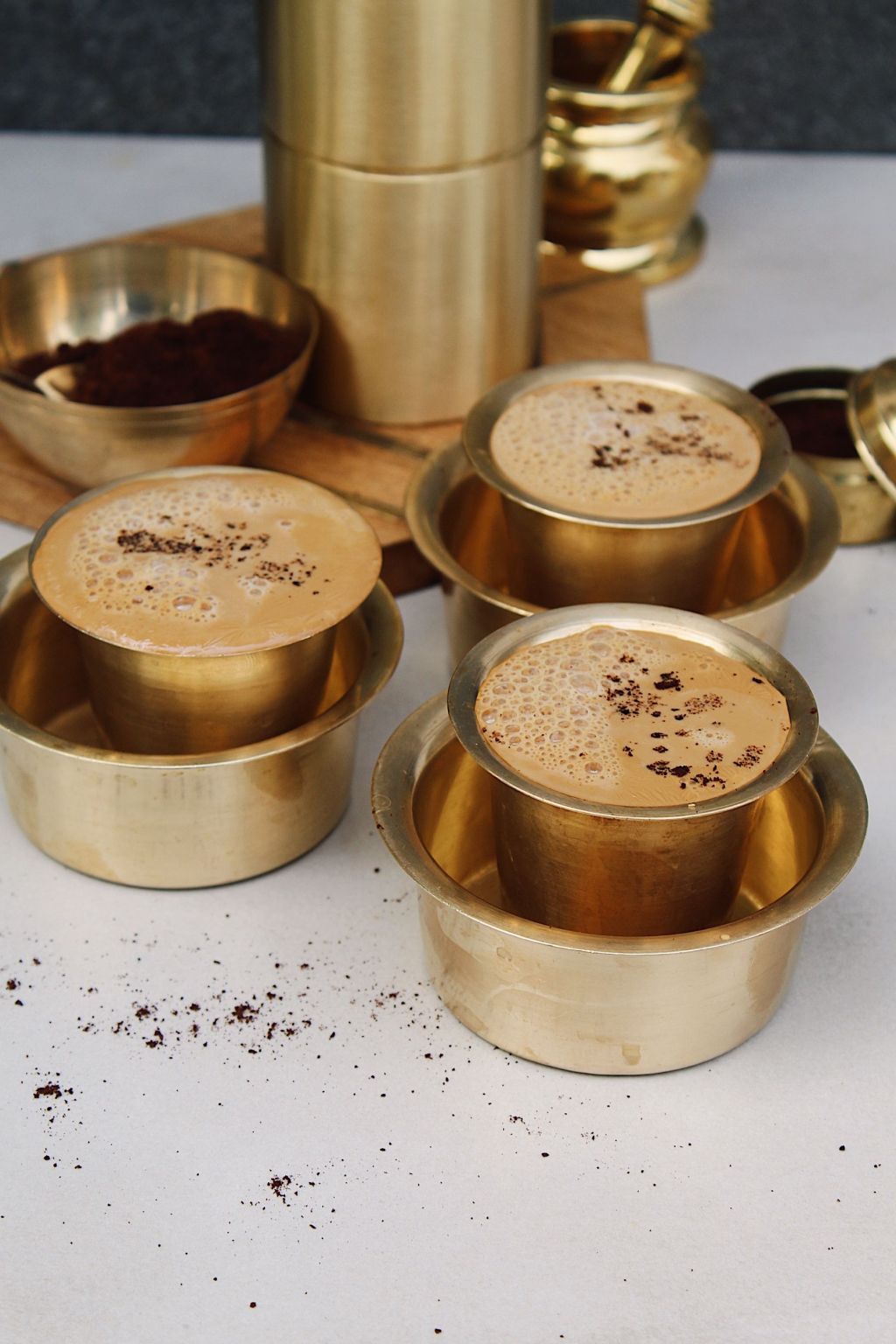
Karnataka grows most of India’s coffee, on shaded estates in the Western Ghats where pepper vines climb the shade trees and cardamom grows beneath. According to tradition, it began in the seventeenth century, when the Sufi saint Baba Budan brought seven coffee beans back from Yemen and planted them in the hills of Chikkamagaluru. We tell that story, and how to brew the result, in our guide to South Indian filter coffee.
Chikkamagaluru
The hills that carry Baba Budan’s name rise north of Chikkamagaluru town. Mullayanagiri, at about 1,930 metres, is the highest peak in Karnataka, and the road and short climb to the top give wide views over the Ghats on a clear day. The district is quieter than Kodagu, with estate stays, waterfalls and forest roads.
Kodagu (Coorg)
Kodagu is the home of the Kodava people, with their own language, cuisine and martial traditions. The district town, Madikeri, sits on a ridge with an old fort and Raja’s Seat, a garden viewpoint over the valleys. Around it are coffee and pepper estates, Abbey Falls, and Talakaveri, the source of the Kaveri river.
- Bylakuppe: one of the largest Tibetan settlements in India, with the Namdroling Monastery and its golden temple.
- Dubare: an elephant camp on the Kaveri run by the forest department.
- Kodava food: pandi curry (pork with a dark, sour kachampuli vinegar) and rice dumplings called kadambuttu.
The coffee year
- March to April: the ‘blossom showers’ bring out white, jasmine-scented coffee flowers for a few days.
- June to September: heavy monsoon rain; landscapes are at their greenest, but some roads and treks close.
- November to February: picking and drying season; the best time to see how coffee is processed.
Staying on an estate
Many families open their estate bungalows as homestays, and this is the best way to experience the region: walks through the plantation, home-cooked food and coffee from the estate. Ask hosts whether they offer a walk explaining how the estate is run, and buy coffee directly from them.
Planning
- Getting there: Madikeri is about five to six hours by road from Bengaluru and two to three from Mysuru; Chikkamagaluru is about five hours from Bengaluru.
- When to go: October to March for clear weather; the monsoon months are wet and leech-prone but very beautiful.
- How long: three nights in one district is a good minimum.
More in our Karnataka guide.
Sources and image credits
Facts that can change were checked on 30 October 2026:
- Wikipedia: Coffee production in India
- Wikipedia: Baba Budan
- Wikipedia: Mullayanagiri
- Wikipedia: Kodagu district
- Coffee Board of India (official)
Photography: Akshata Bablad via Pexels (Pexels License). A stock image of filter coffee, not taken in Kodagu or Chikkamagaluru, and not the author’s own.
Estate visits, trekking permits and road conditions change, especially in the monsoon. Check locally before you go.