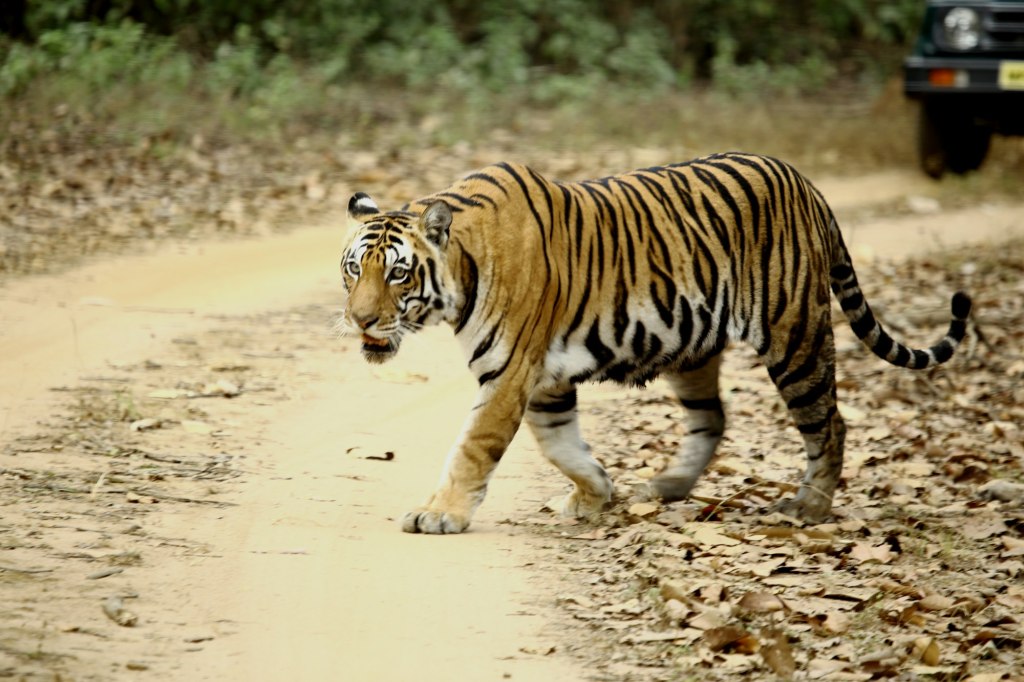
Madhya Pradesh is often called India’s tiger state, and two of its tiger reserves, Kanha and Bandhavgarh, are among the best-known places in India to see wildlife. This guide covers how a safari trip actually works. It doesn’t promise sightings: tigers are wild animals, and many good safaris see none.
Kanha and Bandhavgarh in brief
- Kanha spreads across the Mandla and Balaghat districts in the Maikal hills: sal forest, bamboo and wide grassy meadows. It became a national park in 1955 and is known for its work to save the hard-ground barasingha (swamp deer), which nearly disappeared. Its mascot, Bhoorsingh the Barasingha, was the first official mascot of an Indian tiger reserve.
- Bandhavgarh, in Umaria district, is smaller and hillier, with an ancient fort on its central hill and dense forest below. It is often busy, because it has a reputation for good tiger sightings.
When the parks are open
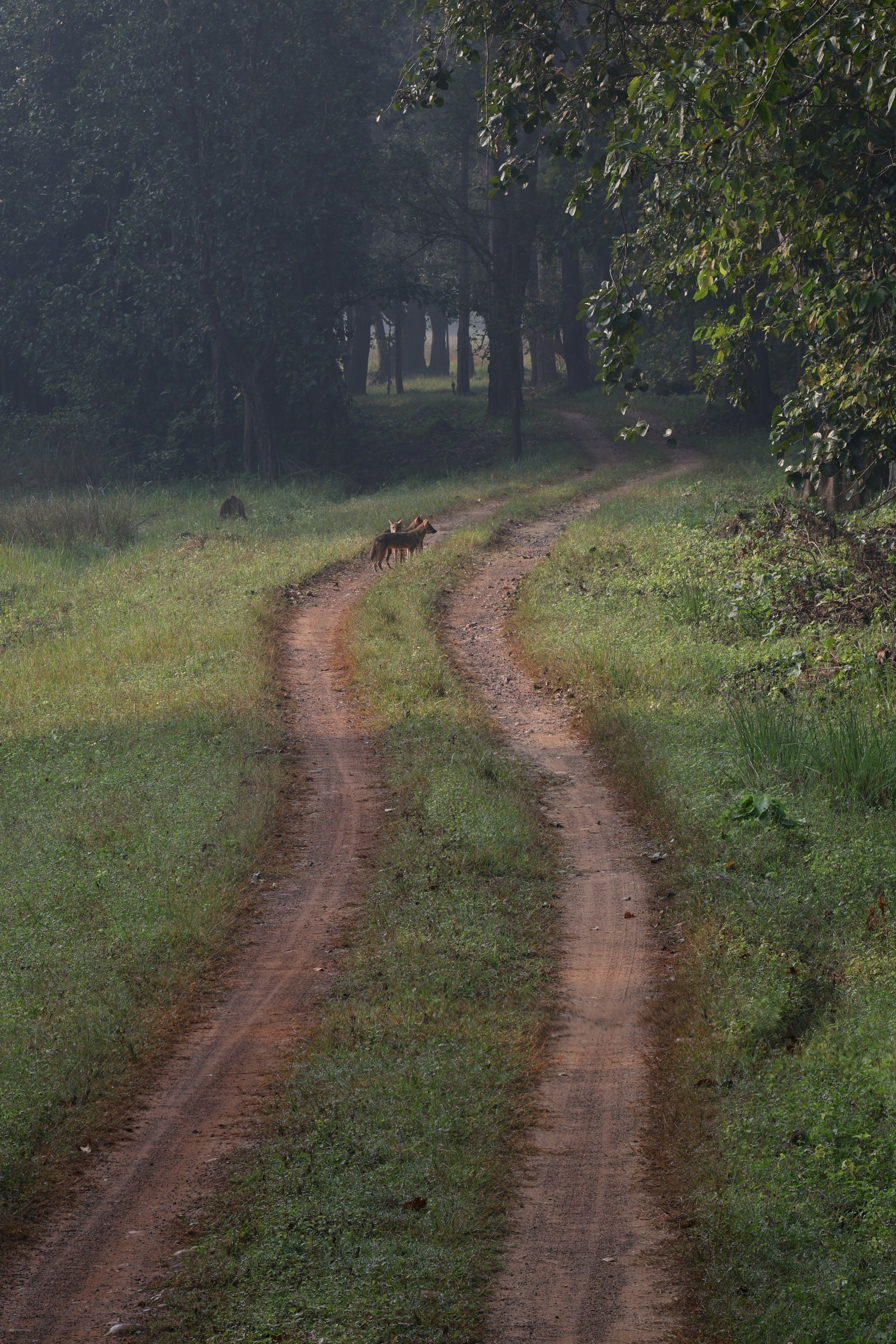
The core zones of Madhya Pradesh’s tiger reserves, including Kanha and Bandhavgarh, close to tourists for the monsoon, traditionally from 1 July to 30 September, and reopen in October. Buffer zones, the forest around the core, can stay open for safaris during the monsoon.
- October to February: cool, green and comfortable; mornings can be very cold in open vehicles in December and January.
- March to June: hot and dry. Animals gather at waterholes, which can help sightings, but midday heat is intense.
- July to September: core zones closed; buffer safaris only.
Booking a safari
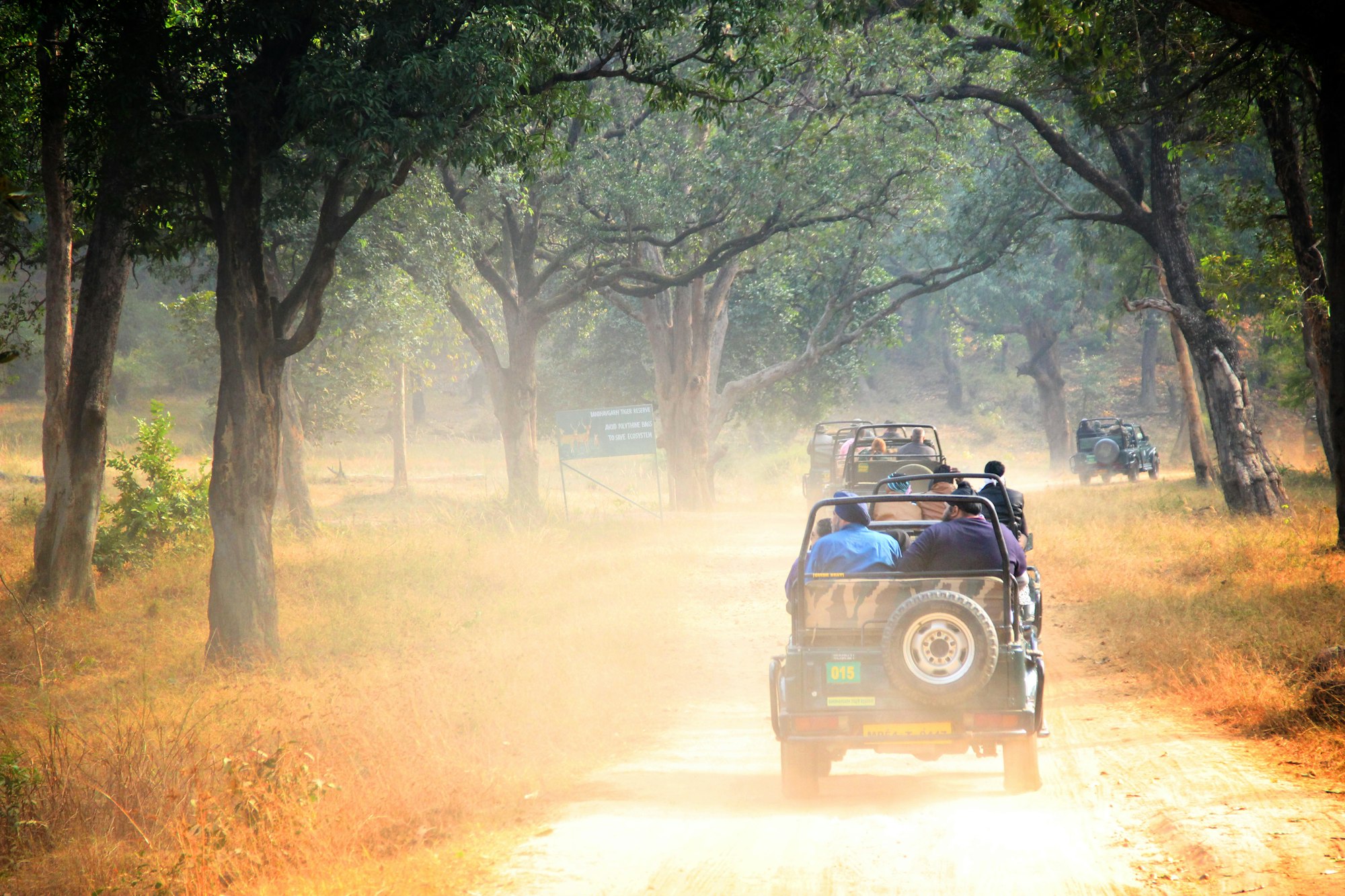
Safari permits for Madhya Pradesh’s tiger reserves are sold through the state forest department’s official portal, forest.mponline.gov.in. Each reserve is divided into zones reached from different gates, and each zone has a fixed number of vehicles per safari. Popular zones sell out well ahead for weekends, holidays and the winter peak, so book as early as you can once your dates are fixed.
- Book the zone, not just the park: your permit is for a specific zone and gate.
- Carry the same photo ID you used to book; it is checked at the gate.
- Vehicles (open gypsies) and guides are allocated at the gate under park rules; many lodges arrange the vehicle for you.
- Fees, timings and the number of safaris per day are set by the park and change; check the portal rather than relying on a lodge’s old information.
Choosing where to stay
Stay near the gate for your booked zone. In Kanha the main gates are Khatia (near Kisli), Mukki and Sarhi; in Bandhavgarh, most visitors stay around Tala. A morning and an evening safari on the same day, repeated over two or three days, gives you a much better chance than a single drive.
Responsible safaris
- Stay in the vehicle and keep your voice low; follow your guide’s and driver’s instructions.
- Don’t ask the driver to chase, crowd or block an animal, and don’t push for off-route driving.
- No flash, no feeding, no litter. Carry a reusable bottle.
- Choose lodges that employ and buy locally, and respect the villages around the parks.
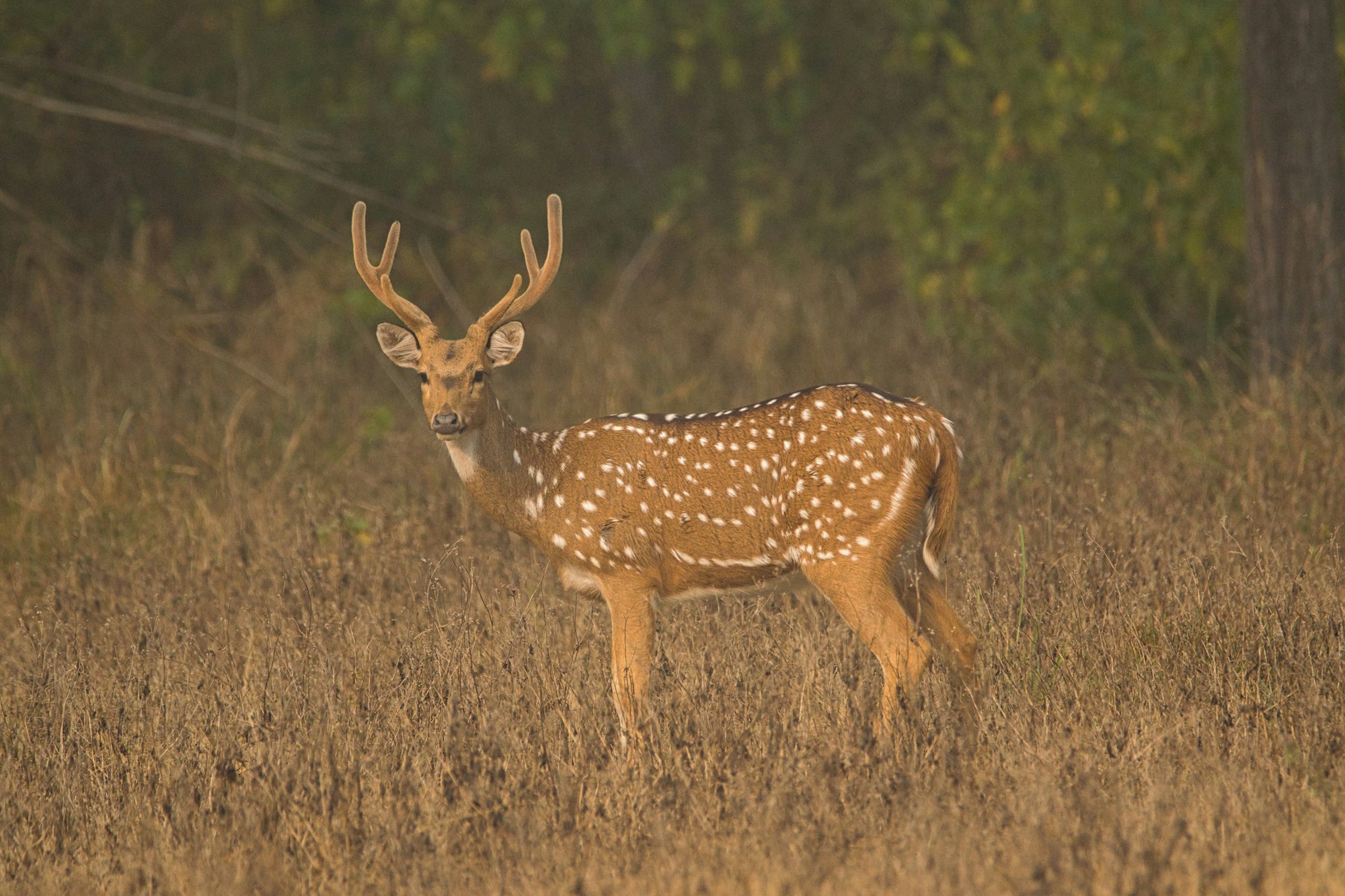
- A safari with no tiger is still a day in a remarkable forest: look for barasingha, gaur, langurs, dhole and birds.
Getting there
- Kanha: the nearest large airports are Jabalpur, Raipur and Nagpur, each several hours away by road. Jabalpur and Gondia are the usual railway stations.
- Bandhavgarh: Umaria and Katni are the nearest railway stations; Jabalpur is the nearest major airport.
- Many travellers combine both parks with a road transfer of most of a day.
See our Madhya Pradesh guide and how to plan a Central India trip for routes that combine wildlife with heritage.
Sources and image credits
Facts that can change were checked on 31 October 2026:
- MP Forest Department safari booking portal
- Outlook Traveller: MP closes tiger reserve core zones for the monsoon
- Wikipedia: Kanha Tiger Reserve
- Wikipedia: Bandhavgarh National Park
- Madhya Pradesh Tourism
Photography (stock images, not the author’s own): via Unsplash, under the Unsplash License: Lakshmi Narasimha (Tiger on a forest track, Kanha), Srivenkata Subramanian (Meadow track, Kanha), Amit Jain (Safari vehicles, Bandhavgarh), Nilesh S (Chital in the grass, Kanha).
Safari rules, zone openings, permit quotas and fees are set by the Madhya Pradesh Forest Department and can change each season. Check the official booking portal before you plan around a date.