Magazine / Travel / Explore India / Central India / Madhya Pradesh
Old stone,
sal forest,
long train rides.
Central India · Temples, forts and forests
Madhya Pradesh
Carved temples, river palaces, ancient cities and sal forest.
Khajuraho, Orchha, Gwalior, Bhopal, Sanchi, Malwa, Pachmarhi, Kanha and Bandhavgarh.
Madhya Pradesh sits in the middle of India, and it holds an extraordinary amount. It has three UNESCO World Heritage Sites (Khajuraho, Sanchi and Bhimbetka), fort towns and palaces, two of the great pilgrimage cities of Hinduism along its rivers, and some of the country’s best-known tiger reserves.
It is also big, and its highlights are spread out. Rather than trying to see it all, pick a region: the northern heritage towns, Bhopal and its ancient sites, the Malwa plateau and the Narmada, the Satpura hills, or the forests of Kanha and Bandhavgarh.
First edition · Practical details last checked 31 October 2026
At a glance
Ideal length · 5 days for one region; 8–10 days for heritage plus a tiger reserve
Gateways · Airports at Bhopal, Indore, Jabalpur, Gwalior and Khajuraho; major rail junctions at Bhopal, Jabalpur, Katni and Jhansi (for Orchha)
Best time · October to March; tiger reserve core zones close for the monsoon (traditionally 1 July to 30 September)
Know before · Book safaris early on the official MP Forest portal; summers are very hot
On this page: Places · Heritage · Tiger reserves · Culture & food · Plan your trip · Itineraries · Before you go · Stories · Sources
Where to go
Places in Madhya Pradesh
Grouped by region, so that each makes a sensible trip on its own.
Gwalior, Orchha and Khajuraho
- Gwalior’s hill fort and the tiled Man Singh Palace.
- Orchha’s Bundela palaces and riverside cenotaphs on the Betwa.
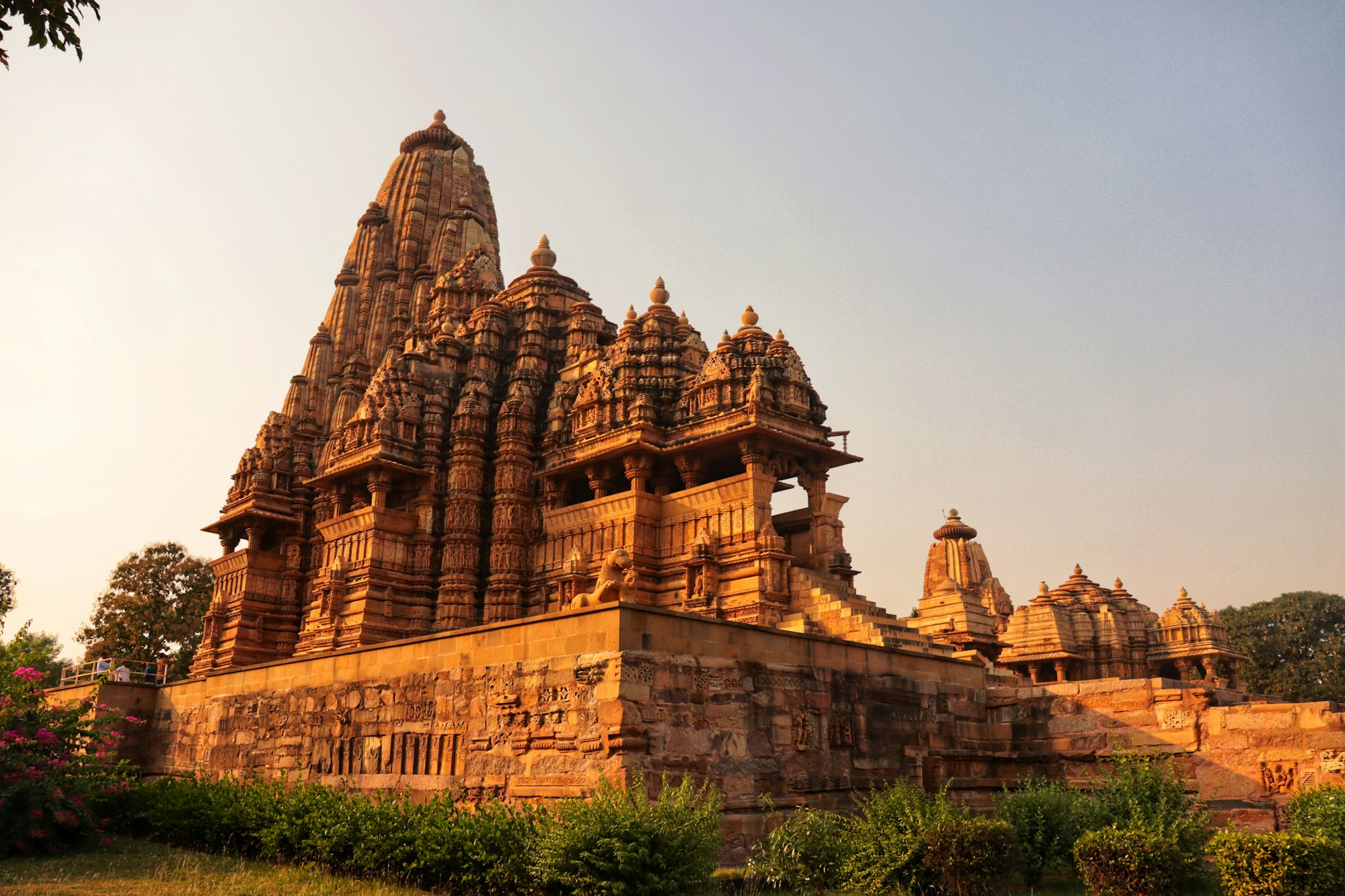
- Khajuraho’s Chandela temples, a UNESCO World Heritage Site. See Khajuraho and Orchha and Gwalior.
Bhopal, Sanchi and Bhimbetka
- The capital, its lakes, mosques and museums.
- Sanchi’s Great Stupa and Bhimbetka’s painted rock shelters, both UNESCO-listed.
- See Bhopal, Sanchi and Bhimbetka.
Malwa: Indore, Ujjain, Mandu, Maheshwar
- Indore’s food streets and the temple city of Ujjain.
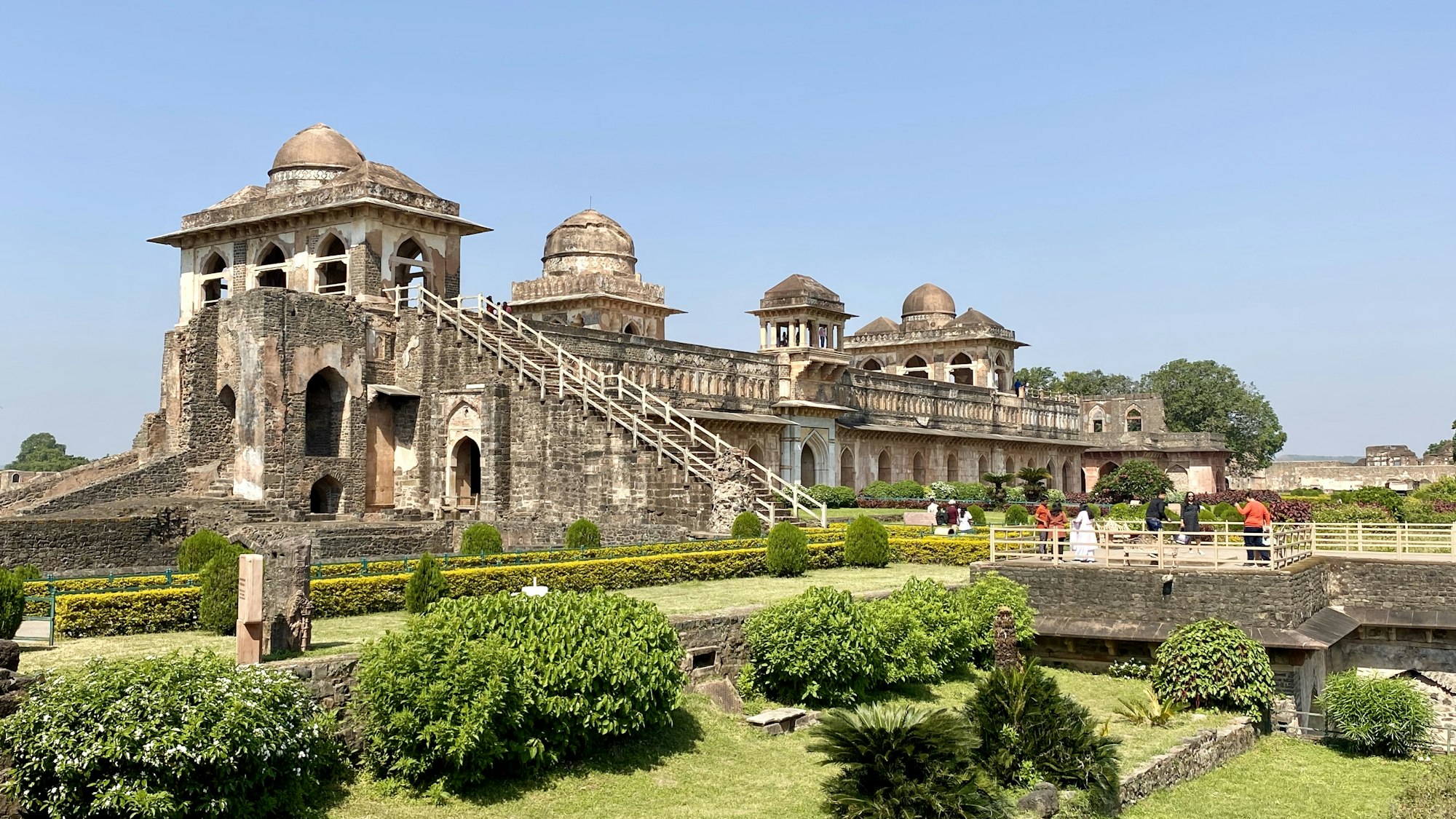
- Mandu’s ruined hilltop palaces and Maheshwar’s ghats and looms on the Narmada.
- See the Malwa route.
Pachmarhi and the Satpuras
- Madhya Pradesh’s only hill station, with waterfalls, caves and viewpoints.
- Satpura Tiger Reserve, known for walking and boat safaris in permitted areas.
- See Pachmarhi.
Kanha, Bandhavgarh and other reserves
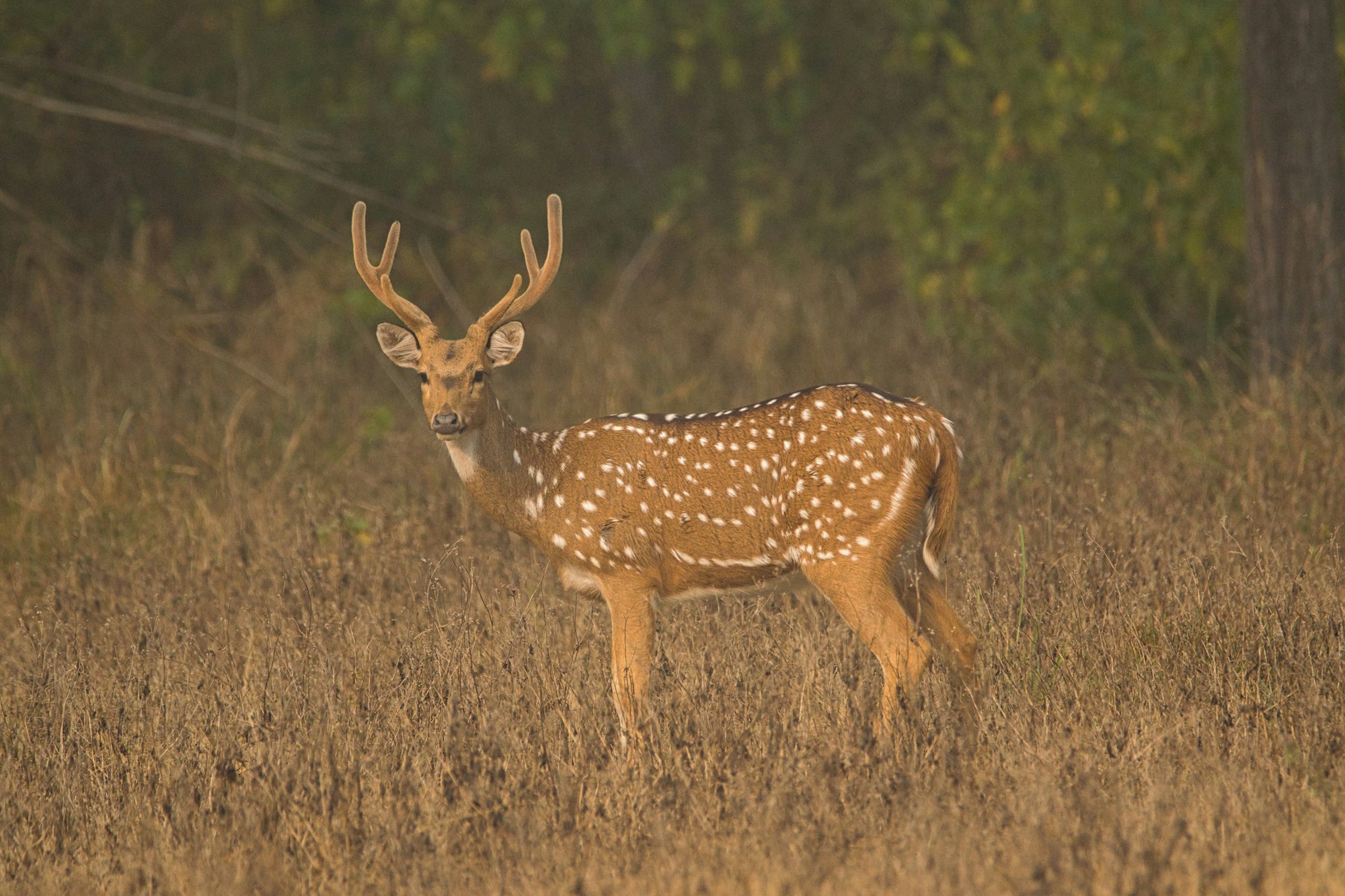
- Kanha’s meadows and barasingha; Bandhavgarh’s hills and fort.
- Panna (near Khajuraho) and Pench are other well-known reserves.
- See our safari guide.
Jabalpur, Bhedaghat and the Narmada
- The marble gorge of Bhedaghat near Jabalpur.
- Amarkantak, where the Narmada rises, in the Maikal hills.
- Jabalpur is a common gateway to Kanha and Bandhavgarh.
Heritage: three UNESCO sites and more
Khajuraho (inscribed 1986), Sanchi (1989) and Bhimbetka (2003) are Madhya Pradesh’s World Heritage Sites. Orchha is on UNESCO’s Tentative List, and Gwalior is a UNESCO Creative City of Music.
For a first trip, the northern loop of Gwalior, Orchha and Khajuraho shows the most variety in the fewest days. Read how to see Khajuraho slowly.
Wildlife: how the tiger reserves work
Kanha and Bandhavgarh are the best known of Madhya Pradesh’s tiger reserves. Safari permits are sold on the official MP Forest portal by zone and gate, and the core zones close for the monsoon. Sightings are never guaranteed; plan several drives over two or three days.
Read our practical guide to Kanha and Bandhavgarh before you book.
Culture & food
Food
- Indore’s poha-jalebi, bhutte ka kees and the Sarafa night market.
- Bhopal’s kebabs and biryani in the old city.
- Dal bafla, the Malwa cousin of dal baati.
Crafts
- Maheshwari and Chanderi handloom weaving.
- Gond painting, from the state’s Adivasi communities.
- See our handloom saree guide.
Festivals
- Khajuraho Dance Festival, listed for 20–26 February 2027.
- Mahashivratri at Ujjain and in Pachmarhi’s cave shrines.
- Simhastha Kumbh Mela at Ujjain, next due in 2028.
Etiquette
- Dress modestly at temples, mosques and monasteries.
- Remove shoes where asked, and follow photography rules.
- Ask before photographing people, especially in villages.
Plan your trip
How many days?
- 5 days: one region, such as the northern heritage loop.
- 8 days: heritage plus Bandhavgarh or Kanha.
- 12–14 days: a wider loop across the state.
When to go
- October to March: the most comfortable, and the tiger reserves are open.
- April to June: very hot; good for wildlife at waterholes.
- July to September: the monsoon; core zones closed, waterfalls and Mandu at their best.
Getting around
- Trains between the main cities; book ahead.
- A car with a driver for smaller towns and parks.
- Road journeys take longer than the map suggests.
Where to stay
- Heritage hotels in Orchha, Gwalior and Maheshwar.
- Lodges near the park gates for your booked safari zone.
- MP Tourism properties in many smaller places.
Sample itineraries
Starting points, not fixed packages. Adjust for weather, crowds and current advisories.
Northern heritage · 5 days
Starting point: Gwalior · Style: forts, palaces and temples
- Day 1 · Gwalior Fort and the Man Singh Palace.
- Day 2 · Drive to Orchha; the chhatris at sunset.
- Day 3 · Orchha’s palaces and temples.
- Day 4 · Drive to Khajuraho; the Western Group in the evening light.
- Day 5 · Eastern and Southern groups; depart.
Limitations · Distances are moderate, but allow for slow roads.
Heritage and tigers · 8 days
Starting point: Khajuraho · Style: temples and forest
- Days 1–2 · Khajuraho.
- Days 3–5 · Bandhavgarh, with four or five safaris.
- Day 6 · Jabalpur and Bhedaghat.
- Days 7–8 · Kanha.
Limitations · Book safari zones before anything else. See how to plan a Central India trip.
Safety and current access
Last checked 31 October 2026. This is a summary, not a safety assurance.
- Tiger reserves: core zones close for the monsoon (traditionally 1 July to 30 September); some buffer zones stay open. Book on the official portal only.
- Heat: April to June is very hot across the plains. Start early and carry water.
- Temples: very large crowds at Ujjain on festival days; follow official arrangements.
- Monuments: timings and ticketing are set by the ASI and the state and can change.
From the journal & traveller stories
Lifelately guides to Madhya Pradesh, researched from official and published sources. We have not yet received a firsthand traveller story from here.
- Khajuraho: how to see the Chandela temples slowly
- Orchha and Gwalior: river palaces, a hilltop fort and a city of music
- Kanha and Bandhavgarh: a practical guide to tiger safaris
- Bhopal, Sanchi and Bhimbetka
- Malwa: Indore, Ujjain, Mandu and Maheshwar
- Pachmarhi and the Satpura hills
- How to plan a Central India trip
Travelled here? Lifelately publishes reader stories with the writer’s approval and full credit. Share your travel story →
Official resources
- Madhya Pradesh Tourism.
- MP Forest Department safari booking.
- India Meteorological Department: forecasts and monsoon warnings.
- GOV.UK travel advice: India regional risks (or your own government’s equivalent).
Sources & last checked
Time-sensitive details were checked on 31 October 2026:
- World Heritage Sites · UNESCO: Khajuraho, Sanchi, Bhimbetka
- Tentative List · The historic ensemble of Orchha (UNESCO)
- Tiger reserve monsoon closure · Outlook Traveller
- Khajuraho Dance Festival 2027 · Madhya Pradesh Tourism
Background on history, culture and food is drawn from general reference sources. Spotted something out of date? Let us know.
Photography (stock images, not the author’s own): via Unsplash, under the Unsplash License: Varun Pyasi (Kandariya Mahadeva Temple, Khajuraho), Nilesh S (Chital in the grass, Kanha), Aakansha Agrawal (Jahaz Mahal, Mandu).
A little something
for your inbox.
Stories, finds and inspiration, occasionally — and a note when new destination guides go live.
More life, always. © 2026 Lifelately · Privacy

