Magazine / Travel / Explore India / South India / Kerala
Monsoon light,
coconut oil,
slow boats.
South India · Between the Ghats and the sea
Kerala
Backwaters and tea hills, spice ports and laterite cliffs, and a slower pace of travel.
Kochi, Alappuzha, Kumarakom, Munnar, Thekkady, Wayanad, Varkala and Malabar.
Places Backwaters Food & culture Plan Itineraries Before you go
Kerala is a narrow state on India’s south-west coast, squeezed between the Arabian Sea and the Western Ghats. In a few hours you can move from fishing harbours and lagoons to spice estates, tea slopes and wildlife reserves in the hills.
It rewards slow travel. Distances look short on the map, but roads are busy and winding, so it is better to choose two or three bases than to try to see everything. Most first trips combine Kochi, a night on the backwaters and a few days in the hills, with a beach to finish.
First edition · Practical details last checked 30 October 2026
At a glance
Ideal length · 7–10 days for Kochi, the backwaters, Munnar or Thekkady and a beach; two weeks to add Wayanad or Malabar
Gateways · Airports at Kochi, Thiruvananthapuram, Kozhikode and Kannur; trains along the coast
Best time · Roughly October to March for dry weather; June to September is monsoon season, green and quiet
Know before · Book licensed houseboats; Eravikulam National Park closes each year for the Nilgiri tahr calving season
On this page: Places · Backwaters · The hills · Culture & food · Plan your trip · Itineraries · Safety & access · Stories · Sources
Where to go
Places in Kerala
Kerala falls into three broad bands: the coast and backwaters, the midland towns, and the hills of the Western Ghats.
Kochi
- Fort Kochi: Chinese fishing nets, St Francis Church and quiet colonial-era lanes.
- Mattancherry: the Mattancherry Palace, Jew Town and the Paradesi Synagogue, and the spice warehouses.
- Kathakali performances and the contemporary art of the Kochi-Muziris Biennale in its exhibition seasons.
Alappuzha and Kumarakom
- Alappuzha: houseboats and canal villages around Vembanad Lake.
- Kumarakom: lakeside stays and birdlife on the eastern shore of the lake.
- Smaller canoe trips through narrow village canals. See the backwaters.
Munnar
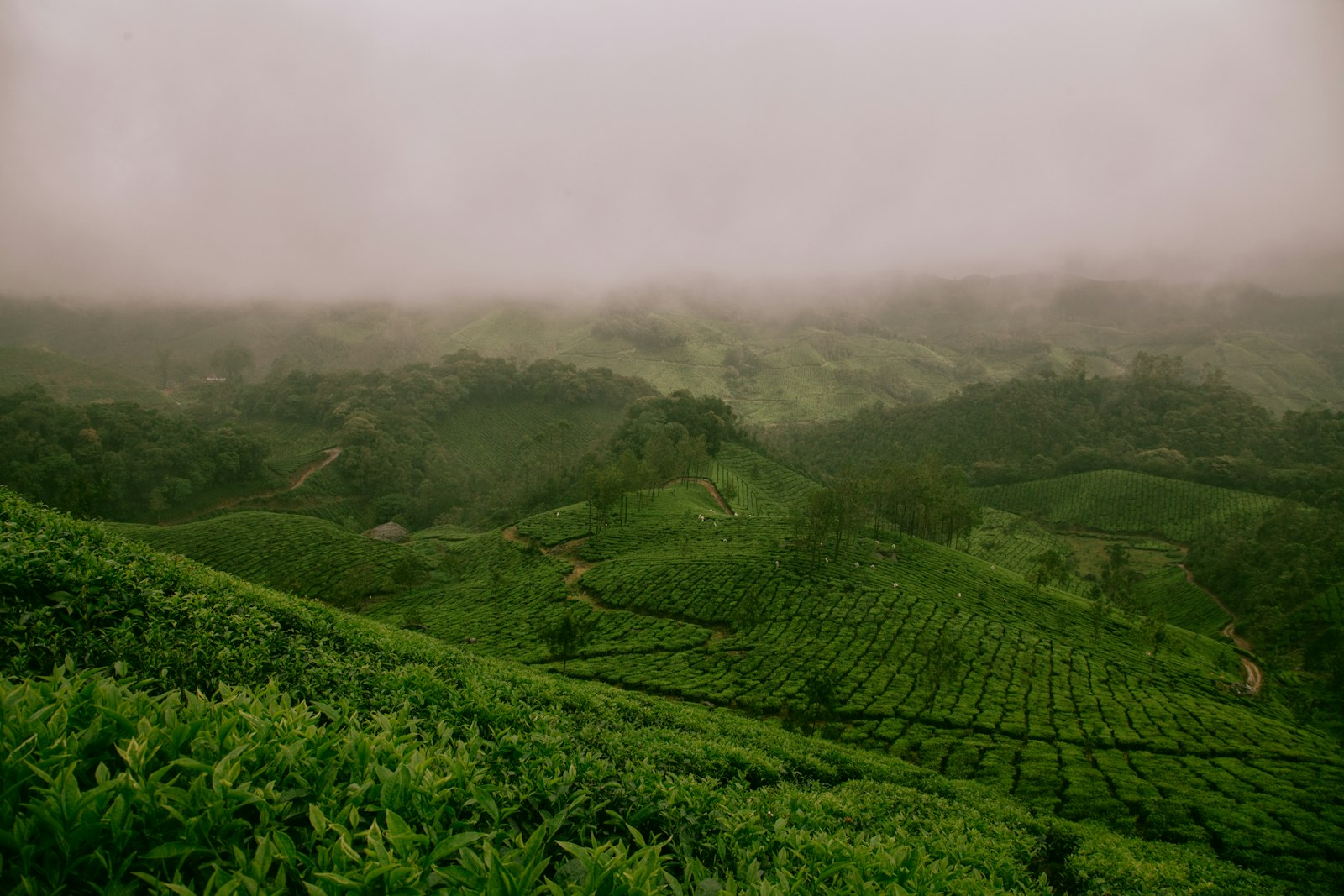
- Tea estates on steep slopes, factory visits and walks through the plantations.
- Eravikulam National Park, home of the Nilgiri tahr (check the annual closure).
- Cool nights, so pack a layer. See the hills.
Thekkady
- Periyar Tiger Reserve: guided walks, bamboo rafting and boat trips run by the reserve.
- Cardamom and pepper estates around Kumily.
- Pair with Munnar for a hill circuit.
Wayanad
- Forested hills in the north-east, coffee and pepper country.
- Edakkal Caves and their ancient rock engravings.
- Check local advice: some landslide-hit villages remain restricted (see before you go).
Varkala and the south coast
- Varkala: red laterite cliffs above the Arabian Sea, with cafés along the cliff path.
- Thiruvananthapuram: the state capital, its museums and the Padmanabhaswamy Temple.
- Kovalam: a busier beach town with a lighthouse.
Malabar (north Kerala)
- Kozhikode: a historic trading port known for Malabar biryani and halwa.
- Kannur and Kasaragod: theyyam ritual performances in the cooler months, forts and quiet beaches.
- Fewer visitors and strong food traditions.
The backwaters
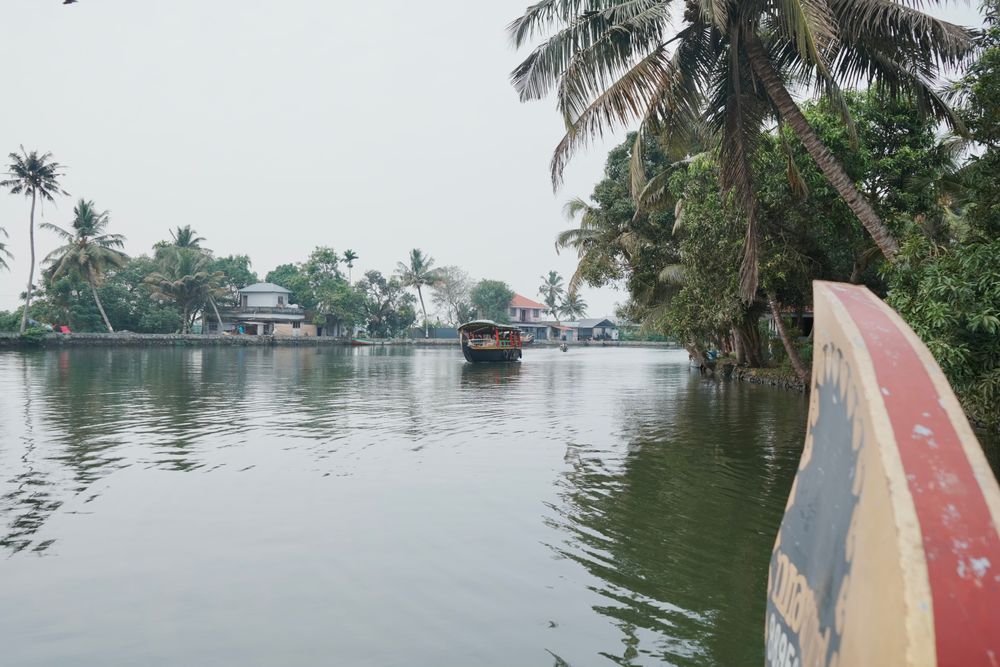
Kerala’s backwaters are a network of lagoons, lakes, rivers and canals running parallel to the coast. Vembanad Lake, between Alappuzha and Kumarakom, is the heart of the houseboat trade, but some of the best experiences are on smaller boats in the narrow village canals, where you see daily life up close.
Kerala Tourism runs a classification scheme for houseboats. Ask operators for their registration and classification before you book, and avoid boats that discharge waste into the water.
- Overnight houseboat: a full day and night on the water; most boats moor in the evening.
- Day cruise or shikara: a few hours, with lunch on board, if you want a taste without the overnight stay.
- Village canoe: slow, quiet and good for birdwatching early in the morning.
- Boat races: snake-boat races take place in the monsoon months; the Nehru Trophy race on Punnamada Lake was held on 22 August in 2026.
The hills
The Western Ghats rise steeply behind the coast. Munnar is tea country, with planters’ bungalows and misty slopes; Thekkady, near the Tamil Nadu border, is spice country and the base for the Periyar Tiger Reserve; Wayanad, further north, is greener and less visited.
Roads are narrow and winding, and the journey from Kochi to Munnar or Thekkady takes most of a day. Plan for at least two nights in each hill base.
Culture & food
Food
- Appam with stew, puttu with kadala curry, and fish curry with red rice.
- Sadya, the vegetarian feast served on a banana leaf, especially at Onam.
- Malabar biryani and snacks in Kozhikode; toddy-shop food in the backwaters.
Performance and ritual
- Kathakali dance-drama; short performances in Kochi explain the make-up and gestures.
- Theyyam in north Kerala, performed at shrines mostly between winter and spring.
- Kalaripayattu, Kerala’s traditional martial art.
Festivals
- Onam (August or September): Kerala’s harvest festival, with feasts and boat races.
- Temple festivals with caparisoned elephants, such as Thrissur Pooram in spring.
- Vishu, the Malayalam new year, in April.
Etiquette
- Many temples restrict entry for non-Hindus; ask before entering and dress modestly.
- Remove shoes before entering temples and homes.
- Cover up away from tourist beaches.
Plan your trip
How many days?
- 4–5 days: Kochi, a night on the backwaters and Munnar or Thekkady.
- 7–10 days: add the second hill station and a few days in Varkala.
- 2 weeks: add Wayanad or a slower Malabar loop.
When to go
- October to March is the main season, with dry weather and warm days.
- April and May are hot and humid on the coast; the hills are cooler.
- The south-west monsoon usually reaches Kerala in early June and brings heavy rain until September: lush, quiet and good for Ayurveda, but some activities close.
Getting around
- Trains run along the coast between Thiruvananthapuram, Kochi, Kozhikode and Kannur.
- Hire a car with a driver for the hills; buses are cheap but slow.
- Ferries cross the water in Kochi and Alappuzha.
Where to stay
- Heritage homestays in Fort Kochi.
- Licensed houseboats or lakeside stays on the backwaters.
- Plantation bungalows and eco-lodges in the hills.
Sample itineraries
Starting points, not fixed packages. Adjust for weather, crowds and current advisories.
Kerala in a week · 7 days
Starting point: Kochi · Style: classic first trip
- Day 1 · Arrive in Kochi; evening walk around the fishing nets in Fort Kochi.
- Day 2 · Mattancherry, the synagogue and spice warehouses; a Kathakali performance.
- Day 3 · Drive to Munnar (most of the day).
- Day 4 · Tea estates and, if open, Eravikulam National Park.
- Day 5 · Drive to Thekkady; spice garden visit.
- Day 6 · Morning walk or boat in the Periyar Tiger Reserve; drive to Alappuzha or Kumarakom.
- Day 7 · Houseboat or day cruise on the backwaters; return to Kochi.
Limitations · Driving days are long. Check the Eravikulam closure dates and Periyar programme bookings before you go.
Coast and backwaters · 5 days
Starting point: Kochi or Thiruvananthapuram · Style: slow, low-effort
- Day 1 · Fort Kochi.
- Day 2 · Kumarakom or Alappuzha; village canoe at dusk.
- Day 3 · Overnight houseboat.
- Day 4 · Train or drive south to Varkala.
- Day 5 · Cliff walk and beach; fly out from Thiruvananthapuram.
Limitations · Swimming conditions vary; obey lifeguard flags, especially in the monsoon.
Safety and current access
Last checked 30 October 2026. This is a summary, not a safety assurance.
- Eravikulam National Park closes every year for the Nilgiri tahr calving season, usually through February and March, reopening around April. Confirm the dates before planning a Munnar visit at that time.
- Wayanad: most tourism has reopened since the 2024 landslides, but the district has at times restricted visitors to the affected villages of Mundakkai and Chooralmala. Follow local instructions and visit respectfully.
- Monsoon: heavy rain can bring landslides in the hills and close roads, viewpoints and treks. Check forecasts and district alerts.
- Sea safety: strong currents at many beaches, especially from June to September.
- Houseboats: book through registered operators and check life jackets on board.
From the journal & traveller stories
- Kerala’s backwaters: how to choose a houseboat, a canoe or a quieter way in
- Munnar’s tea country: estates, Eravikulam and the slow hill roads
- A slow day in Fort Kochi and Mattancherry
- Varkala and Kerala’s southern coast
- Seven beans and a steel tumbler: the story of South Indian filter coffee, a South Indian coffee story from the Lifelately Table
Lifelately’s guides are researched from published and official sources rather than first-hand traveller accounts. If you have travelled here, we would like to hear your story.
Travelled here? Lifelately publishes reader stories with the writer’s approval and full credit. Share your travel story →
Official resources
- Kerala Tourism, including the houseboat classification scheme.
- Periyar Tiger Reserve: programmes and bookings.
- India Meteorological Department: forecasts and monsoon updates.
- GOV.UK travel advice (or your own government’s equivalent).
Sources & last checked
Time-sensitive details were checked on 30 October 2026:
- Houseboat classification · Kerala Tourism houseboat classification scheme
- Eravikulam annual closure · Onmanorama, 6 January 2026
- Nehru Trophy Boat Race 2026 · Alappuzha district administration
- Wayanad tourism after the 2024 landslides · Onmanorama, 22 July 2025
- Monsoon and weather · India Meteorological Department
Background on history, culture and food is drawn from general reference sources. Spotted something out of date? Let us know.
Photography (stock images, not the author’s own): Ravi Pinisetti (Munnar) via Unsplash, used under the Unsplash License; Gladin Joseph (chai, Alappuzha) and Ravi Kant (Kerala backwaters) via Pexels, used under the Pexels License.
A little something
for your inbox.
Stories, finds and inspiration, occasionally — and a note when new destination guides go live.
More life, always. © 2026 Lifelately · Privacy

