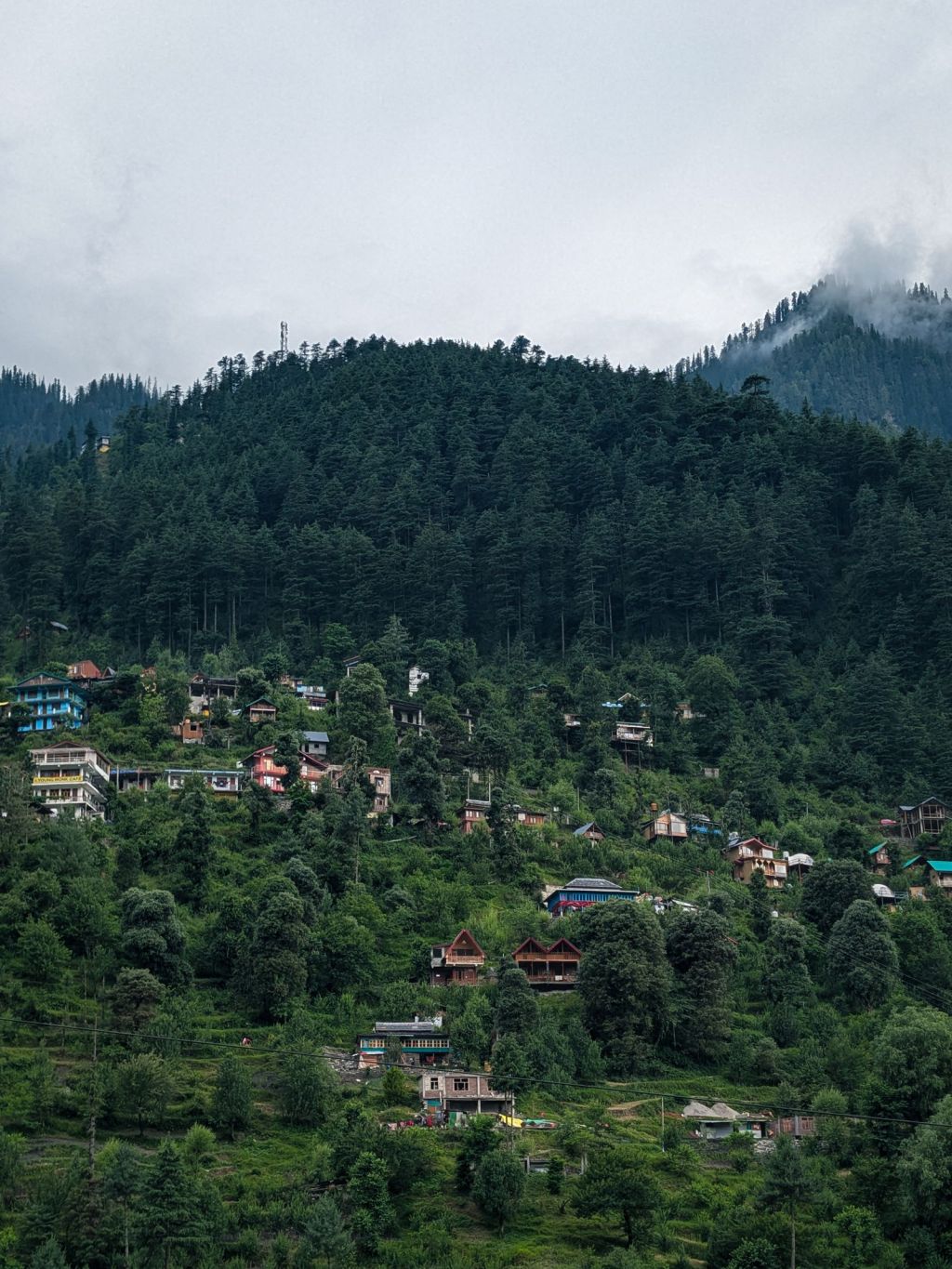
Some mountain weekends are about covering ground. This one is about the opposite. The Tirthan Valley, in the Banjar area of Himachal Pradesh, is a place of fast green water, deodar forest and villages built from timber and stone, and two unhurried days here can feel longer than a week of driving between viewpoints.
The valley is quieter than Manali or Shimla, and its small base, Jibhi, has grown into a cluster of homestays and cafés without losing its village shape. Above it, the road climbs to Jalori Pass and an easy forest walk to a high lake. Below it, the Tirthan river runs towards the Great Himalayan National Park.
Why the Tirthan Valley
- A protected landscape next door. The Great Himalayan National Park Conservation Area, which includes the Tirthan and Sainj wildlife sanctuaries, was inscribed as a UNESCO World Heritage Site in 2014.
- Village architecture. Many older houses and temples in this part of Himachal use the kath-kuni method: alternating courses of timber and stone, built without mortar.
- Walks rather than sights. The best things here are a riverside morning, a village lane and a few hours on a forest trail.
Getting there
- By road: turn off the Chandigarh–Manali highway at Aut and follow the valley road towards Banjar; Jibhi is roughly 35 km from Aut. The last stretch is narrow and winding, so plan to arrive in daylight.
- By air: the nearest airport is Bhuntar, near Kullu, about 60 km away.
- By bus: long-distance buses on the Delhi–Manali route pass Aut; local buses and taxis continue to Banjar and Jibhi.
Day 1: the valley floor
Arrive, drop your bags and walk. The lanes around Jibhi lead past apple trees, small shrines and timber houses, and a short trail from the village reaches a small waterfall in the forest. In the afternoon, walk up to Chehni Kothi, a tall timber-and-stone tower above Chehni village, a fine example of the region’s traditional building. Ask locally about access before you go, and remember that it is part of a living village.
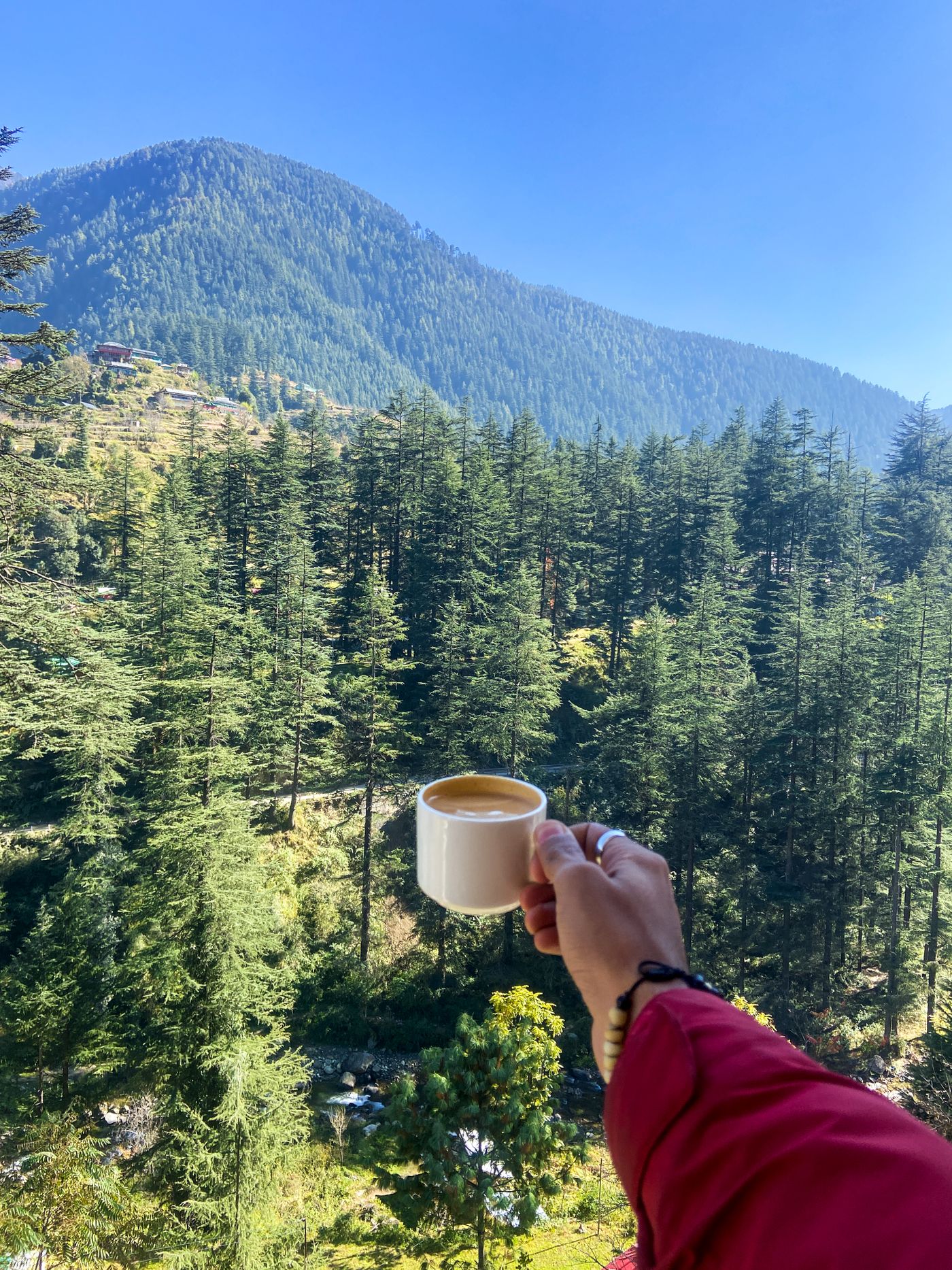
Spend the evening by the river. Many homestays serve home-style Himachali meals; ask what is cooking rather than ordering from a long menu.
Day 2: Jalori Pass and Serolsar Lake
Drive or take a taxi up to Jalori Pass, about 12 km above Jibhi and at roughly 3,000 m. From the pass, a forest trail of about 5 km leads to Serolsar Lake, at around 10,170 ft, with the small Budhi Nagin temple on its shore. The walk is generally graded easy and returns the same way; allow most of a morning or afternoon at an unhurried pace.
- The trail is usually walked from March to November. In winter it is snowbound and not recommended, and the road over the pass can be blocked by snow.
- Carry water, a warm layer and rain protection; weather on the pass changes quickly.
- Keep the lake clean. It is a sacred site for the local community.
If you have a third day: the national park
The Great Himalayan National Park has no roads inside it. From Gushaini, at the end of the motorable valley road, trails follow the Tirthan towards the park boundary, and forest staff issue entry permits at the gate. A full walk to the gate and back is a long day; multi-day treks should be arranged with a registered local guide. Some areas of the park are closed from time to time, so check with the park office before you plan a route.
When to go
- Spring and autumn are the most comfortable seasons for walking.
- Monsoon (roughly July to September) brings lush forest but also landslides and road closures on mountain roads.
- Winter is cold and quiet, with snow at higher levels and possible closures at Jalori Pass.
Travelling lightly
- Stay in locally run homestays and eat locally.
- Carry your rubbish back down from trails and the lake.
- Ask before photographing people, homes and temples.
- Do not swim in the Tirthan; the current is fast and the water is cold.
For more of the state, read our Himachal Pradesh guide, see a different side of Himachal in the Kangra Valley, or plan around the seasons with our climate guide.
Sources and image credits
Facts that can change were checked on 22 October 2026:
- World Heritage Site: Great Himalayan National Park Conservation Area (inscribed 2014)
- Great Himalayan National Park: visitor information and contact
- Indiahikes: Serolsar Lake trek (distance, altitude, season)
- Holidify: Jibhi travel guide (distances from Aut and Bhuntar)
Photography via Pexels, used under the Pexels License: Anurag Kothare (Jibhi village), Moonstone Hammock (coffee in Jibhi). These are stock images, not the author’s own.
Roads, weather and park access change. Check current conditions before you travel.