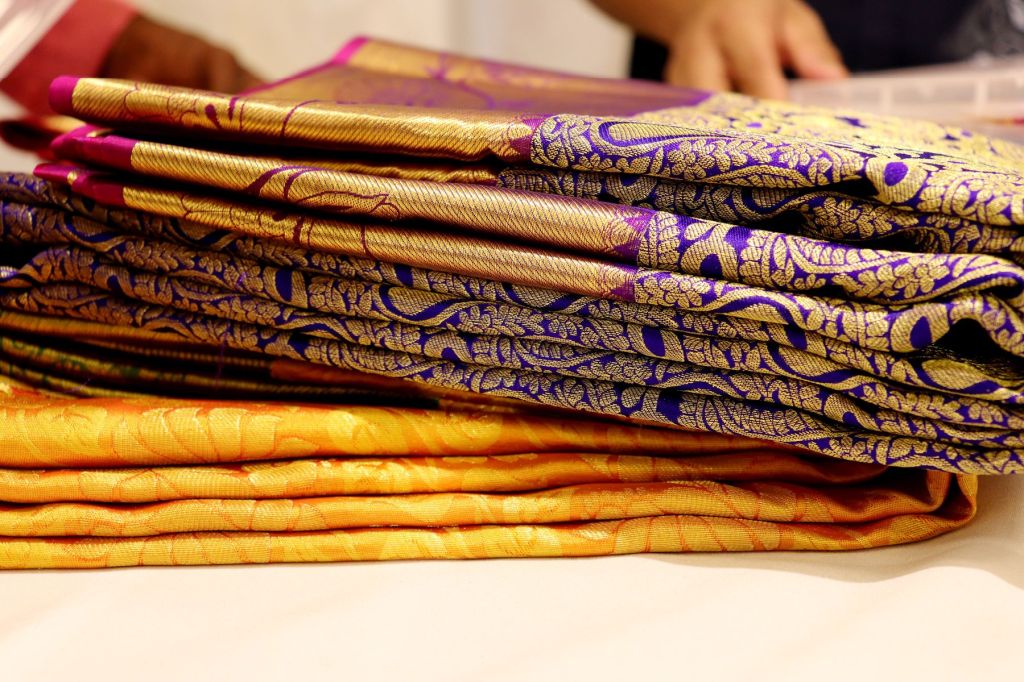
A handloom sari is made slowly, one pass of the shuttle at a time, and the best ones carry the fingerprints of a particular town: its weavers, its motifs, its way of handling silk or cotton. That is also why so many of them are now legally protected. Under India’s Geographical Indications of Goods Act of 1999, a weave can be registered to the place that made it famous, so that only products from that region, made in the traditional way, can use the name.
Below are six registered weaves that are worth knowing, followed by a few practical ways to tell a genuine handloom piece from a power-loom copy.
Kanjeevaram (Kancheepuram), Tamil Nadu
Kancheepuram silk was among the earliest textiles to receive a GI tag, registered in 2004–05. The sarees are known for heavy mulberry silk, bold contrast borders and pallus, and temple, checks and stripe motifs. Traditionally the border and body are woven separately and interlocked, which is one reason a good Kanjeevaram feels substantial and drapes with weight.
Banarasi, Uttar Pradesh
Banaras brocades and sarees were registered as a GI in 2009–10. They are famous for zari work, metallic thread woven into the silk to create floral and foliate patterns, and for techniques such as kadhua, where each motif is woven in individually. Because the name is so valuable, Banarasi is also one of the most frequently imitated weaves on the market.
Chanderi, Madhya Pradesh
Chanderi sarees, registered in 2004–05, are light, sheer and slightly translucent, woven from silk, cotton or a blend of the two. Small woven motifs called buttis, often in zari, are scattered across the body. They are a good choice for hot weather and for anyone who finds heavier silks hard to wear.
Paithani, Maharashtra
Paithani sarees and fabrics, registered in 2010–11, take their name from the town of Paithan near Chhatrapati Sambhajinagar. They are recognisable by their richly coloured silk and by peacock, parrot and lotus motifs on the pallu, worked in a tapestry-like technique.
Uppada Jamdani, Andhra Pradesh
Jamdani is a fine supplementary-weft technique with roots in Bengal. In Uppada, on the Andhra coast, weavers apply it to silk, and Uppada Jamdani sarees were registered as a GI in 2008–09. The result is very light, with motifs that seem to float on the fabric.
Patan Patola, Gujarat
Patan Patola, registered in 2013–14, is a double ikat: both the warp and the weft threads are tie-dyed before weaving so that the pattern appears when they meet on the loom. It is one of the most demanding textile techniques in the world, and a single piece can take months, which is reflected in the price.
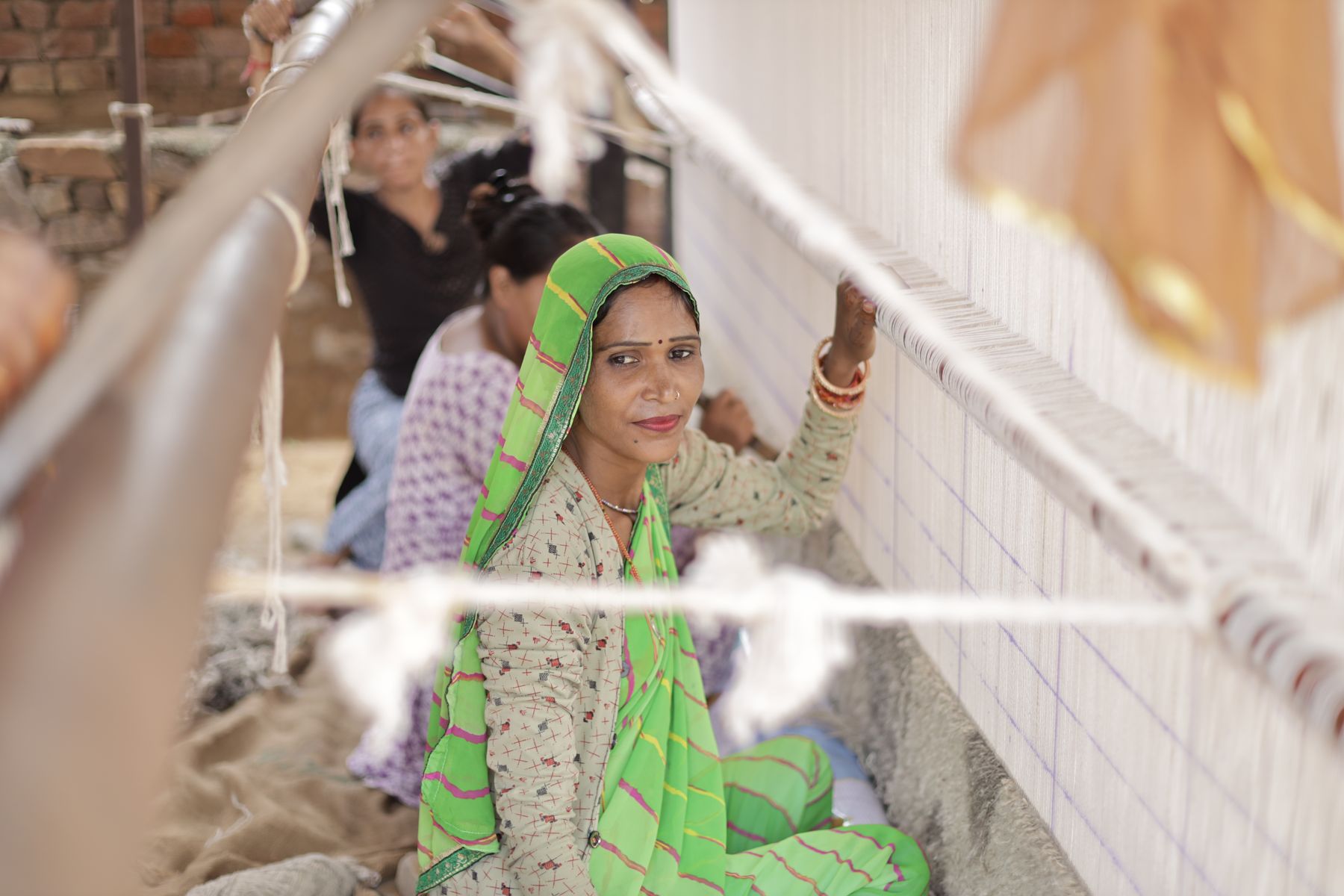
How to tell genuine handloom
No single test is foolproof, but a few habits help:
- Look for government-backed labels. The Handloom Mark and the India Handloom Brand are certification schemes for handwoven products, and genuine silk can carry the Silk Mark from the Silk Mark Organisation of India. A GI logo or certificate from an authorised producer is another good sign.
- Turn it over. Hand-woven motifs often show small irregularities and floating threads on the reverse; power-loom pieces tend to be perfectly uniform.
- Check the edges. Handloom selvedges can be slightly uneven, and the fabric may have tiny variations in density.
- Ask about the source. Weaver co-operatives, state emporiums and brands that name their clusters make it easier to trace a piece back to the loom.
- Be wary of the price. A double ikat or a hand-woven brocade at a fast-fashion price is almost certainly not what it claims to be.
Why it matters
India marks National Handloom Day on 7 August, a date chosen because the Swadeshi movement, with its call to buy Indian-made cloth, was launched on that day in 1905. The first National Handloom Day was held in 2015. Buying genuine handloom is one of the most direct ways to keep these skills, and the incomes that depend on them, alive.
Sources
- List of geographical indications in India (registration years)
- National Handloom Day
- GI-protected sarees and fabrics of India, GKToday
Lead photo: Sharath G. / Pexels. Facts checked against the sources above in October 2026.