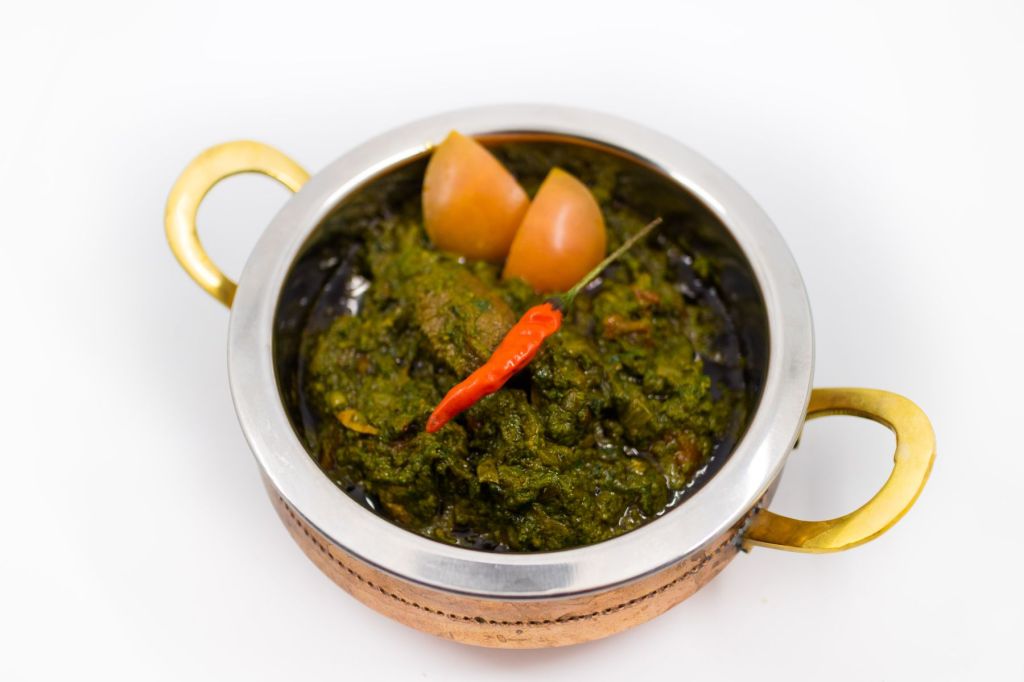
Punjab’s food grows out of its fields. The plains produce wheat in abundance, dairy runs through almost every meal, and the clay tandoor has been at the centre of village life for generations. The result is not complicated cooking but generous cooking: breads straight from the oven, greens slow-cooked for hours in winter, and a dollop of white butter on top. This guide explains the traditions behind the Punjabi table, and how to find them when you travel.
Wheat, and the tandoor
Bread is the backbone of a Punjabi meal: roti, naan, stuffed parathas and kulchas appear at most home meals. In villages, open-air tandoors dug into the ground were once shared: women brought their dough to be baked, and the communal oven became a meeting place. Rural households still cook on a chullah (stove) and in a bhatti, a brick or clay oven fired from one side.
The tandoor also travelled. After Partition in 1947, Punjabi refugees brought tandoor cooking to Delhi and beyond, which is why tandoori dishes are now found across India.
Dairy at every meal
Punjab is a major dairy state, and milk becomes butter, curd, buttermilk and lassi. Rather than relying on elaborate sauces, Punjabi cooks enrich food with ghee, white butter and cream. Lassi, salty or sweet, is the summer drink, and it is also served with stuffed parathas at breakfast.
Winter: saag and makki
The dish most Punjabis associate with home is sarson ka saag: mustard greens, often mixed with spinach or bathua, cooked slowly and topped with ghee or white butter. It is eaten from about November to February, with makki ki roti, a flatbread of maize flour, and often with jaggery and white butter on the side. If you travel in winter, order it wherever you see it.
Everyday dishes
- Dal and pulses: kaala chana (black chickpeas), rajma and kadhi with roti or rice make up many lunches.
- Stuffed parathas: potato, cauliflower or radish, with curd and pickle.
- Tandoori dishes: tandoori chicken originated in undivided Punjab before Partition, alongside tandoori paneer and breads such as lachha paratha.
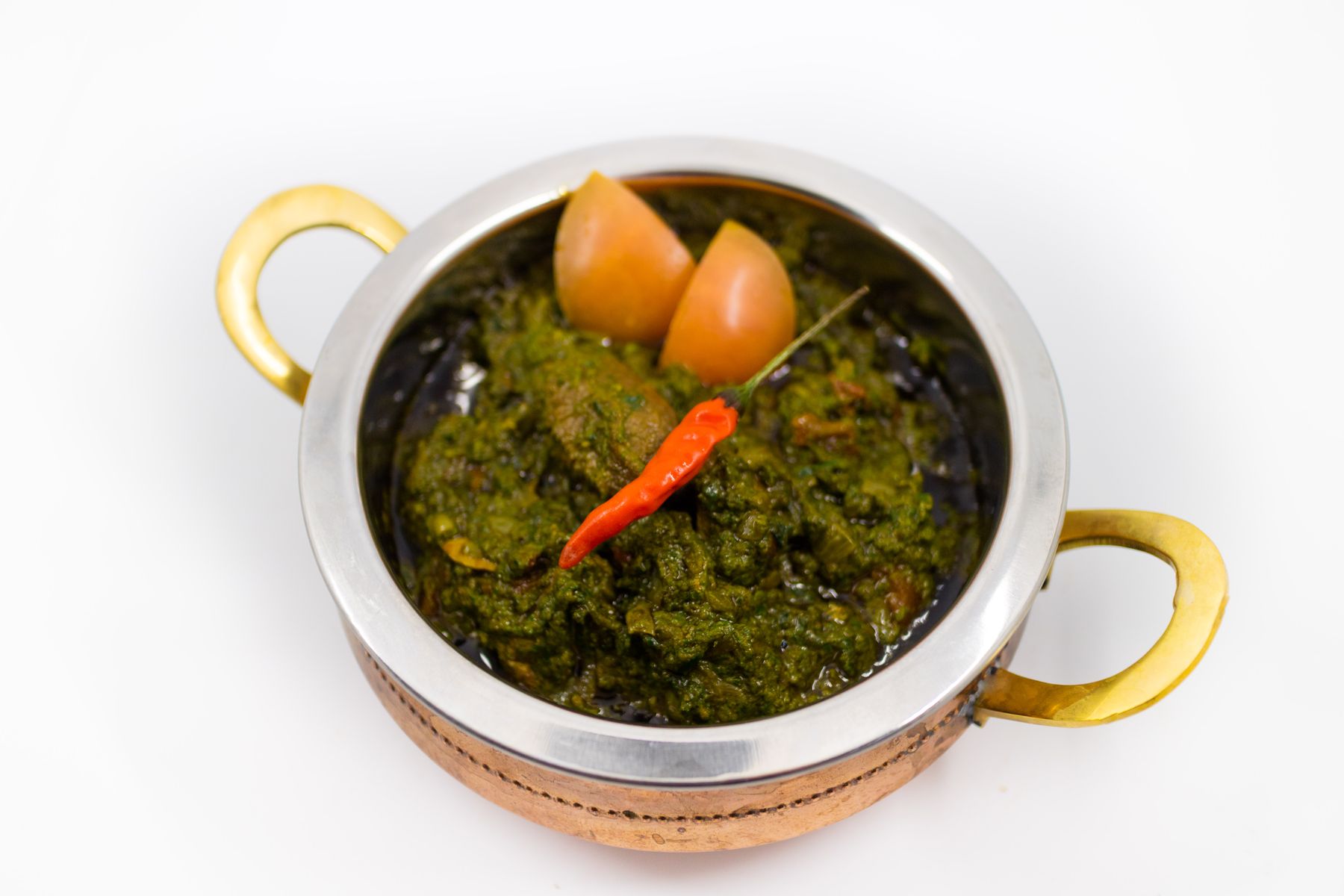
Amritsar’s kulcha
Amritsar has a bread of its own. The Amritsari kulcha is stuffed with spiced potato, onion and dried pomegranate seeds and baked in the tandoor until crisp and flaky. Many dhabas keep a separate tandoor just for kulcha. The related pathi kulcha is a breakfast favourite, eaten with butter, chickpea curry, yogurt or chutney. Our Amritsar guide has more on the city’s food.
Sweets and festival food
- Summer: kheer and falooda.
- Winter: gajar ka halwa and panjiri, a roasted mix of wheat flour, ghee, nuts and sugar.
- Lohri, in January, marks the end of winter and the rabi harvest with gajak, sesame sweets and gur-rewri around the bonfire.
The langar
No account of Punjabi food is complete without the langar, the free community kitchen found at every gurdwara. Everyone sits together on the floor and eats the same simple vegetarian meal, whatever their faith, caste or background. At the Golden Temple in Amritsar, the langar runs around the clock and feeds more than 100,000 people a day. Visitors are welcome to eat and to volunteer.
- Cover your head and remove your shoes.
- Sit in the rows, accept what is served with both hands, and take only what you will eat.
- Offer to help with serving or washing up if you have time.
Eating well as a traveller
- Travel in winter for saag. November to February is the season for sarson ka saag and makki ki roti, and the weather is also best for sightseeing.
- Eat at dhabas. Roadside dhabas along the highways serve fresh rotis from the tandoor; busy ones turn food over quickly.
- Ask for less butter if you prefer. Generosity is the default.
- Vegetarians eat very well in Punjab, and the langar is always vegetarian.
Plan the rest of your trip with our Punjab guide, and continue to Anandpur Sahib, Patiala and Kapurthala.
Sources and image credits
Facts were checked on 29 October 2026:
- National Virtual Library of India: Cuisine of Punjab
- Wikipedia: Punjabi tandoori cooking
- SBS Food: Punjabi cuisine (17 November 2021)
- The Tribune: Kulcha, crown jewel of street food in Amritsar (20 September 2025)
- The National: Inside the Golden Temple’s free kitchen (13 October 2023)
Photography via Pexels, used under the Pexels License: Sutee Pheera (saag). A stock image, not the author’s own.
Seasonal dishes depend on the harvest. Ask what is fresh when you order.