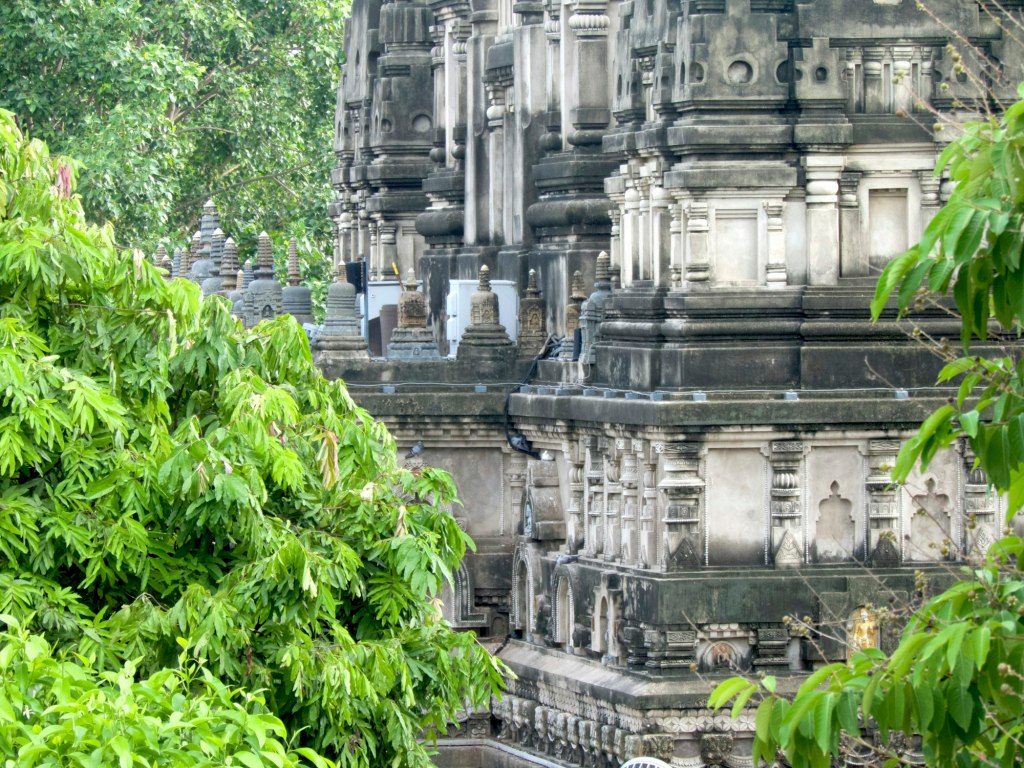
Bodh Gaya, in southern Bihar, is where the Buddha is believed to have attained enlightenment, and it is the most important of all Buddhist pilgrimage sites. Pilgrims come from every Buddhist country in Asia and beyond, and the small town is ringed with temples and monasteries in their national styles.
The Mahabodhi Temple
The first temple here is attributed to the emperor Ashoka in the 3rd century BCE. The present brick temple, about 50 metres tall, dates from roughly the 5th or 6th century CE, in the late Gupta period. It is a UNESCO World Heritage Site. West of the temple grows the Bodhi Tree, believed to be a direct descendant of the tree under which the Buddha sat.
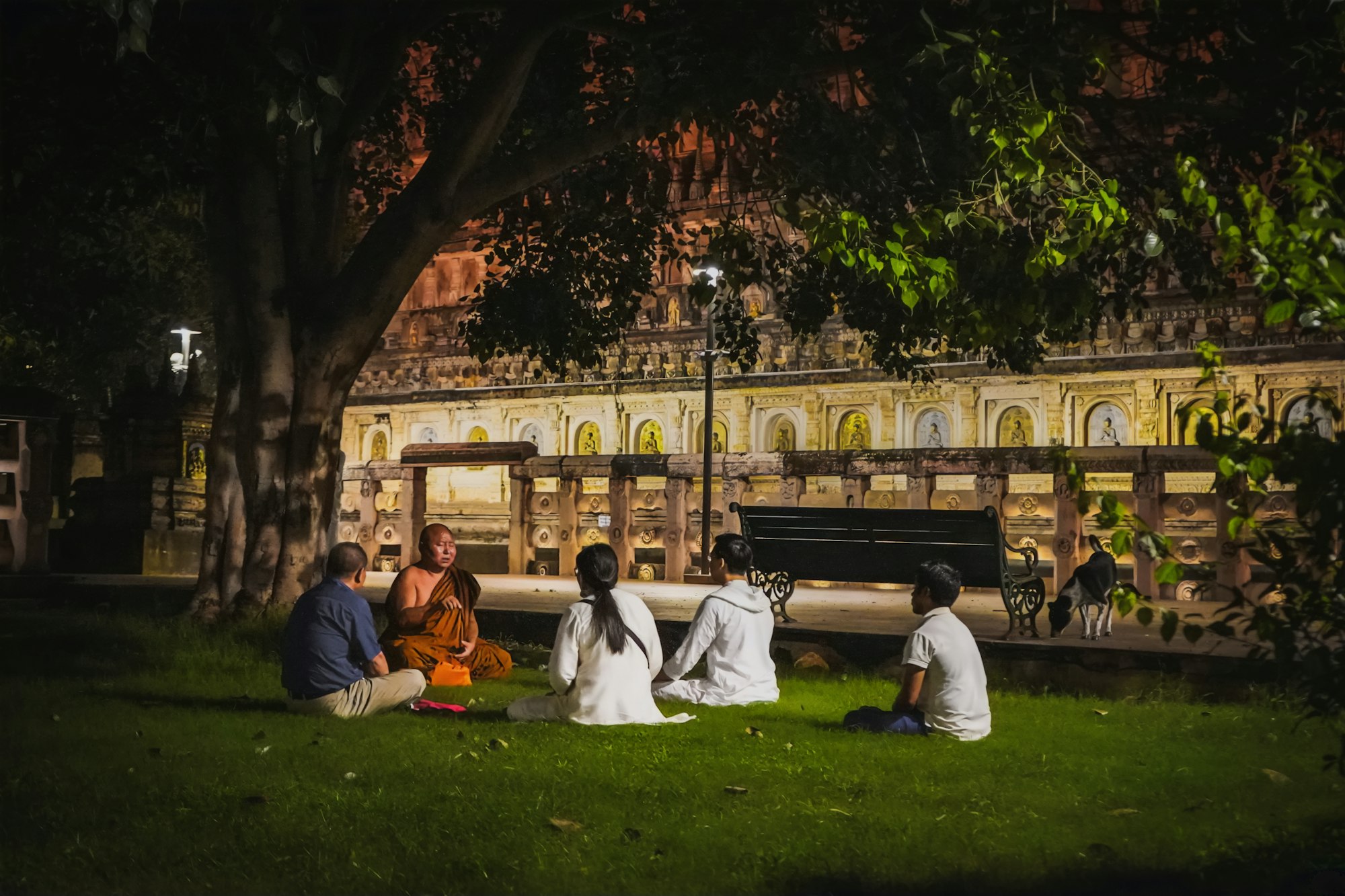
The atmosphere is what most visitors remember: monks and lay pilgrims walking clockwise around the temple, chanting, prostrating and meditating under the trees. Early morning and evening are the most peaceful times.
Etiquette
- Dress modestly, with shoulders and knees covered.
- Remove shoes where asked and walk clockwise around the temple and stupas.
- Keep your voice low and ask before photographing people at prayer.
The monasteries
Around the town, temples built by communities from countries such as Thailand, Japan, Bhutan and Tibet each reflect their own architecture and traditions. Walking between them is a quiet way to spend an afternoon.
Practicalities
- Bodh Gaya is about 16 km from Gaya, which has a railway station and an airport, and about 115 km from Patna.
- October to March is the most comfortable season and the busiest for pilgrims.
- Combine with Rajgir and Nalanda. See our guide to Nalanda and Rajgir and our Bihar guide.
Sources and image credits
Facts that can change were checked on 31 October 2026:
Photography: Prashanth Karnam via Unsplash (Unsplash License); Nayan Bhalotia via Unsplash (Unsplash License). Stock images, not the author’s own.
Arrangements for visitors at the Mahabodhi Temple are set by the temple management. Check current rules on arrival.