Nalanda and Rajgir lie a short drive apart in southern Bihar and are usually visited together, often on the way between Bodh Gaya and Patna. One is a great archaeological site; the other a small town ringed by hills, rich in Buddhist and Jain associations.
Nalanda Mahavihara
Nalanda was a monastic university that taught for some eight centuries, from the 5th to the 13th century CE, drawing students and scholars from across Asia before it was sacked and abandoned. The excavated site, a UNESCO World Heritage Site, covers 23 hectares and contains the remains of 11 monasteries and 14 temples, along with stupas and shrines in red brick, and art in stucco, stone and metal.
Without context the ruins can look like rows of brick walls, so it is worth hiring a guide or visiting the site museum first. Go early: there is little shade.
Rajgir
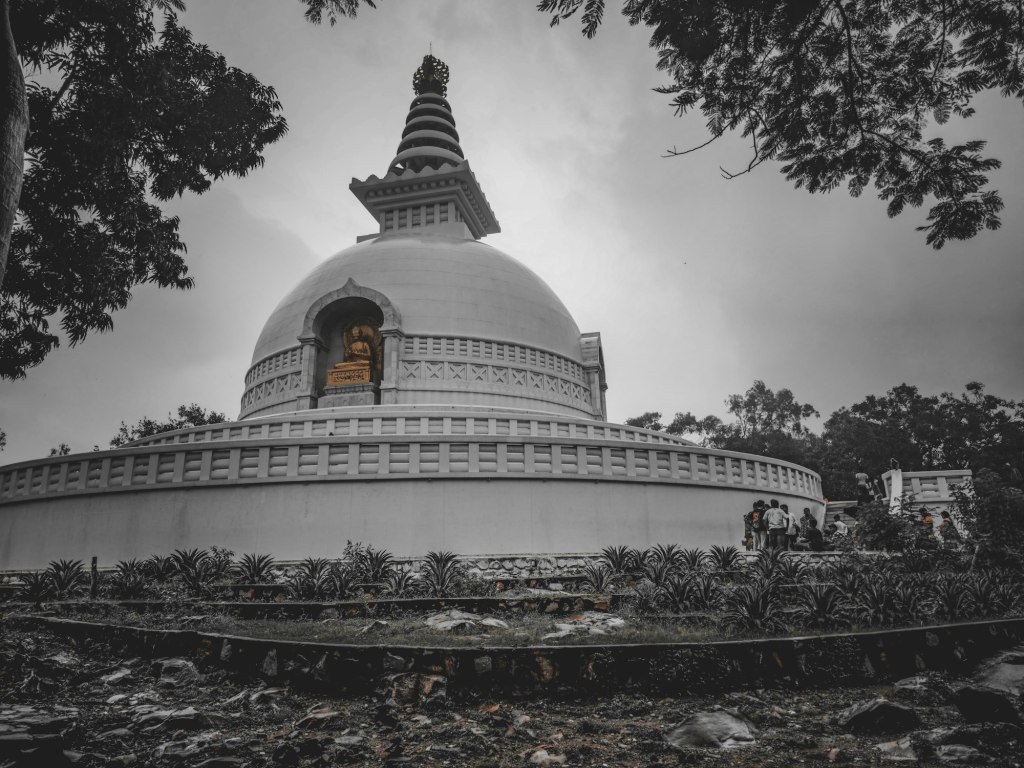
Rajgir, the ancient capital of Magadha, is surrounded by low hills. The Buddha spent time here, and it is also important to Jains. On Ratnagiri hill stands the white Vishwa Shanti Stupa, first completed in 1969 by the Japanese Buddhist order Nipponzan Myohoji. Nearby is Griddhakuta, or Vulture Peak, where the Buddha is said to have taught. The town also has hot springs and remains of ancient walls.
Practicalities
- Allow a full day for both, or stay a night in Rajgir.
- October to March is the best time; summers are very hot.
- Pair with Bodh Gaya for a short Buddhist circuit. See our Bihar guide.
Sources and image credits
Facts that can change were checked on 31 October 2026:
- UNESCO: Archaeological Site of Nalanda Mahavihara
- Wikipedia: Vishwa Shanti Stupa, Rajgir
- Wikipedia: Rajgir
Photography: Sumeet Singh via Unsplash (Unsplash License). Stock images, not the author’s own.
Site arrangements, ropeway services and opening details can change. Check locally before you go.