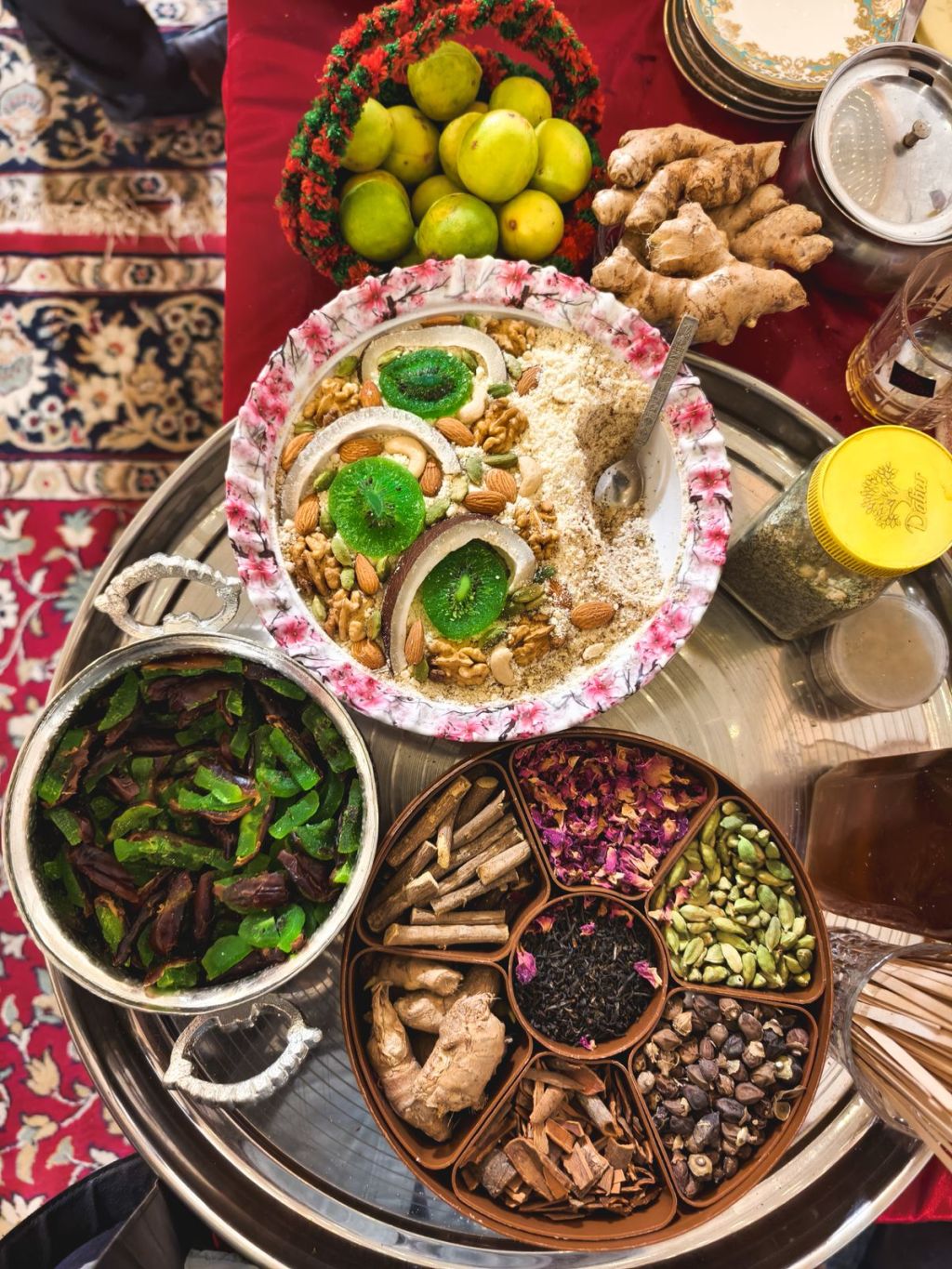
In the Kashmir Valley, food follows the calendar and the occasion. Mornings start with bread from the neighbourhood baker and a pink, salted tea. Winter brings a slow-cooked mutton breakfast sold before the sun is properly up. Weddings bring the wazwan, a feast cooked overnight by specialist chefs and shared from one copper plate by four people at a time. This guide explains the main traditions, the dishes worth knowing, and how to eat well as a visitor.
Two kitchens, one valley
Kashmiri cooking is often described as two related traditions: the cooking of Kashmiri Muslims, which reaches its height in the wazwan, and the cooking of Kashmiri Pandits, the Valley’s Hindu community. Both are built on lamb, rice, yogurt and a small set of spices, but they flavour food differently.
- Wazwan cooking leans on shallot paste (pran), and on fennel, cardamom, cinnamon, cloves and dried red chilli. Sahapedia’s account of wazwan singles out shallot paste as the flavour that sets it apart from Mughlai cooking in Delhi, Lucknow and Hyderabad.
- Kashmiri Pandit cooking generally avoids onion, garlic and tomato. Food is cooked in mustard oil and flavoured with asafoetida, fennel and dry ginger, and it is usually not garnished with coriander.
The wazwan
The word combines waza, a cook, with wan, a shop. Wazas set up temporary kitchens at the host’s home, and a head chef, the vasta waza, oversees everything from preparing the meat to the final dish. A full royal wazwan is often described as thirty-six courses, many of them meat. Sahapedia notes that the feast grew from about seven dishes into one of twelve to twenty-four.
Guests sit in groups of four around a large copper plate, the trami (also spelt traem). Hands are washed at the table over a portable basin, the tash-t-naer. The plate arrives heaped with rice and the first dishes, and the waza’s team keeps bringing more.
- Tabak maaz: lamb ribs simmered with spices, then fried in ghee until crisp.
- Rista: meatballs in a red, chilli-coloured gravy. The meat is pounded by hand on a flat stone with a wooden mallet, with fat added until it turns pale pink.
- Rogan josh: lamb in a deep red gravy.
- Aab gosht: lamb in a mild, milk-enriched gravy flavoured with fennel.
- Methi maaz: tripe cooked with fenugreek.
- Gushtaba: large, soft meatballs in a yogurt gravy (yakhni). Gushtaba traditionally closes the main meal.
Yogurt and chutneys come in small bowls alongside, and a cup of kahwa often follows. Vegetarian dishes exist but are fewer: nadru (lotus stem), haakh (a collard green), paneer in tomato gravy (tamatar chaman) and dum aloo. Wazwan is a wedding and celebration meal first. Visitors usually taste it at restaurants that serve wazwan dishes or set menus, rather than at a full feast.
The Pandit table
The Pandit kitchen shares many dish names with the wazwan but cooks them its own way. Rogan josh is made without onion or garlic, its colour coming from Kashmiri chilli, its depth from fennel, dry ginger and asafoetida.
- Dum olav (dum aloo): potatoes in a chilli-red, fennel-scented gravy, a feast staple.
- Nadir yakhin: lotus stem in a spiced yogurt gravy.
- Haakh and monje haakh: collard greens, or greens with knol khol, cooked simply with asafoetida.
- Chaman (paneer) dishes, such as lyder chaman in a turmeric gravy.
- Rice and plain yogurt are everyday staples. Vegetables are traditionally sun-dried in summer and autumn to last through the winter.
Tea: noon chai and kahwa
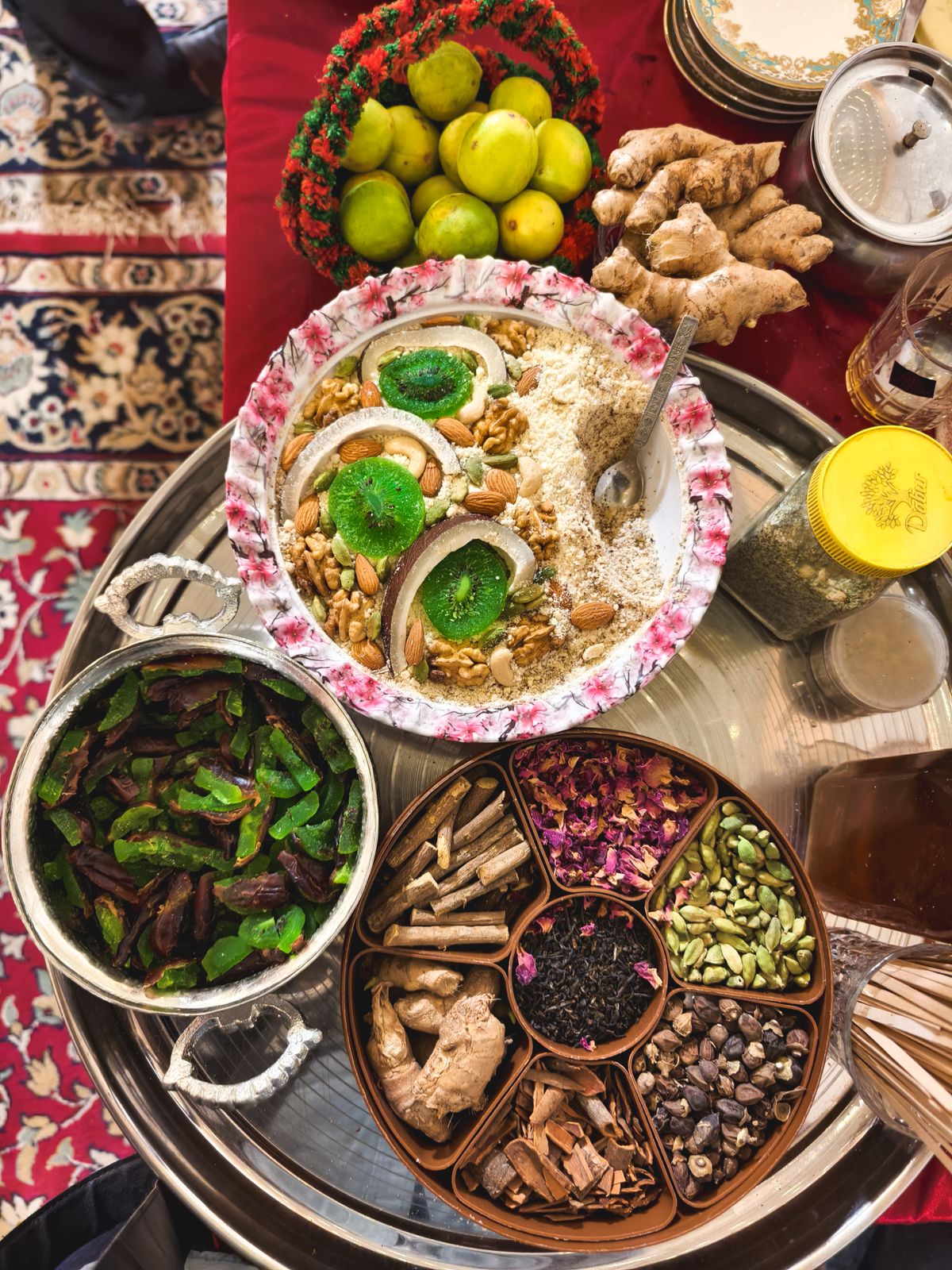
Noon chai (also called pink tea, or sheer chai by Kashmiri Pandits) is made from green tea leaves boiled for a long time with a pinch of baking soda, then finished with milk and salt. The baking soda turns the brew a deep red, and the milk turns it pink. Noon means salt. Many households drink it several times a day.
Kahwa is the lighter, sweeter guest tea: green tea brewed with saffron and spices. It often closes a wazwan meal and is offered to visitors.
The kandur: bread for every hour
The neighbourhood baker, the kandur, bakes in a tandoor from early morning. Bread matters here: it is eaten with tea through the day, though it is not usually served with wazwan.
- Girda: a round, crusty, soft-centred loaf, the classic breakfast bread.
- Lavasa: thin, unleavened and crisp, eaten plain or as a wrap.
- Tsochwor (chochwor): a soft ring of bread with poppy seeds, often dunked in noon chai.
- Kulcha: dry and crumbly, sometimes topped with a peanut or poppy seeds.
- Bakarkhani and sheermal: richer, layered or sweet breads for festive days.
Winter harissa
From roughly October to March, shops in Srinagar’s old city make harissa: mutton and rice cooked overnight with spices in a copper or clay pot set over a wood fire, then stirred and pounded into a smooth paste. It is a breakfast dish, served hot with a drizzle of fat, minced meethi and kandur bread. Shops open early and often sell out by mid-morning. People’s Archive of Rural India describes the harissa shops of the downtown Nawakadal and Gratabal areas, some run by the same families for generations.
Saffron
Kashmir saffron, grown mainly on the raised karewa tablelands around Pampore, received a Geographical Indication tag in 2020. The crocus flowers in autumn. Saffron colours kahwa, sweets and some festive rice dishes. If you buy it, buy from certified sellers and look for the GI mark: cheaper imitations are common.
Eating well as a visitor
- Order a few dishes, not a feast. Rista, rogan josh, gushtaba and tabak maaz are the usual introduction. Vegetarians can ask for nadru, haakh, dum aloo and chaman.
- Ask what the Pandit versions are. Some restaurants and homestays cook Pandit-style dishes; others only cook wazwan.
- Go early for bread and harissa. Kandur bread is best warm in the morning, and harissa is a winter breakfast only.
- At a shared plate, eat from the part of the trami in front of you, with your right hand, and let the waza serve.
- Ramzan changes the rhythm. Many eateries close by day and open for iftar in the evening.
Planning a trip? See our Kashmir Valley guide, the food notes on our Kashmir places page, and five days in Kashmir, which takes in the old city where many of these foods are made.
Sources and image credits
Facts that can change were checked on 29 October 2026:
- Sahapedia: Wazwan, a culinary legacy
- Wikipedia: Wazwan
- Hamiast: Kaeshur Khyen, the cuisine of Kashmiri Pandits
- Wikipedia: Noon chai
- Homegrown: Kashmir’s kandur bakeries
- People’s Archive of Rural India: In Srinagar, harissa is best served hot
- S.S. Rana & Co.: Kashmir saffron gets the GI tag (30 July 2020)
Photography via Pexels, used under the Pexels License: Haziq Farooqi (wazwan). A stock image, not the author’s own.
Menus, opening hours and seasonal availability change. Check locally before you go.