Most Ladakh journeys follow the same shape: a few days in Leh, then out along one or two valleys to the high lakes. The places are famous for good reason, and fragile for the same reason. This guide covers the four classic stops, in the order that suits your body, with notes on how to visit each without leaving a mark. If you have not planned your season, route in or acclimatisation yet, start with our Ladakh planning guide.
Leh and the Indus valley
Leh is where you rest, arrange permits and taxis, and get used to the altitude, so it is worth more than a transit night. The old town of mud-brick houses climbs towards Leh Palace, built in the 17th century for the Namgyal kings. Above it, the Namgyal Tsemo gompa and its prayer flags look over the valley, and Shanti Stupa catches the evening light on the opposite ridge.
- First two days: rest, then short, flat walks in the old town and the bazaar. Leave the climb to Shanti Stupa or the palace until you feel well.
- Day trips once acclimatised: Thiksey for early prayers, Hemis (Ladakh’s largest monastery), Shey and Stok.
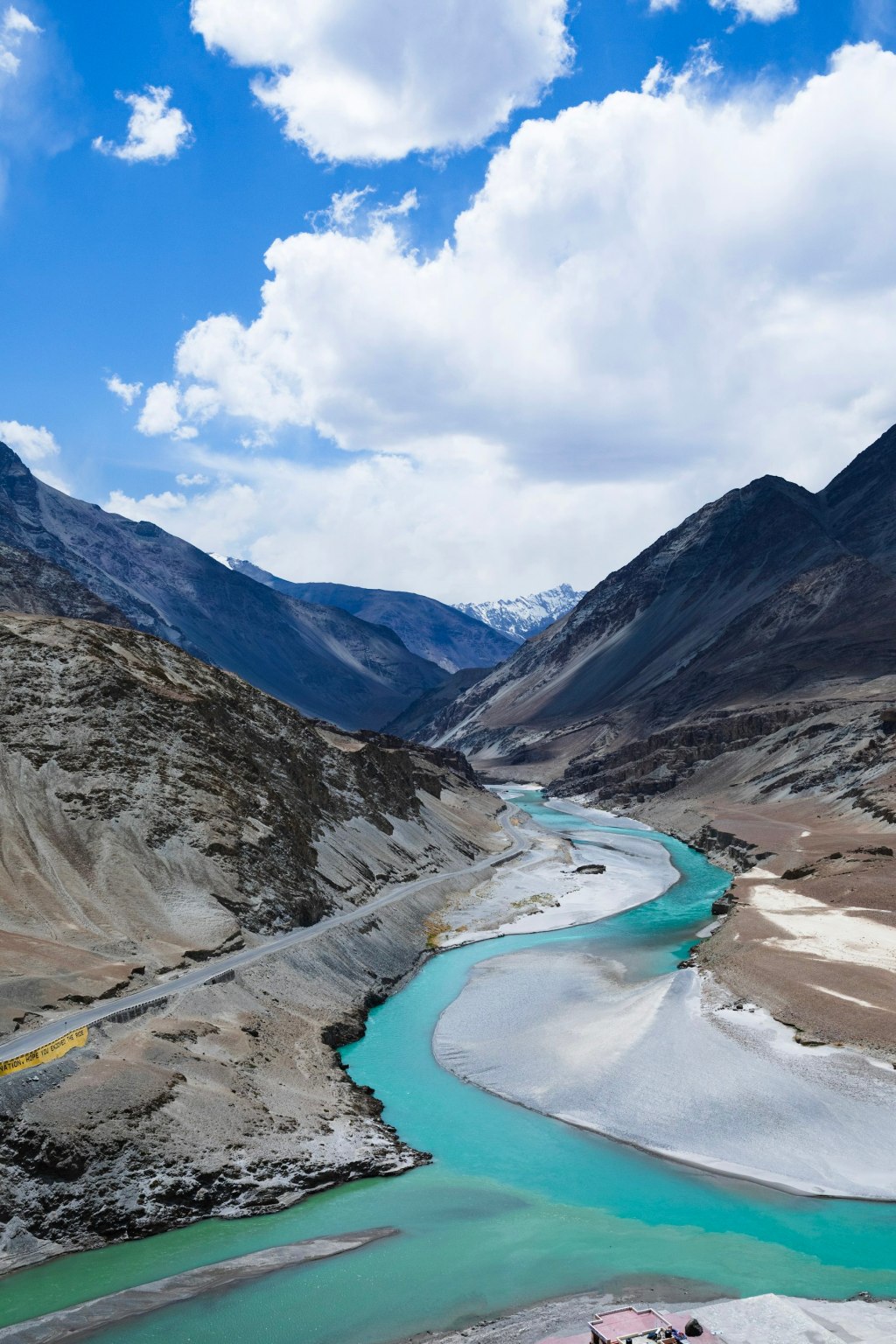
- West along the Indus: Sangam, where the Zanskar river meets the Indus, then Basgo, Likir and Alchi, whose 11th-century murals are among the oldest surviving in Ladakh. The Sham valley villages make a gentle first overnight outside Leh.
Nubra valley
North of Leh, the road climbs over Khardung La, one of the highest motorable passes in the world, and drops into the wide valleys of the Shyok and Nubra rivers. Nubra is lower than the lakes, which makes it a good first trip out of Leh.
- Diskit monastery and its large Maitreya statue look down over the valley.
- Hunder has sand dunes between the river and the mountains.
- Turtuk, a Balti village in lower Nubra, opened to visitors in 2010. Its language, food and architecture differ from those of Buddhist Ladakh.
- Do not linger at the top of Khardung La: stop briefly, then descend.
Pangong Tso
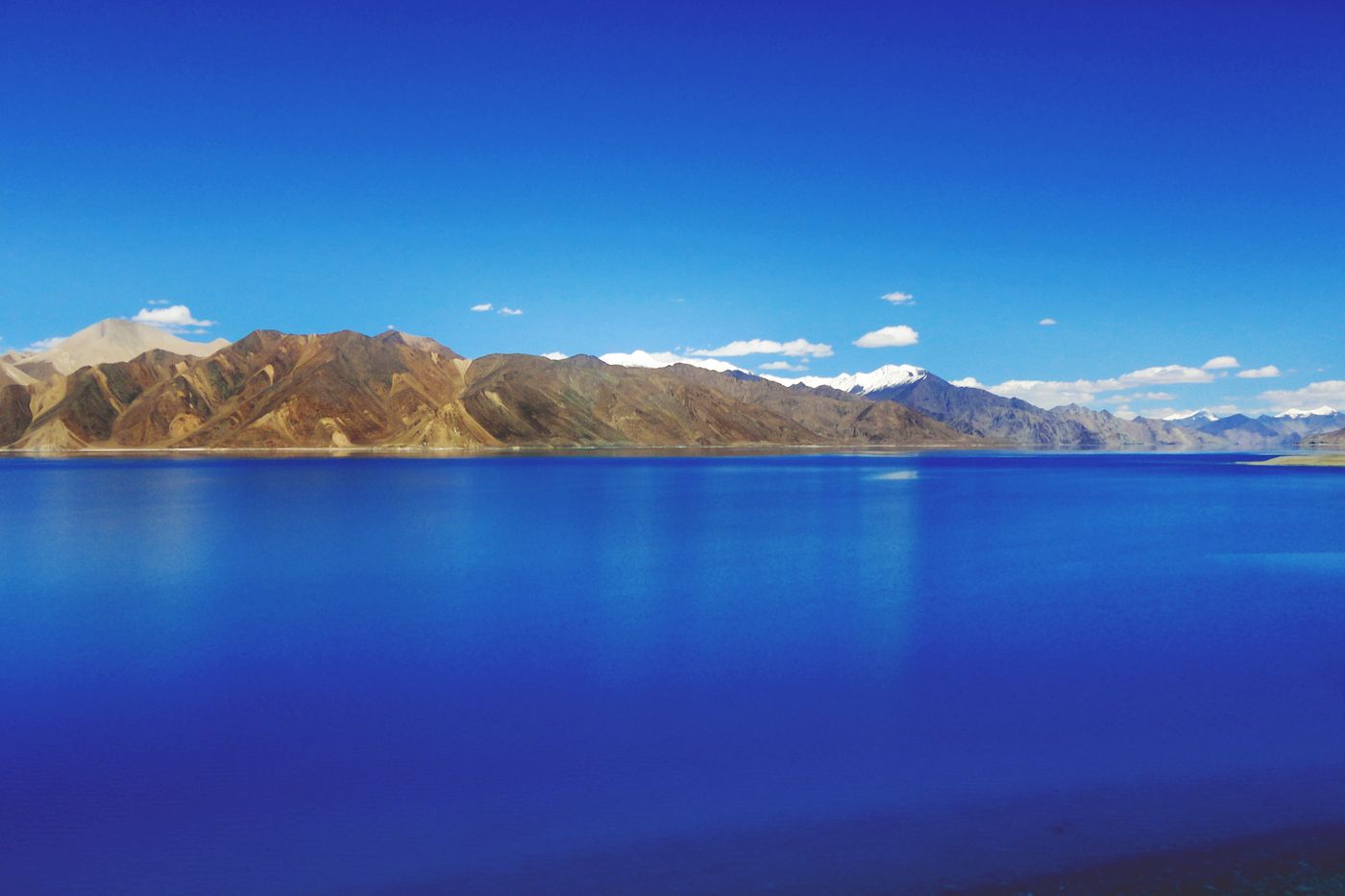
The long, blue lake of Pangong lies on the Changthang plateau east of Leh, reached over Chang La. It stretches far beyond the Indian side into Tibet, and its colour shifts with the light through the day. It is also higher than Leh, so sleep there only once you have acclimatised, ideally after a night in Nubra.
- Accommodation at the lake is mostly basic camps and homestays, many of them seasonal. Nights are very cold, even in summer.
- A direct route between Nubra and Pangong along the Shyok depends on road conditions. Check locally the day before.
- Stay on the road. Driving onto the lakeshore and the fragile grassland around it is penalised: in June 2026, four vehicles were fined ₹50,000 each for driving off-track near Pangong.
Tso Moriri
Tso Moriri, south-east of Leh, is higher and quieter than Pangong, at about 4,522 metres. It was designated a Ramsar wetland of international importance in 2002. The only year-round settlement on its shore is Korzok, with a monastery about 400 years old. The Changpa, nomadic herders of yaks, sheep and goats, are the area’s main inhabitants.
- The lake is a breeding ground for the bar-headed goose, and black-necked cranes are seen in the area. Keep well back from nesting birds.
- Kiang, the Tibetan wild ass, are disturbed by jeeps driving off the road. Do not chase wildlife for photographs.
- Because of the altitude, Tso Moriri belongs at the end of a trip, not the start. Combine it with Tso Kar or Hanle only if you are well acclimatised.
Hanle and the dark sky
Further south-east, Hanle is home to India’s first dark-sky reserve and the Indian Astronomical Observatory. Visitors are asked to keep artificial light to a minimum, use red-filtered torches, keep noise down and take all rubbish away.
Putting it together
- Days 1–2: rest in Leh.
- Days 3–4: the Indus monasteries and the Sham valley.
- Days 5–6: over Khardung La to Nubra, with a night at Diskit or Hunder.
- Days 7–8: Pangong, then back to Leh over Chang La.
- Add three or four days for Tso Moriri, Tso Kar or Hanle at the end.
Foreign nationals need a Protected Area Permit for Nubra, Pangong, Tso Moriri and Hanle. Indian citizens no longer need an Inner Line Permit, but registration and fees may apply. Details are in our planning guide and on the Ladakh guide.
Sources and image credits
Facts that can change were checked on 29 October 2026:
- Wikipedia: Tso Moriri (altitude, Ramsar designation, Korzok, wildlife)
- Business Today: off-road fines near Pangong (30 June 2026)
- Indian Institute of Astrophysics: regulations inside the Hanle Dark Sky Reserve
- Ladakh Tourism: tourist advisory
- Deccan Herald: Inner Line Permit removed for Indian citizens (2021)
Photography: Prabhav Kashyap Godavarthy (Sangam) via Unsplash, used under the Unsplash License; Avinash Patel (Pangong Tso) via Pexels, used under the Pexels License. These are stock images, not the author’s own.
Road conditions, camps and permit rules change by season. Check locally before you set out.