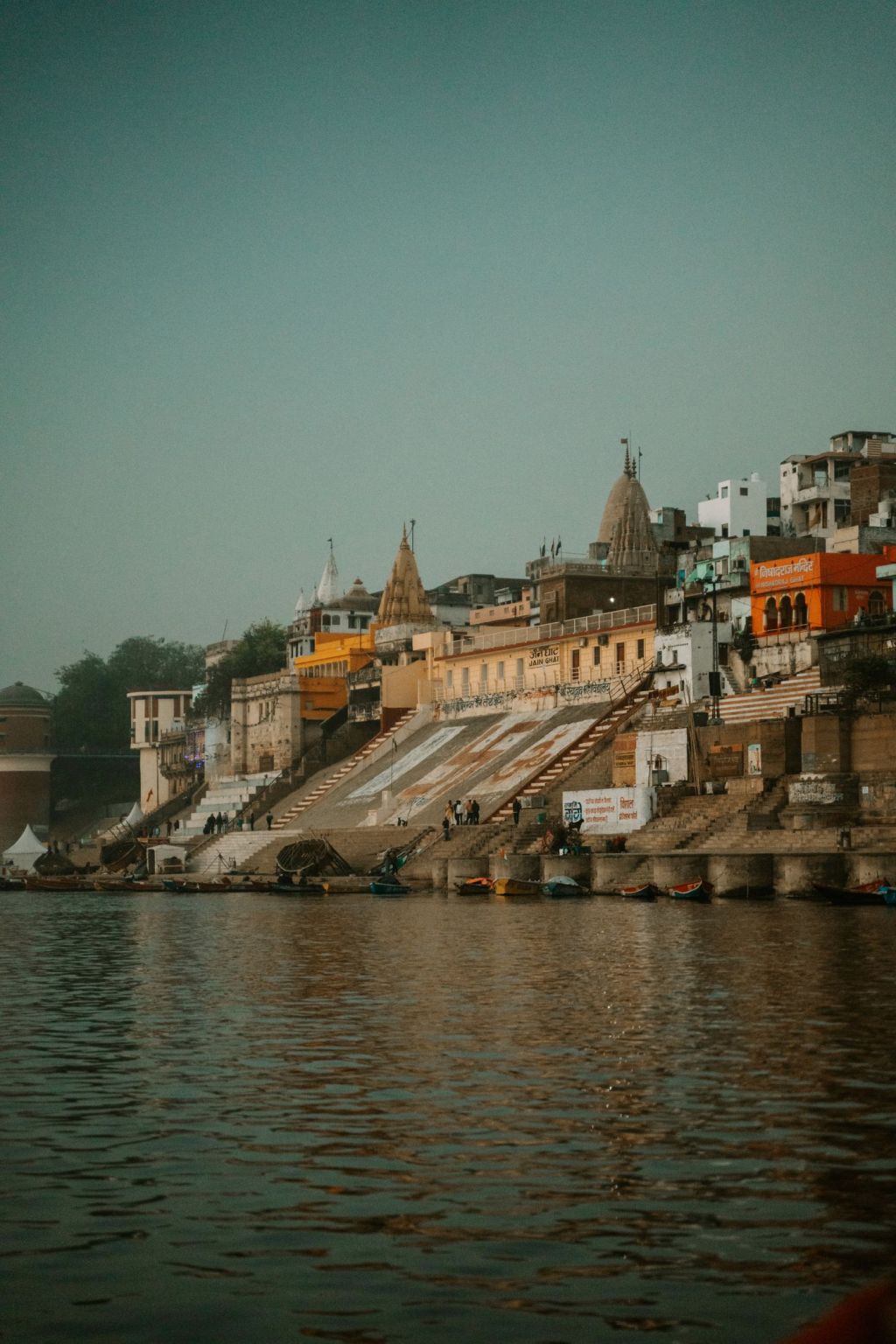
Varanasi, also called Kashi and Banaras, is one of the holiest cities in Hinduism and one of the most intense places in India to visit. Life, prayer and death all happen in public along a few kilometres of stone steps on the Ganga. A first visit goes best if you give it at least two nights, walk rather than rush, and remember that what you are watching is somebody’s faith.
The ghats, on foot and by boat
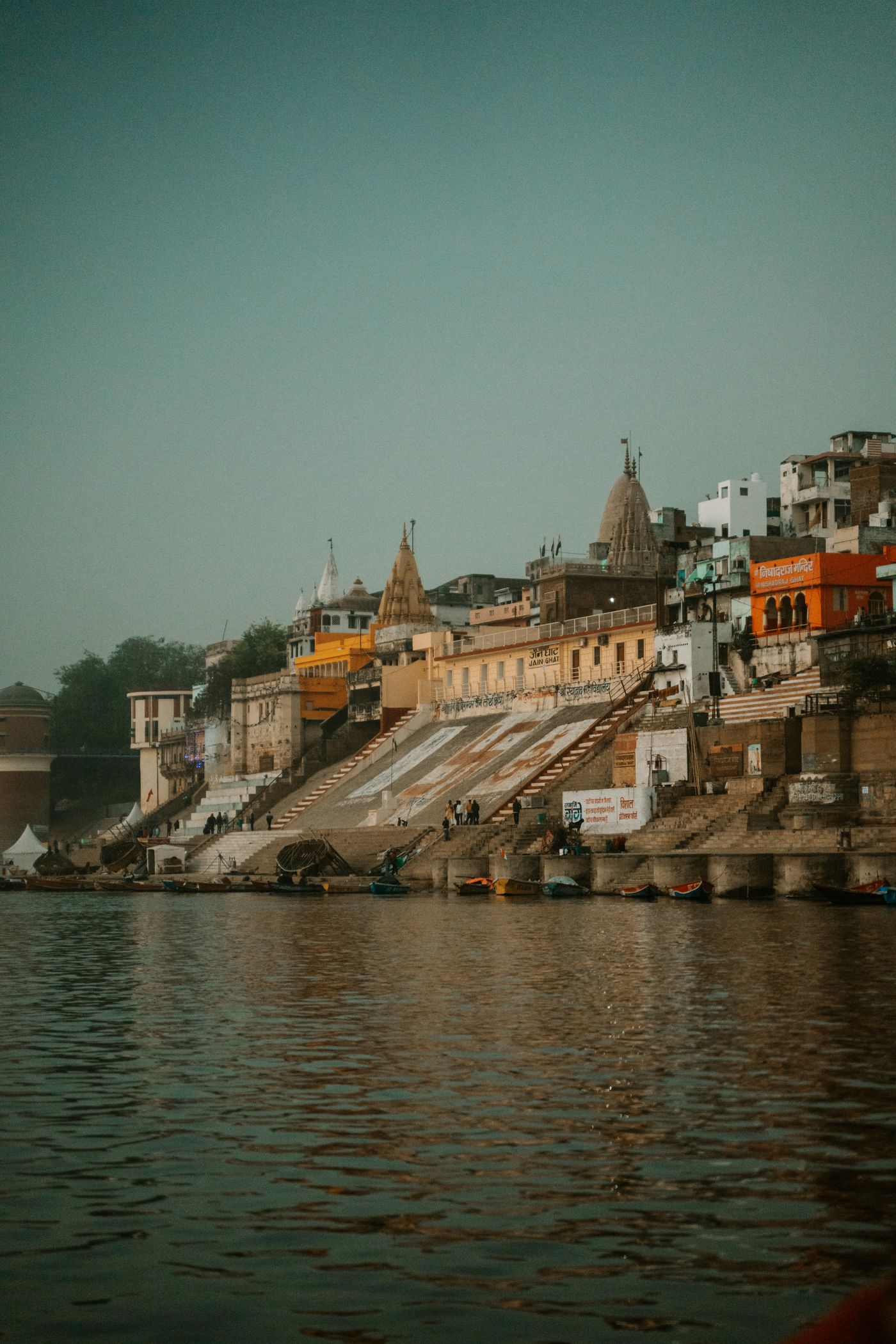
The city faces the river through a long line of ghats, stepped embankments that lead down to the water. Walking them from Assi Ghat in the south towards Dashashwamedh takes you past bathing pilgrims, temples, wrestlers, laundry and cricket games. Then see the same stretch from the water: a rowing boat at dawn, when the light falls on the façades, is the classic way to take in the scale of it. Agree the price and the route with the boatman before you board.
The cremation ghats: watch with care
At Manikarnika and Harishchandra ghats, cremations take place day and night. Many Hindus believe that dying or being cremated in Kashi brings liberation, and families travel a long way to be here. You may pass by and watch quietly from a distance, but do not photograph cremations, and refuse anyone who offers a paid “tour” of the pyres or asks for money for wood.
The evening aarti, and dawn at Assi
Every evening at dusk, priests at Dashashwamedh Ghat perform the Ganga aarti, a choreographed offering of lamps, incense, conch shells and chanting that lasts roughly 45 minutes. It is the busiest event in the city, so arrive well before sunset for a place on the steps, or watch from a boat on the river. The aarti at Assi Ghat is smaller and calmer. At dawn, Assi also hosts Subah-e-Banaras, a morning programme of aarti, chanting and classical music. Start times move with the season, so confirm them locally on the day.
- Ignore touts selling “reserved” seats.
- A small donation when the lamp comes past is customary but optional.
- Keep valuables close in the crowd, and plan your way out before it ends.
Kashi Vishwanath Dham
The Kashi Vishwanath temple, dedicated to Shiva, is the spiritual centre of the city. The present temple was restored in 1777–80 with the support of Maharani Ahilyabai Holkar of Indore, and Maharaja Ranjit Singh later gilded it. In December 2021 the Shri Kashi Vishwanath Dham corridor opened, linking the temple directly to the ghats on the river. Expect queues and security checks: phones, bags and leather items generally have to be left in lockers before you enter, and the rules for non-Hindu visitors and photography are set by the temple trust, so check its current guidance first.
A morning in Sarnath
Sarnath, a short drive from the city, is where the Buddha is believed to have given his first sermon. The great Dhamek Stupa stands among the excavated remains of monasteries, and the Sarnath Museum, the oldest site museum of the Archaeological Survey of India, holds the Lion Capital of Ashoka, the source of India’s national emblem. Its collection spans the third century BCE to the twelfth century CE.
- The museum is open 10 am to 5 pm and closed on Fridays, according to Incredible India.
- Pair it with the stupa and the remains in one quiet half-day, ideally in the morning.
A simple two-day plan
- Day 1: walk the ghats from Assi in the afternoon, then the evening aarti at Dashashwamedh.
- Day 2: a dawn boat ride or Subah-e-Banaras at Assi, the old lanes and Kashi Vishwanath Dham, then Sarnath (not on a Friday) in the afternoon.
Practical notes
- Getting there: Lal Bahadur Shastri International Airport (VNS) and Varanasi Junction station connect to most major cities.
- When to go: October to March is the most comfortable. Summers are very hot, and during the monsoon the river rises and can cover the lower ghats, which may limit boats and walks.
- Festivals: Dev Deepawali, in November, fills the ghats with lamps and visitors; book well ahead and expect higher prices.
- Dress: cover shoulders and knees, and wear shoes you can slip off at temples.
- Drones are not permitted over the ghats.
For Agra, Lucknow and more of the state, read our Uttar Pradesh guide. For pairing Varanasi with other regions and seasons, see how to plan a North India trip, or follow the Ganga upstream to Rishikesh.
Sources and image credits
Facts that can change were checked on 30 October 2026:
- Drishti IAS: Shri Kashi Vishwanath Dham corridor inaugurated (13 December 2021)
- Incredible India: Sarnath Museum (timings, Lion Capital)
- India Mapped: Varanasi Ganga aarti guide (ghats, Subah-e-Banaras, etiquette)
Photography: Stijn Dijkstra via Pexels (Pexels License). A stock image, not the author’s own.
Aarti times, temple rules and river conditions change. Confirm locally before you go.