New Delhi is wide avenues and roundabouts. Old Delhi is the opposite: the walled city of Shahjahanabad, founded by the Mughal emperor Shah Jahan in the seventeenth century, where a fort, a bazaar street and a great mosque still sit within a short walk of each other. It is crowded, loud and endlessly interesting, and it rewards an early start and comfortable shoes.
Start at the Red Fort
Shah Jahan commissioned the fort when he moved his capital from Agra to Delhi; it was completed in 1648. You enter through the Lahori Gate, named because it faces Lahore, and walk through the Chhatta Chowk, a covered bazaar that once sold silks and jewellery to the court. Inside are the Diwan-i-Aam, the hall of public audience, and the white-marble Diwan-i-Khas, the hall of private audience. Four museums opened in the old colonial barracks in 2019, covering 1857, the Jallianwala Bagh massacre, Subhas Chandra Bose and the Indian National Army, and Indian art.
- The Red Fort Complex was inscribed as a UNESCO World Heritage Site in 2007.
- Since February 2026 the fort is open every day, including Mondays, from sunrise to 9 pm, under an Archaeological Survey of India order reported by Business Today.
- Children under 15 enter free. Book tickets on the ASI’s official portal; online payment is slightly cheaper.
- Every year on 15 August, the Prime Minister raises the national flag here and addresses the country from the ramparts, so expect closures in the days around Independence Day.
Walk the length of Chandni Chowk
Chandni Chowk runs west from the Red Fort to the Fatehpuri Masjid. The bazaar was laid out in 1650, and its design is traditionally credited to Shah Jahan’s daughter, Jahanara Begum. A canal fed by the Yamuna once ran down its centre; it was filled in after 1857. Since 2021, the main 1.3 km road has been closed to motorised vehicles from 9 am to 9 pm, which makes walking easier, though the side lanes remain as dense as ever.
The street is a lesson in how many faiths share one road. Walking west from the fort you pass the Digambar Jain Lal Mandir, the Gauri Shankar Temple, the Central Baptist Church and Gurdwara Sis Ganj Sahib, which marks the place where the ninth Sikh Guru, Guru Tegh Bahadur, was executed on the orders of Aurangzeb in 1675. A small shrine was first built here in 1783; the present building dates mostly from after 1930. Cover your head, remove your shoes and leave them at the shoe counter before entering.
The lanes off the main road are where Old Delhi eats: fried parathas, jalebis and chaat on one side, and kebabs and slow-cooked Mughlai dishes in the streets around the Jama Masjid. Eat where food is cooked fresh in front of you and the turnover is high.
End at the Jama Masjid
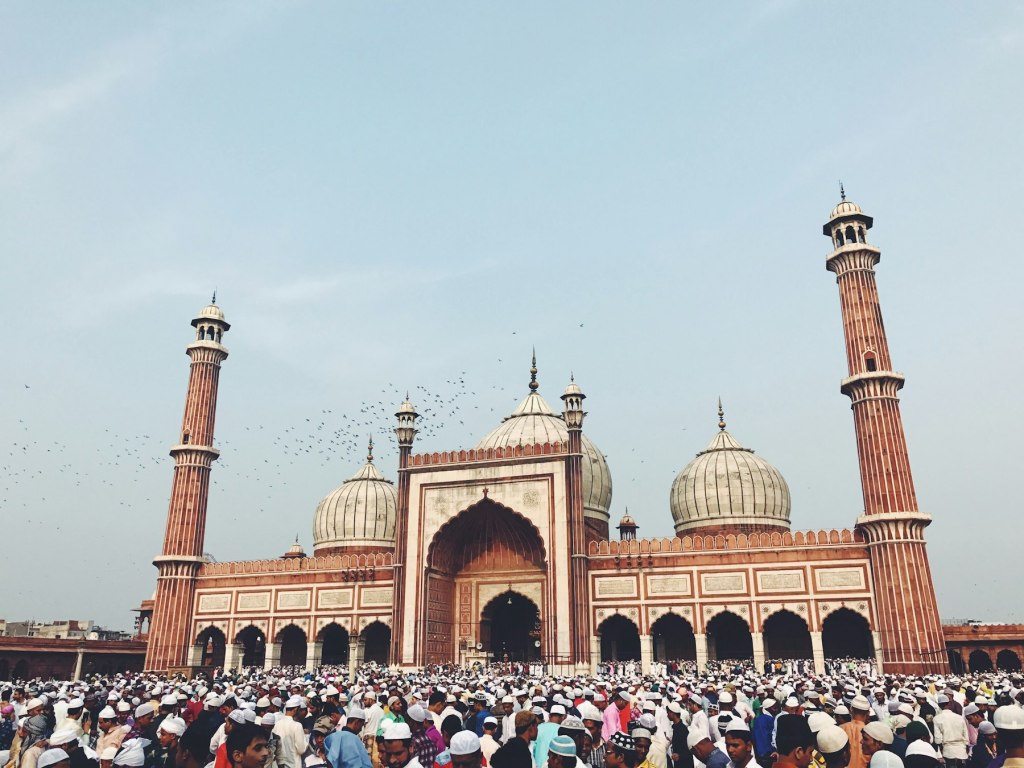
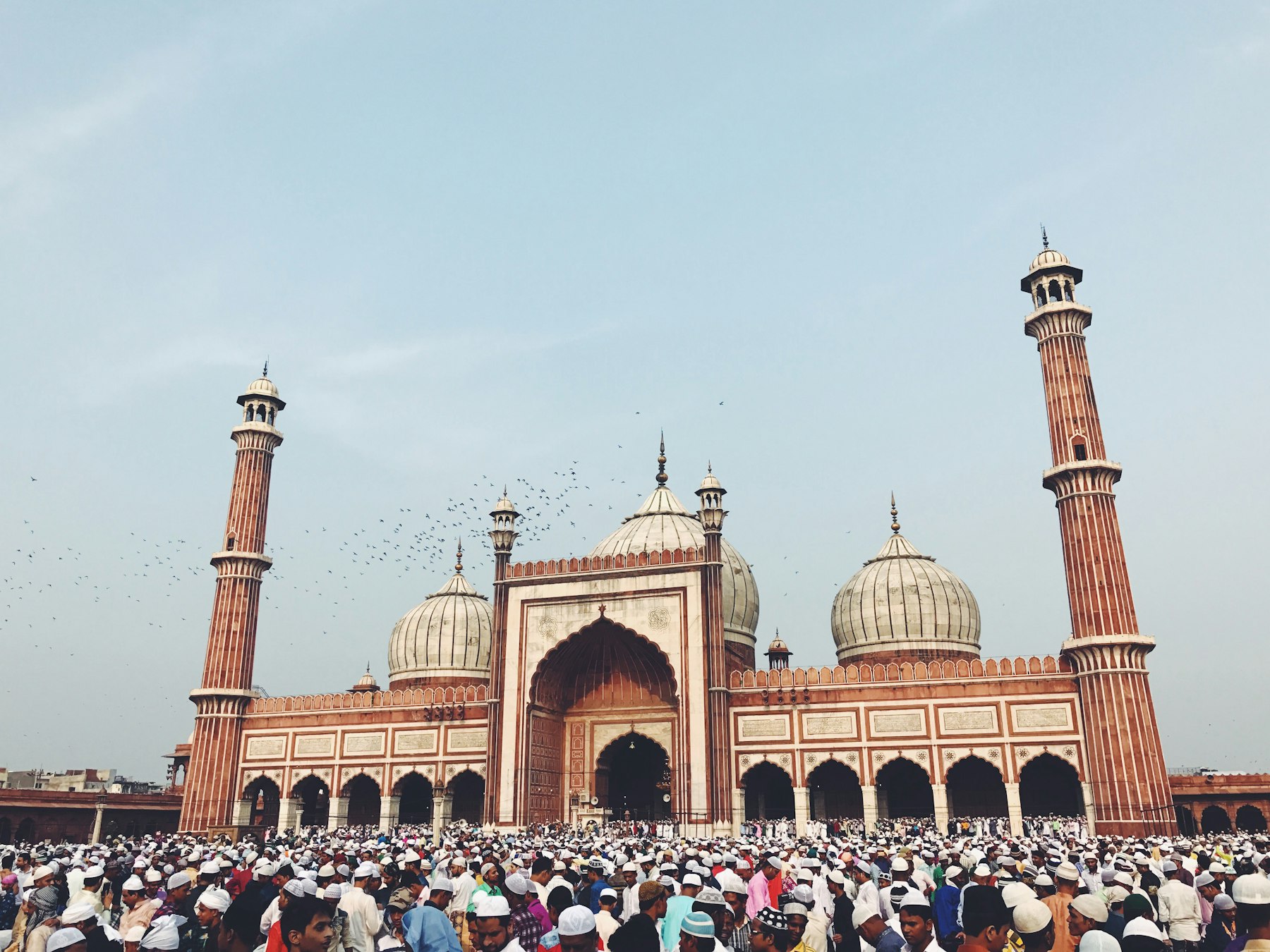
Built under Shah Jahan, the Jama Masjid stands on a rise south of Chandni Chowk, with two 40-metre minarets of red sandstone and white marble and a courtyard that Delhi Tourism says can hold 25,000 worshippers. Climb the steps for the view back over the old city.
- Delhi Tourism lists tourist hours as 8 am to sunset for foreign visitors and 11 am to sunset for Indian visitors. The mosque closes to visitors during prayers and after sunset.
- Indian visitors enter free; foreign visitors pay a fee.
- Dress modestly, covering arms and legs. Robes can be borrowed at the north gate. Shoes come off at the entrance.
- Friday midday prayers are the busiest time; avoid visiting then if you are sightseeing.
A simple plan for the day
- Morning: the Red Fort and one or two of its museums, before the heat and the crowds.
- Midday: walk Chandni Chowk west, stopping at Gurdwara Sis Ganj Sahib, then eat in the lanes.
- Afternoon: the Jama Masjid, timed outside prayer hours.
- Evening: back to the fort for its extended hours, or head out of the walled city.
Practical notes
- Getting there: take the Delhi Metro. Chandni Chowk station is on the Yellow Line; Lal Quila and Jama Masjid stations are on the Violet Line. Driving into the old city is slow and parking is scarce.
- Cycle-rickshaws are the easiest way through the lanes. Agree the fare before you set off.
- Crowds: keep valuables close in the bazaars, and expect the busiest hours in the afternoon and before festivals.
- When to go: October to March is the most comfortable. Summer days are very hot, and winter mornings can be smoggy and foggy.
For more of the city, read our Delhi guide, or step back further in time at Mehrauli Archaeological Park. Planning a longer route? Start with how to plan a North India trip.
Sources and image credits
Facts that can change were checked on 30 October 2026:
- Business Today: Red Fort to remain open daily (22 February 2026)
- Wikipedia: Red Fort (history, UNESCO listing, museums)
- Wikipedia: Chandni Chowk
- Business Today: Chandni Chowk a no-vehicle zone (17 June 2021)
- Wikipedia: Gurdwara Sis Ganj Sahib
- Delhi Tourism (official): Jama Masjid
Photography: Naveed Ahmed via Unsplash (Unsplash License). A stock image, not the author’s own.
Opening hours, fees and traffic rules change. Check the ASI and Delhi Tourism before you go.