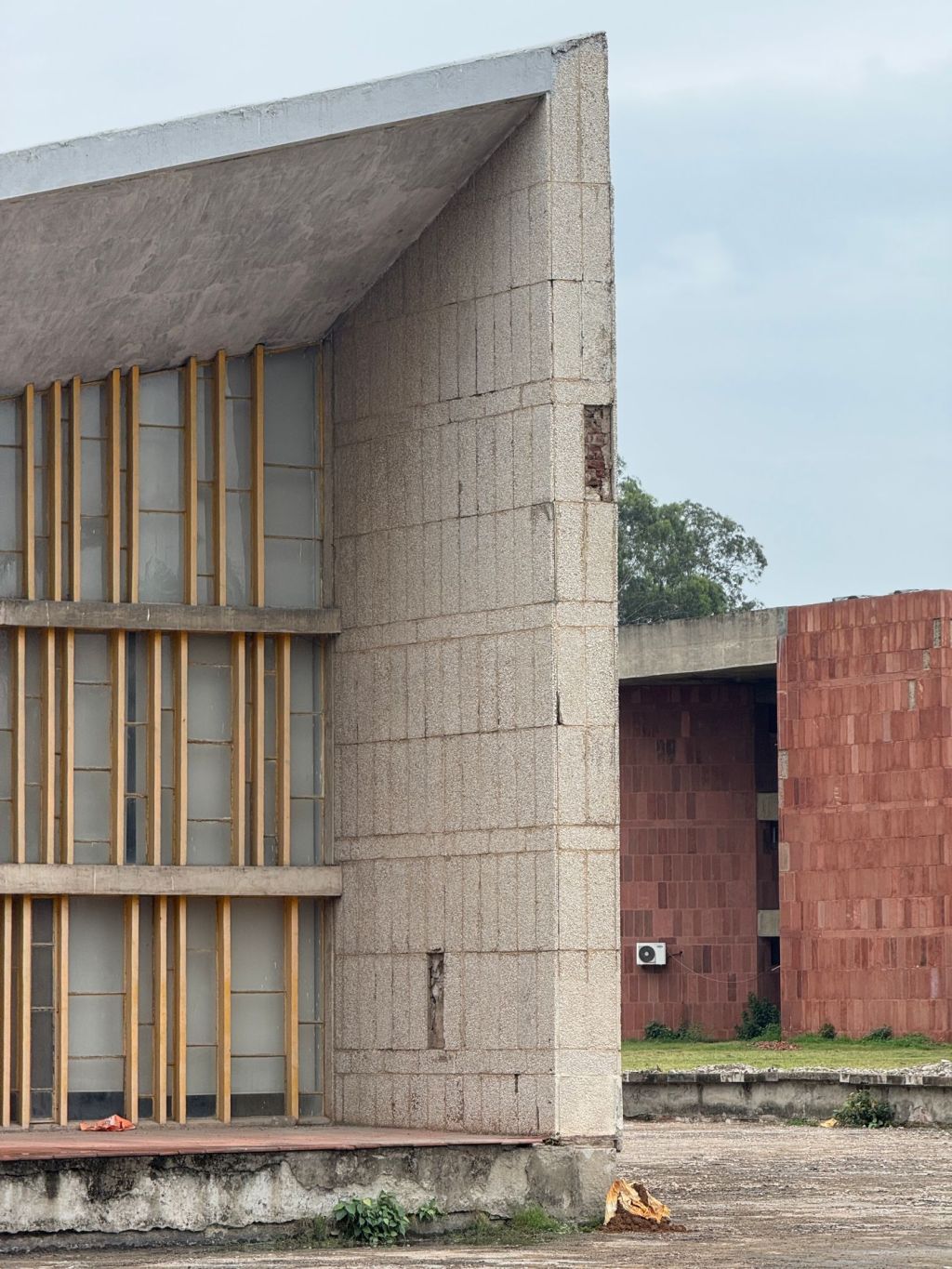
Most people pass through Chandigarh on the way to the hills. It deserves a day of its own. Few cities in the world were drawn on paper and then built more or less as planned, and Chandigarh is one of them: a capital laid out in the 1950s for post-Partition Punjab, and today a union territory that serves as the capital of both Punjab and Haryana. Its best sights are close together, mostly free, and easiest to understand on foot.
How the city is drawn
The American planner Albert Mayer prepared the first plan; Le Corbusier took over and reshaped it, working with Pierre Jeanneret, Maxwell Fry and Jane Drew. The result is a grid of numbered sectors, each a neighbourhood of roughly 800 by 1,200 metres meant to hold its own shops, schools and green space. Roads follow a hierarchy Le Corbusier called the 7Vs, from fast inter-city roads (V1) down to footpaths and cycle tracks (V7). Once you know this, the city’s calm, slightly repetitive rhythm starts to make sense.
Morning: the Capitol Complex
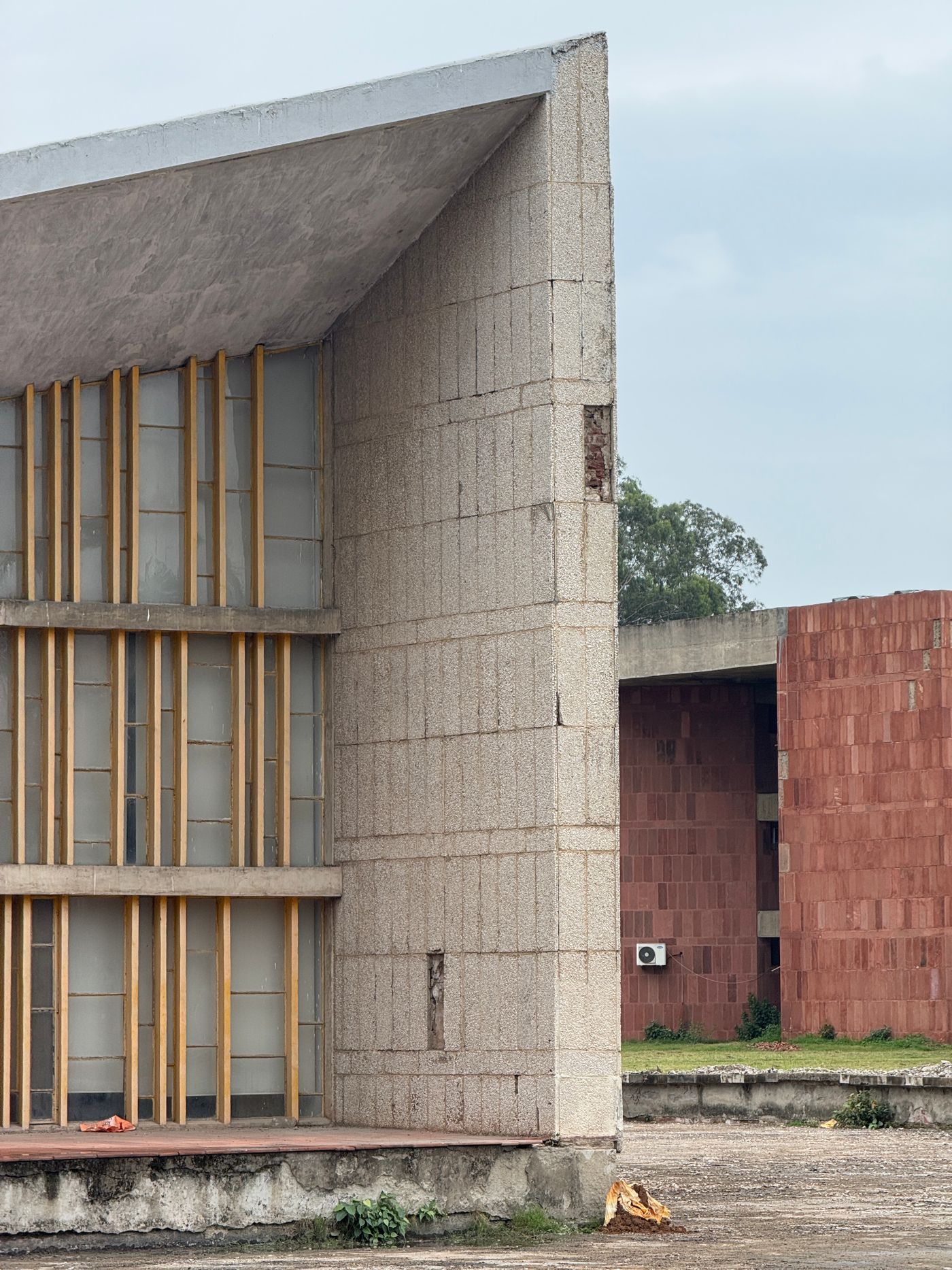
In Sector 1, at the head of the city, the Assembly, the Secretariat and the High Court face each other across a vast concrete plaza, with the Open Hand monument, the Tower of Shadows and the Geometric Hill between them. In 2016 the complex was inscribed by UNESCO as part of The Architectural Work of Le Corbusier, a World Heritage listing of 17 sites in seven countries.
- Guided tours leave at 10 am, 12 noon and 3 pm. Chandigarh Tourism asks visitors to arrive 15 minutes early to register.
- Entry is free, but carry photo ID.
- On weekdays you can go inside the buildings; on Saturdays and Sundays the complex is viewed from outside only. It is closed on gazetted holidays.
- The Open Hand, about 26 metres (85 feet) high, turns with the wind and is the city’s emblem.
Late morning: Nek Chand’s Rock Garden
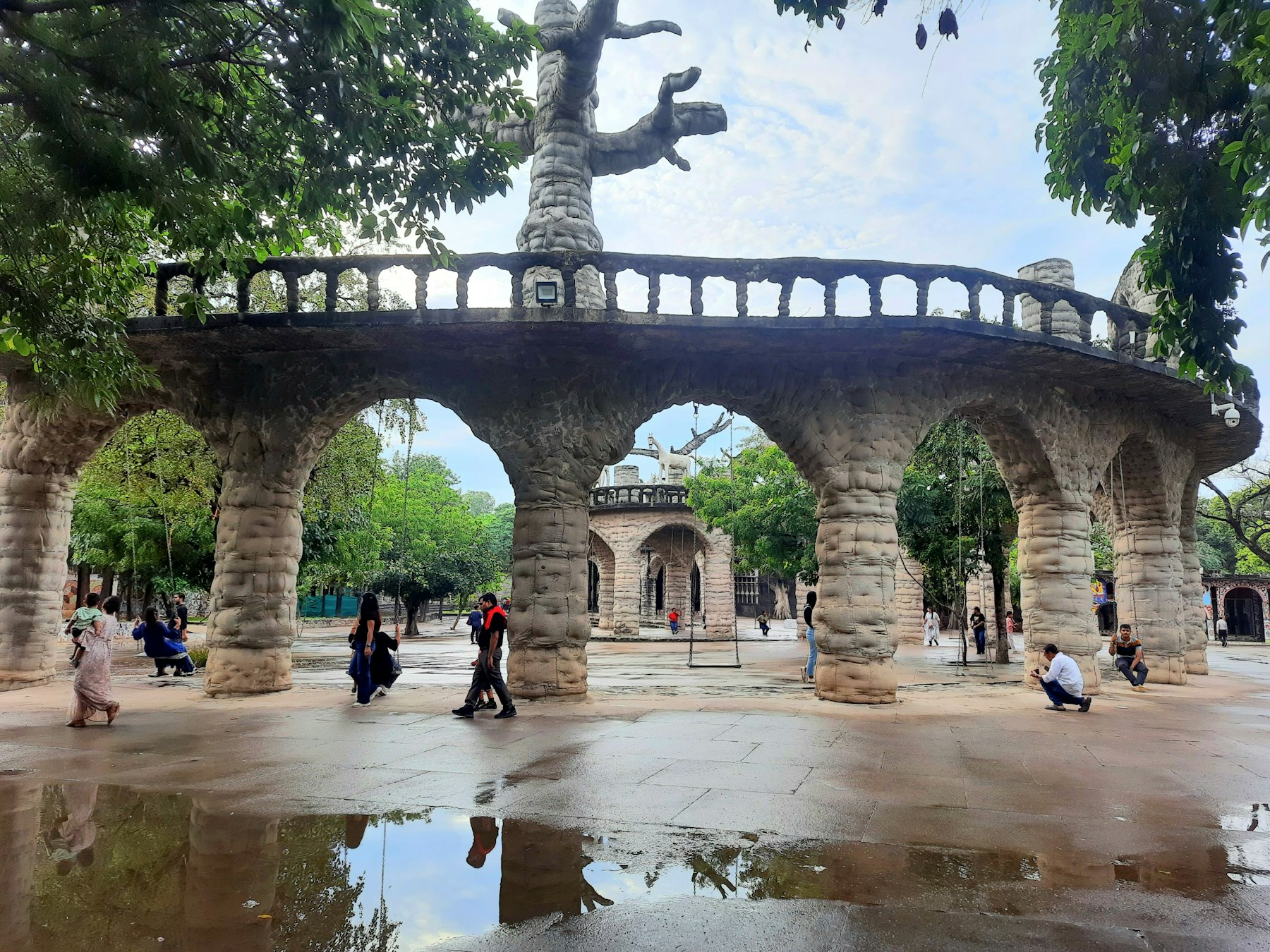
A short walk from the Capitol, the Rock Garden is the city’s other origin story. Nek Chand, a road inspector, began building it secretly in his spare time in 1957, using stones, broken bangles, ceramic pots, tiles, bottles and electrical waste salvaged from the villages cleared for the new city. It now spreads over about 35 acres of walled courtyards, waterfalls and figures arranged in crowds. It is the opposite of the Capitol: intimate, handmade and full of humour.
- Timings: 9 am to 7.30 pm from April to September, and 9 am to 6 pm from October to March.
- Tickets: ₹30 for adults and ₹10 for children, according to Chandigarh Tourism.
- Paths are narrow in places, with low arches and steps. Go early on weekends.
Afternoon: the lake, and the architects’ own rooms
Sukhna Lake, next to the Rock Garden, was created in 1958 by damming the Sukhna Choe, a seasonal stream from the Shivalik foothills. Le Corbusier kept motorboats off it, and the dam top is a car-free promenade, which makes it the city’s favourite place for an evening walk.
Across the road in Sector 5, Pierre Jeanneret’s house (House No. 57) became a museum in 2017. The simple two-storey home displays models and photographs of the furniture he designed for the city. Entry is free; it is open 10 am to 5 pm and closed on Mondays and public holidays.
If you have time for one more stop, the Le Corbusier Centre in Sector 19B occupies the old architects’ office, one of the earliest buildings in the city, where the team worked. It holds sketches, photographs, models and furniture, and is open Tuesday to Sunday, 10 am to 5 pm (₹20 for adults; children enter free).
If you have longer
The Government Museum and Art Gallery in Sector 10 is known for its Gandhara sculpture and its Pahari and Rajasthani miniature paintings. It is open Tuesday to Sunday, 10 am to 5 pm, with adult tickets at ₹30. Beyond the city, the Morni Hills in Haryana make an easy half-day trip, and the road up to Kasauli and Shimla starts just north of town.
Practical notes
- Getting there: Chandigarh Junction is on the main rail network, and Shaheed Bhagat Singh International Airport (IXC) has flights from major Indian cities.
- Getting around: the Capitol Complex, Rock Garden and Sukhna Lake are walkable from each other; use an auto or cab between other sectors.
- When to go: October to March is the most comfortable for walking. Summer afternoons are hot, so plan the Capitol tour for the morning.
- Mondays: several museums close, so plan a Monday around the Rock Garden and the lake instead.
For the wider city, read our Chandigarh guide; for nearby escapes, see Haryana and Himachal Pradesh, or plan a longer route with how to plan a North India trip.
Sources and image credits
Timings and fees were checked on 30 October 2026:
- Chandigarh Tourism (official): Capitol Complex, tours and visiting days
- Ministry of Culture: The Architectural Work of Le Corbusier (2016)
- Incredible India: Capitol Complex
- Chandigarh Tourism (official): Rock Garden
- Chandigarh Tourism (official): Le Corbusier Centre
- Chandigarh Tourism (official): Government Museum and Art Gallery
- Museums of India: Pierre Jeanneret Museum
- Wikipedia: Sukhna Lake
- CEC course notes: Chandigarh sectors and the 7V road system
Photography: Ananya Mandial via Pexels (Pexels License); Shrishti Pandey via Unsplash (Unsplash License). These are stock images, not the author’s own.
Tour times, fees and opening days change. Check with Chandigarh Tourism before you go.