Ahmedabad, on the Sabarmati river, was founded in the 15th century by Sultan Ahmad Shah, and its walled old city is a UNESCO World Heritage Site: the Historic City of Ahmadabad. It is a city best explored on foot, early in the morning, before the heat and traffic build.
The old city
The old city is made up of pols, close-knit residential neighbourhoods entered through gateways, with carved wooden houses, shared courtyards and bird feeders called chabutaros. Many visitors join a guided heritage walk, which is the easiest way to find your way through the lanes. Along the way are the Sultanate-era mosques, including the Jama Masjid and the Sidi Saiyyed Mosque with its carved stone window.
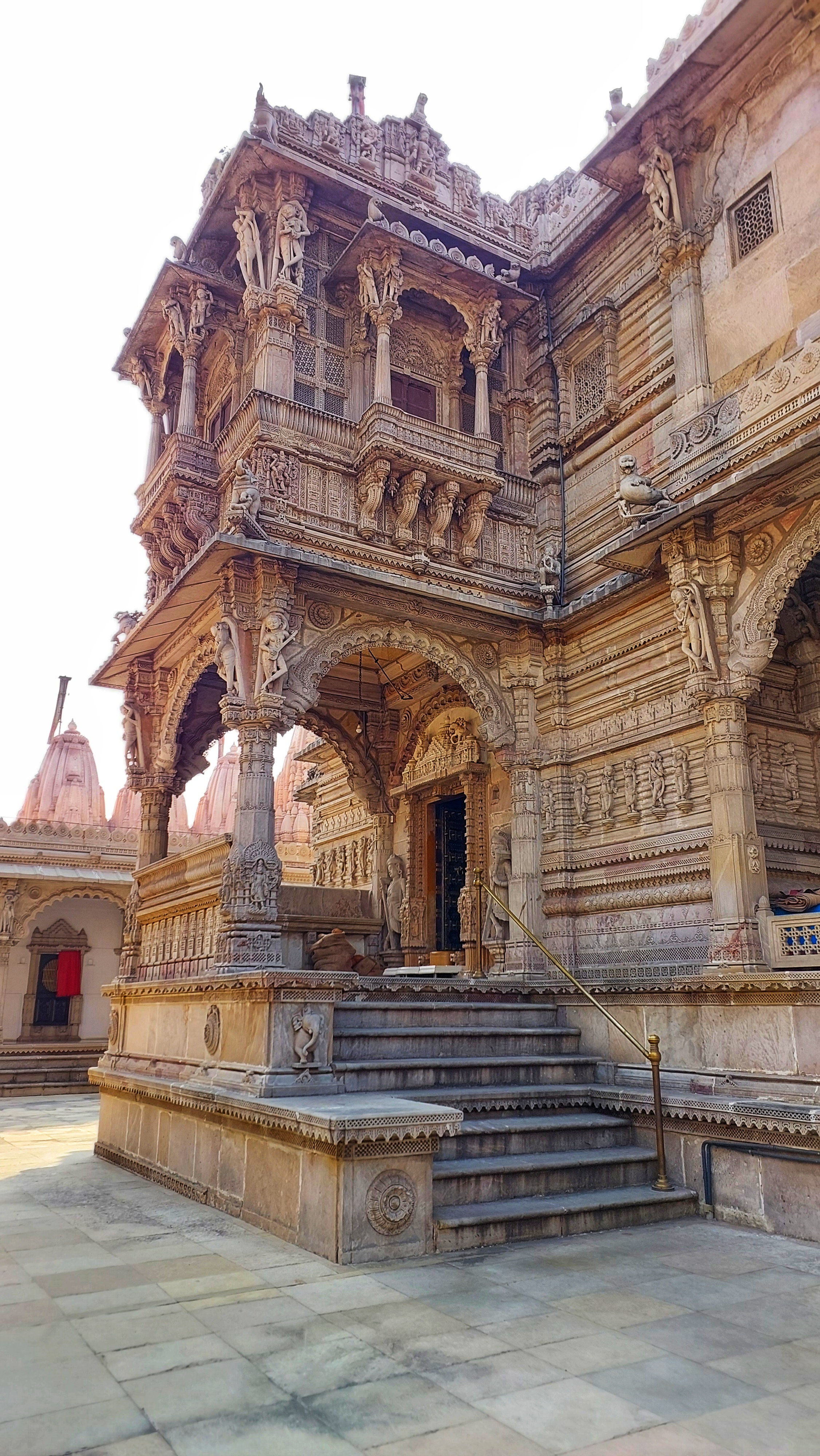
Outside the walls, the Hutheesing Jain Temple, built in the mid-19th century, is a riot of white marble carving. North of the centre, the Sabarmati Ashram was Mahatma Gandhi’s home for more than a decade and the starting point of the 1930 Salt March.
Adalaj Stepwell
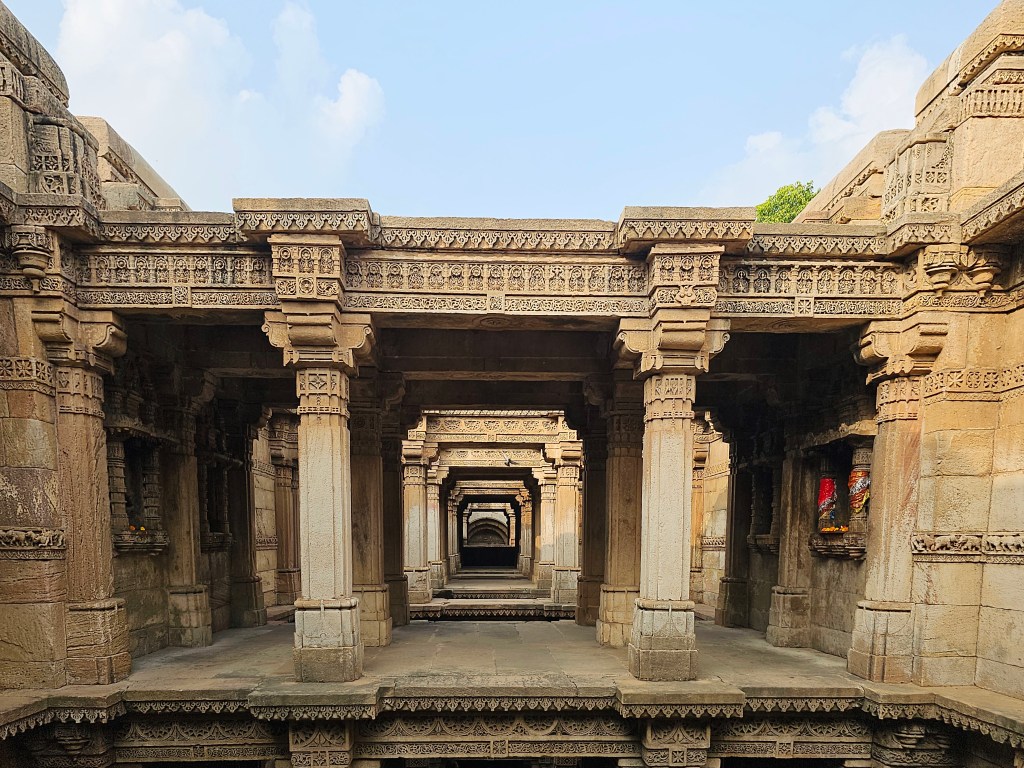
Stepwells were built in Gujarat to reach groundwater through the long dry season, and they became places to gather, rest and worship. Adalaj, on the northern edge of the city, dates from the end of the 15th century and descends five storeys through carved columns and landings, staying cool even at midday.
Modhera and Patan
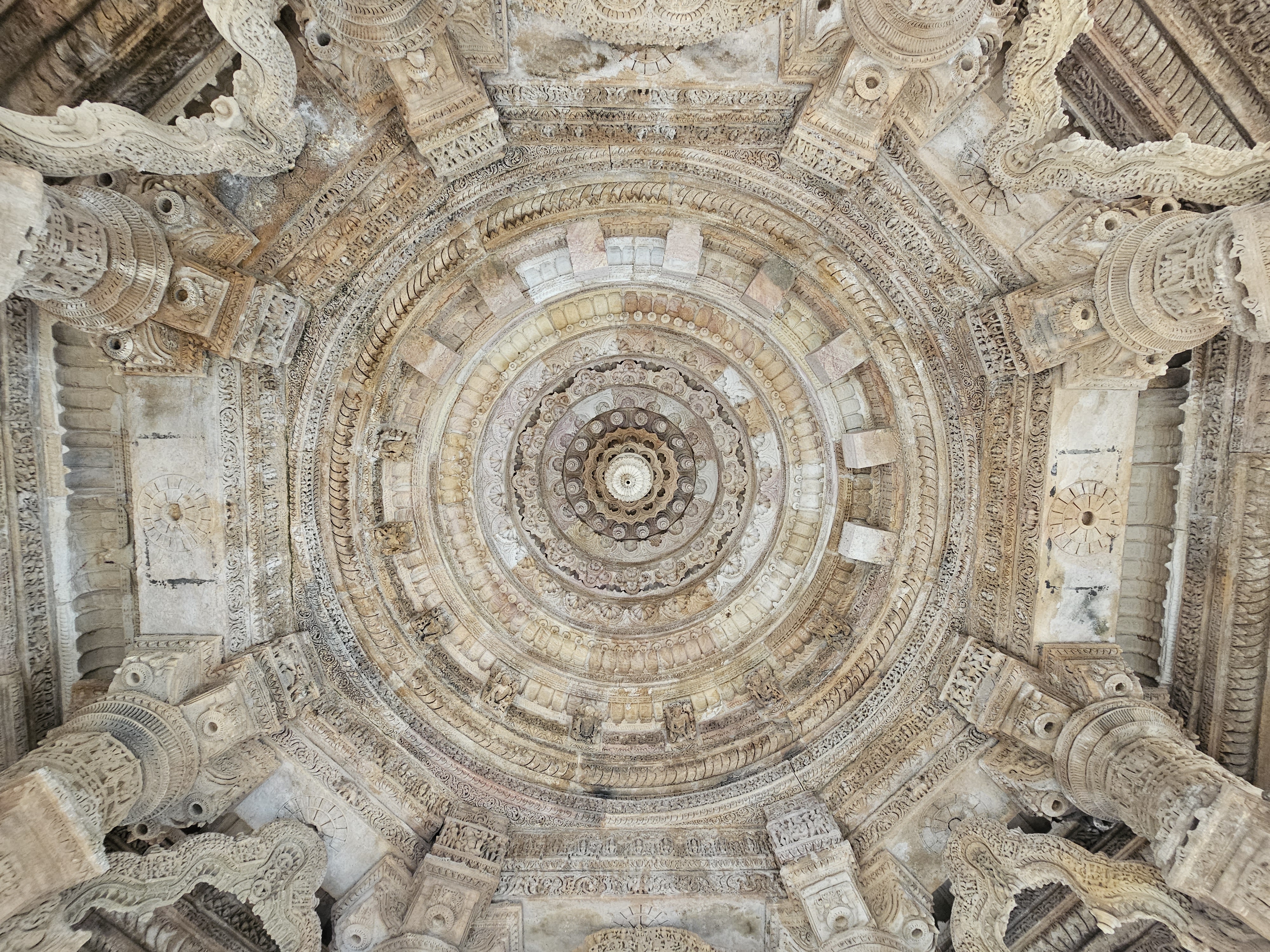
A day trip north takes in two more masterpieces. The Sun Temple at Modhera was built in the 11th century under the Chaulukya king Bhima I, beside a great stepped tank, the Suryakund. Every surface is carved, inside and out.
At Patan, Rani-ki-Vav, the Queen’s Stepwell, is a UNESCO World Heritage Site: an 11th-century stepwell lined with hundreds of sculptures. Patan is also home to the Patola double-ikat silk weavers.
Practicalities
- Getting there: Ahmedabad has an international airport and is a major railway junction.
- When to go: November to February. Summer is very hot.
- Festivals: Navratri, in September or October, fills the city with garba, a dance form inscribed on UNESCO’s list of Intangible Cultural Heritage in 2023.
- Note: Gujarat has prohibition laws on alcohol; visitors should check the current permit rules.
Related Style stories: Same Nine Nights, Dressed Differently, on dressing for Navratri; and Six handloom sarees worth knowing, and how to tell the real thing, which includes Patan Patola.
More in our Gujarat guide.
Sources and image credits
Facts that can change were checked on 31 October 2026:
- UNESCO: Historic City of Ahmadabad
- UNESCO: Rani-ki-Vav (the Queen’s Stepwell) at Patan
- Wikipedia: Sun Temple, Modhera
- Wikipedia: Adalaj Stepwell
- Governance Now: Garba of Gujarat inscribed by UNESCO
Photography: Bigul Malayi via the WordPress Photo Directory (CC0); Jose Varghese via the WordPress Photo Directory (CC0). Stock images, not the author’s own.
Opening arrangements for temples and monuments change, and some sites close for festivals or conservation. Check locally before you go.