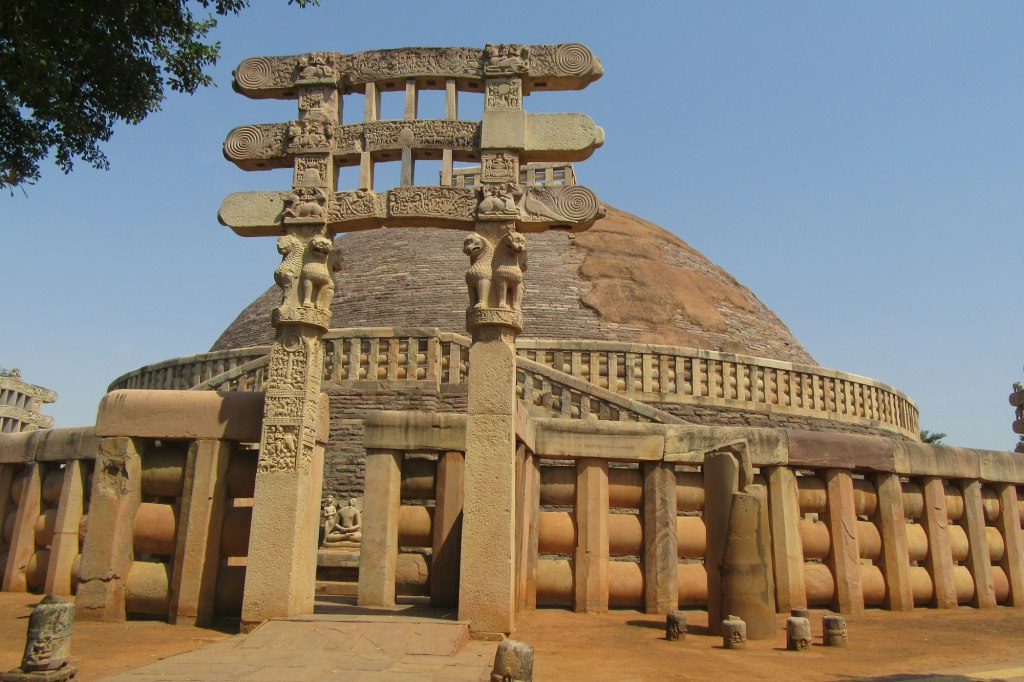
Bhopal, the capital of Madhya Pradesh, is a city of lakes and mosques, and a practical base for two of India’s most important ancient sites. Sanchi, with its Buddhist stupas, lies to the north-east; Bhimbetka, with its prehistoric rock paintings, lies to the south. Both are UNESCO World Heritage Sites, and each is an easy day trip.
Bhopal
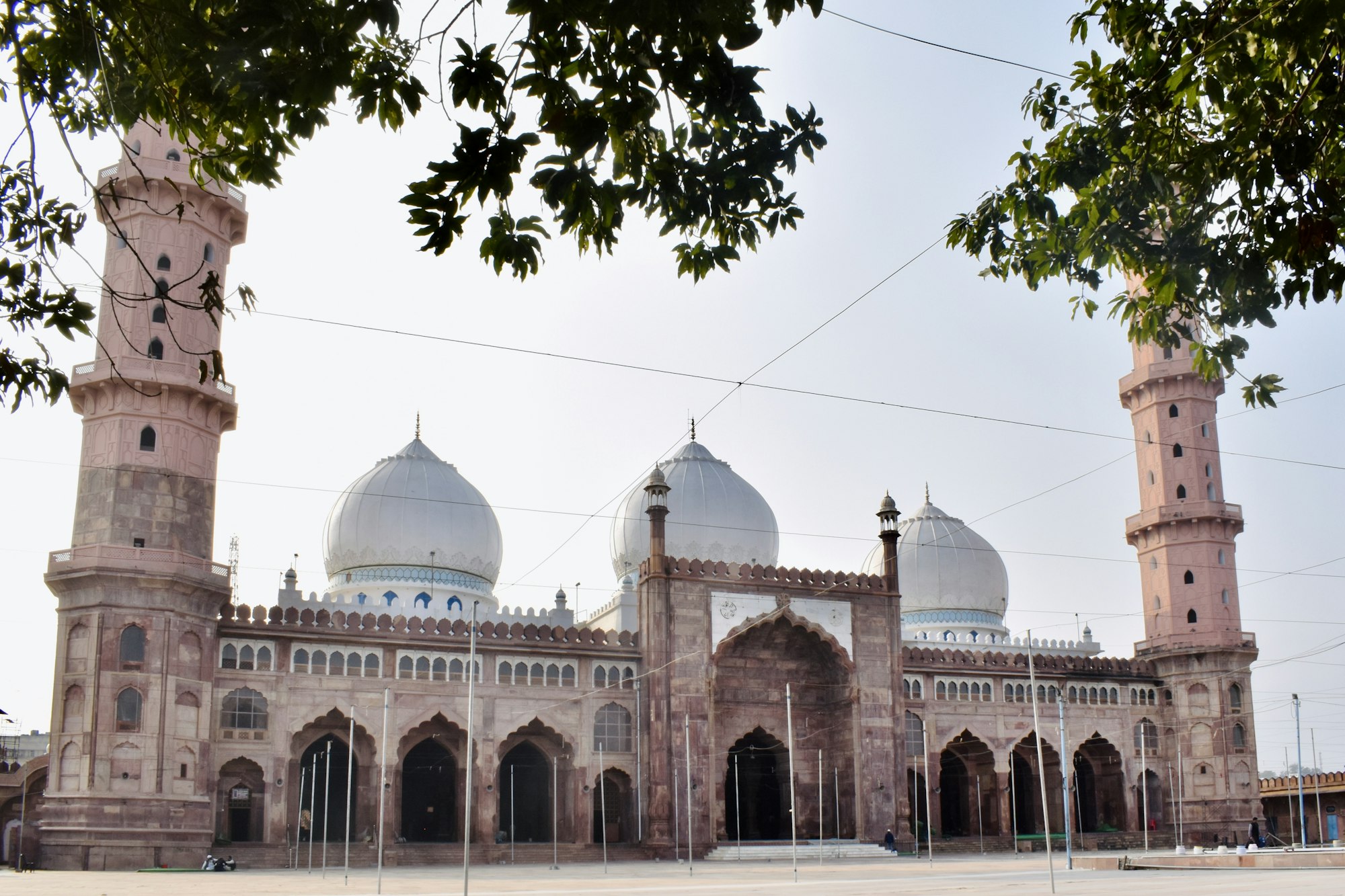
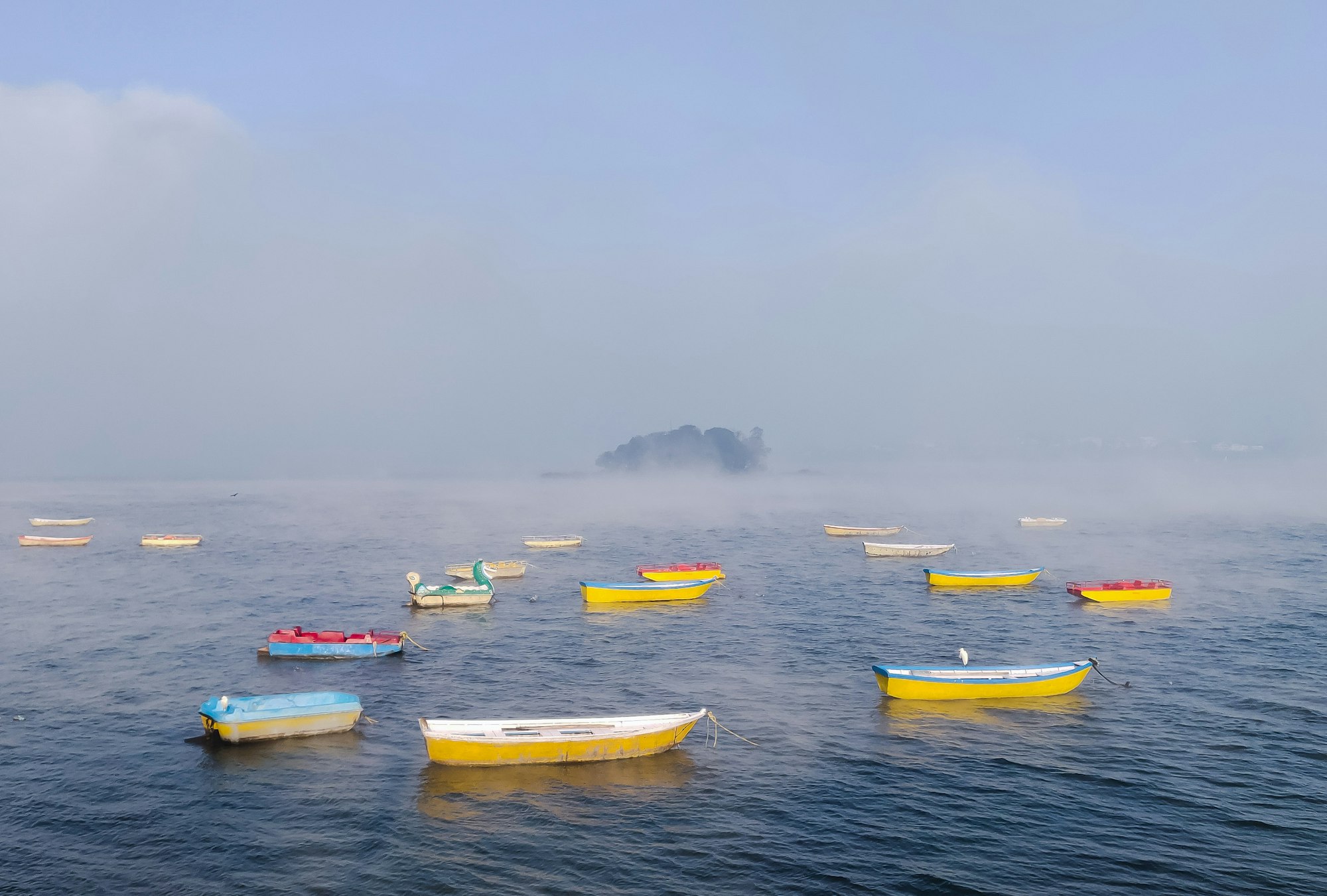
The Upper Lake (Bada Talab) defines the city. Walk or drive along its banks at the end of the day. The Taj-ul-Masajid, with its pink facade and white domes, is one of the largest mosques in India; the smaller Moti Masjid is nearby in the old city.
Bhopal is also a city of museums. The Madhya Pradesh Tribal Museum and the Indira Gandhi Rashtriya Manav Sangrahalaya (the national museum of humankind), both in the Shyamla Hills, introduce the cultures of central India better than any guidebook.
Sanchi
The Great Stupa at Sanchi was first built in the 3rd century BCE under the emperor Ashoka and enlarged in the centuries after. Its four carved stone gateways (toranas), added later, are covered in scenes from the life of the Buddha and the Jataka tales, with the Buddha shown through symbols rather than in human form. The site, with its smaller stupas, monasteries and temples, was inscribed by UNESCO in 1989.
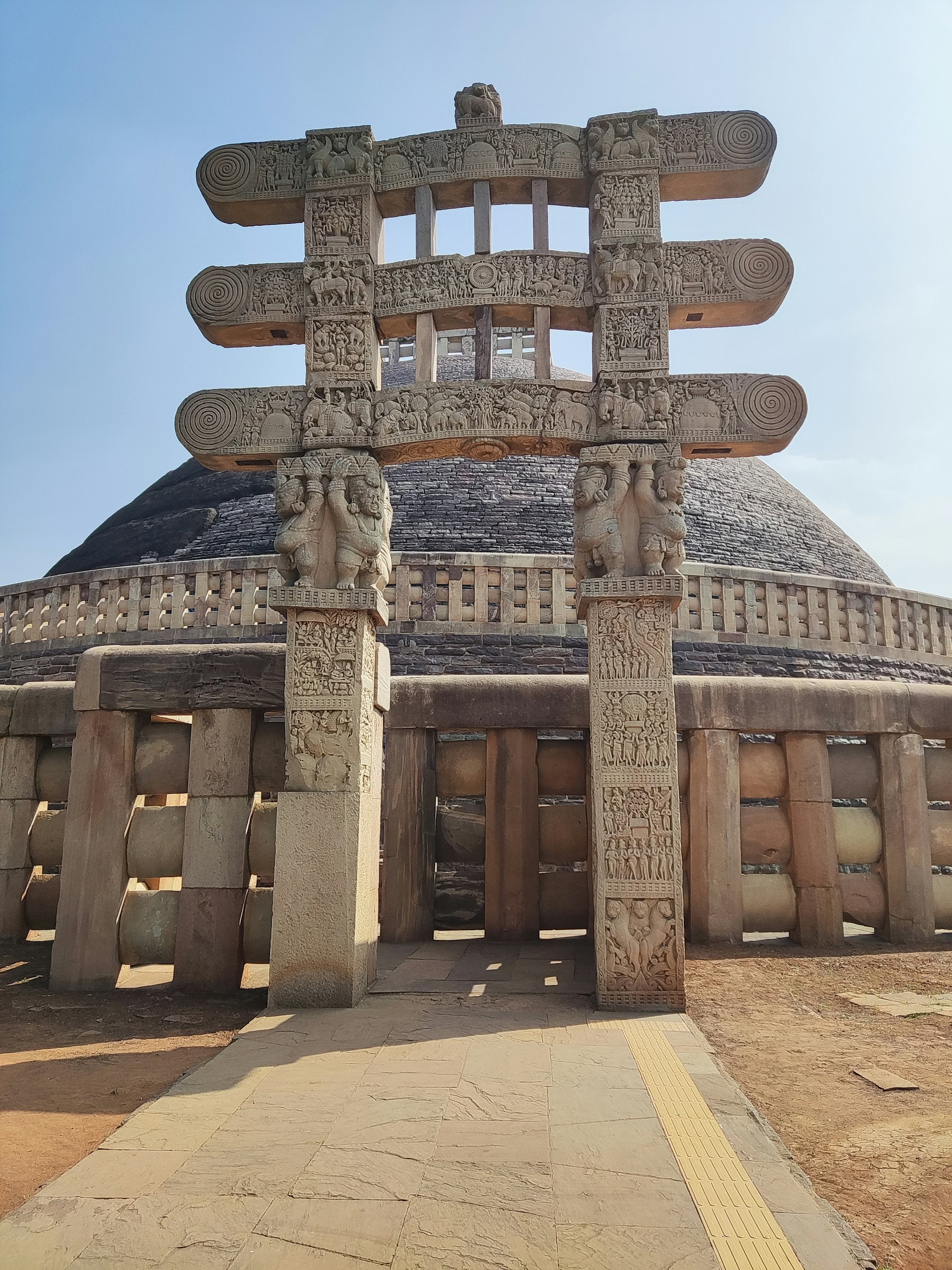
Give it half a day. Walk around the stupa clockwise, as pilgrims do, and spend most of your time at the gateways. The small site museum is worth a visit.
Bhimbetka
The Rock Shelters of Bhimbetka sit in forested sandstone hills at the foot of the Vindhyas. Hundreds of shelters were used by people over a very long period, and many hold paintings of animals, hunts, dancing and riders, in reds and whites, from different eras. UNESCO inscribed the site in 2003.
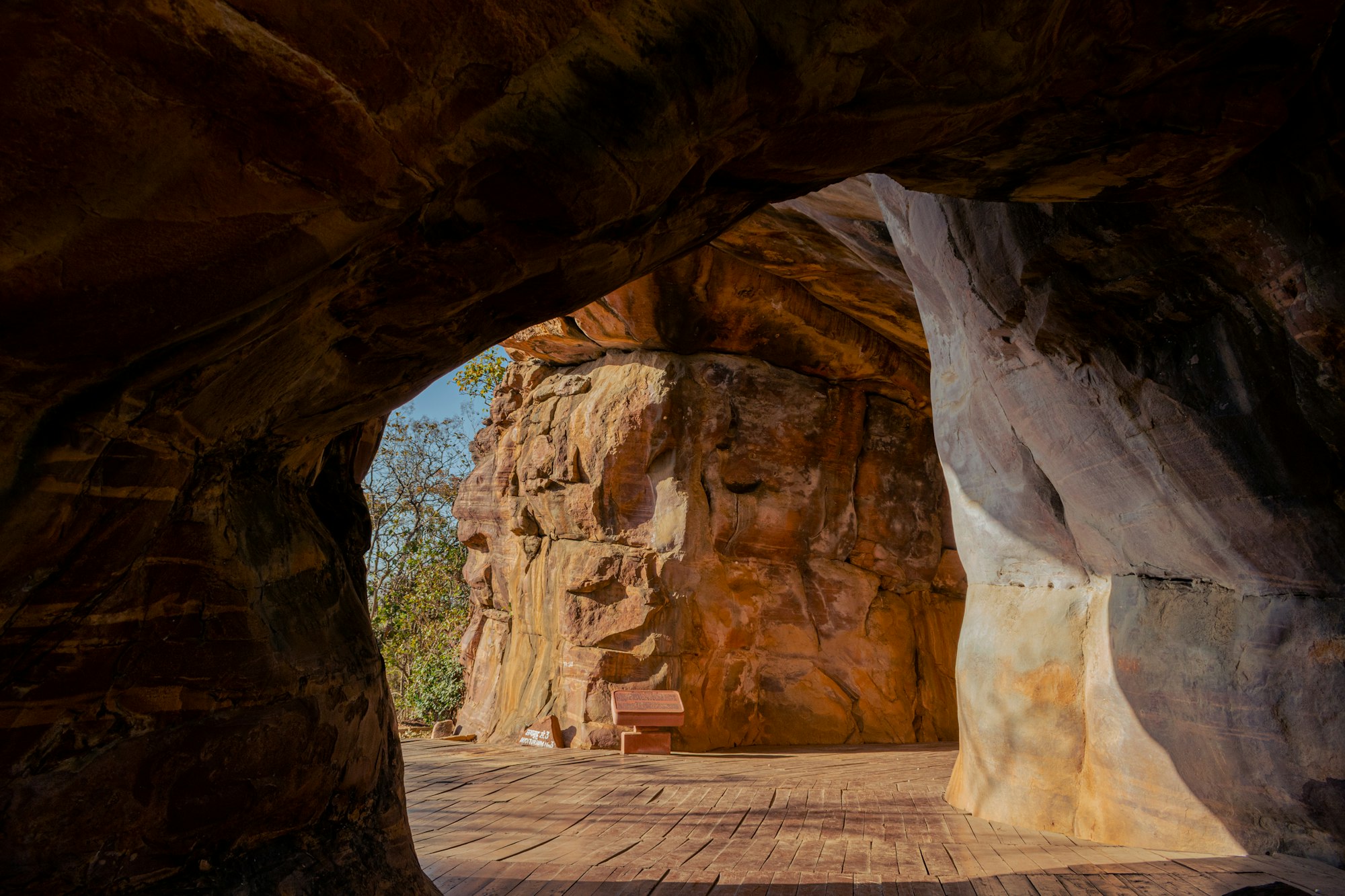
A short marked trail leads through the shelters open to visitors. Go early or late, when it is cooler, and bring water.
Practicalities
- Getting there: Bhopal has an airport (Raja Bhoj) and is a major railway junction. Sanchi and Bhimbetka are each roughly an hour or more by road from the city, depending on traffic.
- How long: two to three days for Bhopal and both sites.
- When to go: October to March. The monsoon makes the hills around Bhimbetka green, but paths can be slippery.
- Next: Bhopal connects easily to Pachmarhi and to Indore, Ujjain and Mandu.
More in our Madhya Pradesh guide.
Sources and image credits
Facts that can change were checked on 31 October 2026:
- UNESCO: Buddhist Monuments at Sanchi
- UNESCO: Rock Shelters of Bhimbetka
- Wikipedia: Bhimbetka rock shelters
- Wikipedia: Taj-ul-Masajid
- Madhya Pradesh Tourism
Photography (stock images, not the author’s own): via Unsplash, under the Unsplash License: Ameena Tasneem (The Great Stupa, Sanchi), Abhidev Vaishnav (Taj-ul-Masajid, Bhopal), Akshat Agrawal (Upper Lake, Bhopal), Anish De (A carved gateway, Sanchi), Aru Jain (Rock shelter, Bhimbetka).
Site timings and access can change. Bhimbetka’s shelters are fragile: stay on the marked paths and never touch the paintings.