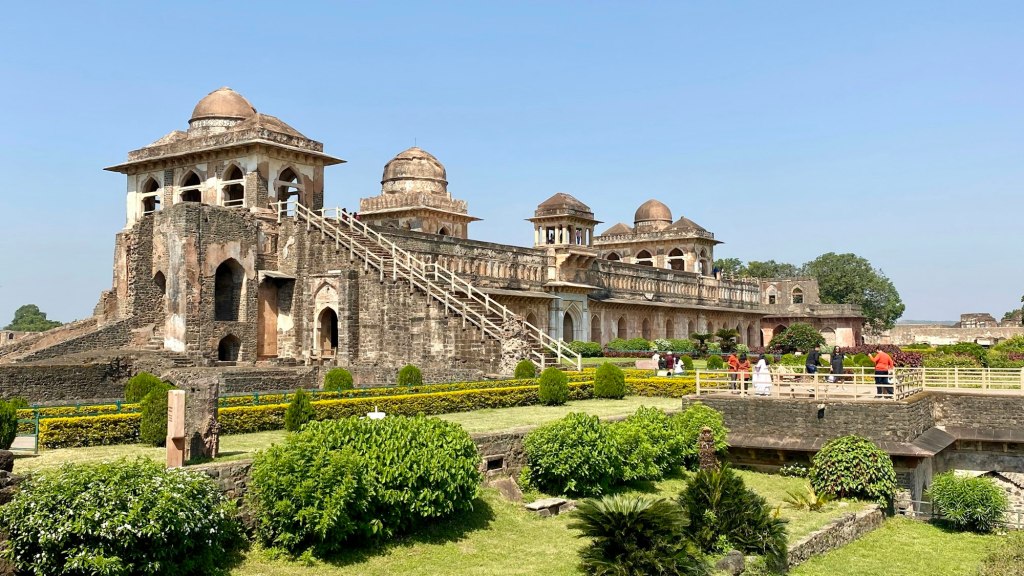
Malwa is the plateau of western Madhya Pradesh: black-soil farmland, old trading towns and the valley of the Narmada to the south. Four places make a natural route here, each with a different character. Indore is the commercial city and the easiest gateway; Ujjain is one of India’s great pilgrimage cities; Mandu is a ruined capital on a hilltop; and Maheshwar is a river town of ghats and looms.
Indore
Indore is the region’s largest city and best known, for travellers, for food. In the evening, the Sarafa bazaar, a jewellers’ street by day, turns into a street-food market; Chappan Dukan is the other famous food street. Try poha-jalebi for breakfast, bhutte ka kees (grated corn), garadu (spiced yam, in winter) and sabudana khichdi. The Rajwada, the old palace of the Holkar rulers, stands in the centre of the old city.
Ujjain
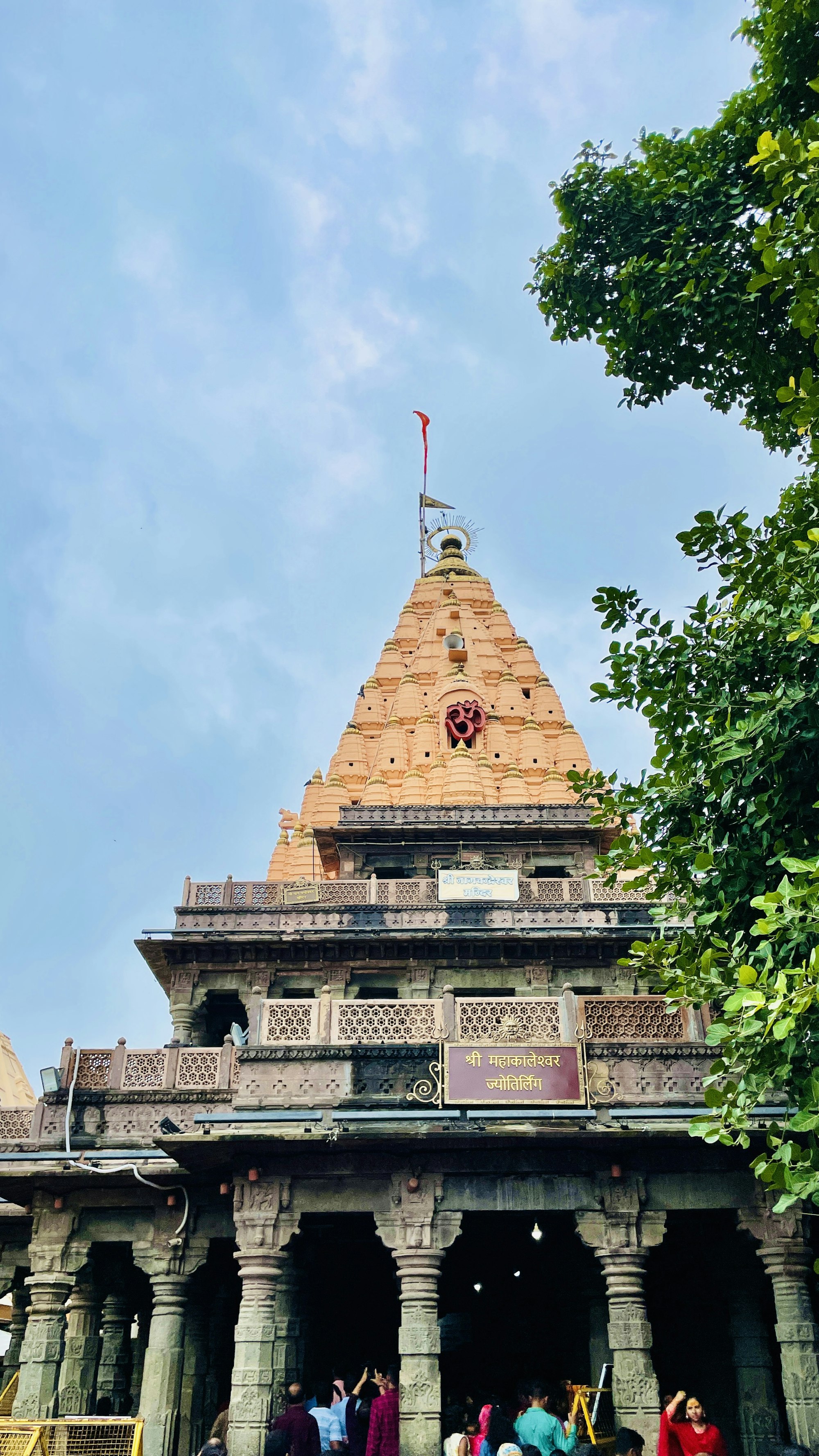
Ujjain, on the Shipra river, is one of the seven sacred cities of Hinduism. The Mahakaleshwar temple is one of the twelve jyotirlingas of Shiva and draws very large crowds, especially on festival days and in the month of Shravan. Ujjain also hosts the Simhastha Kumbh Mela every twelve years; the next is due in 2028.
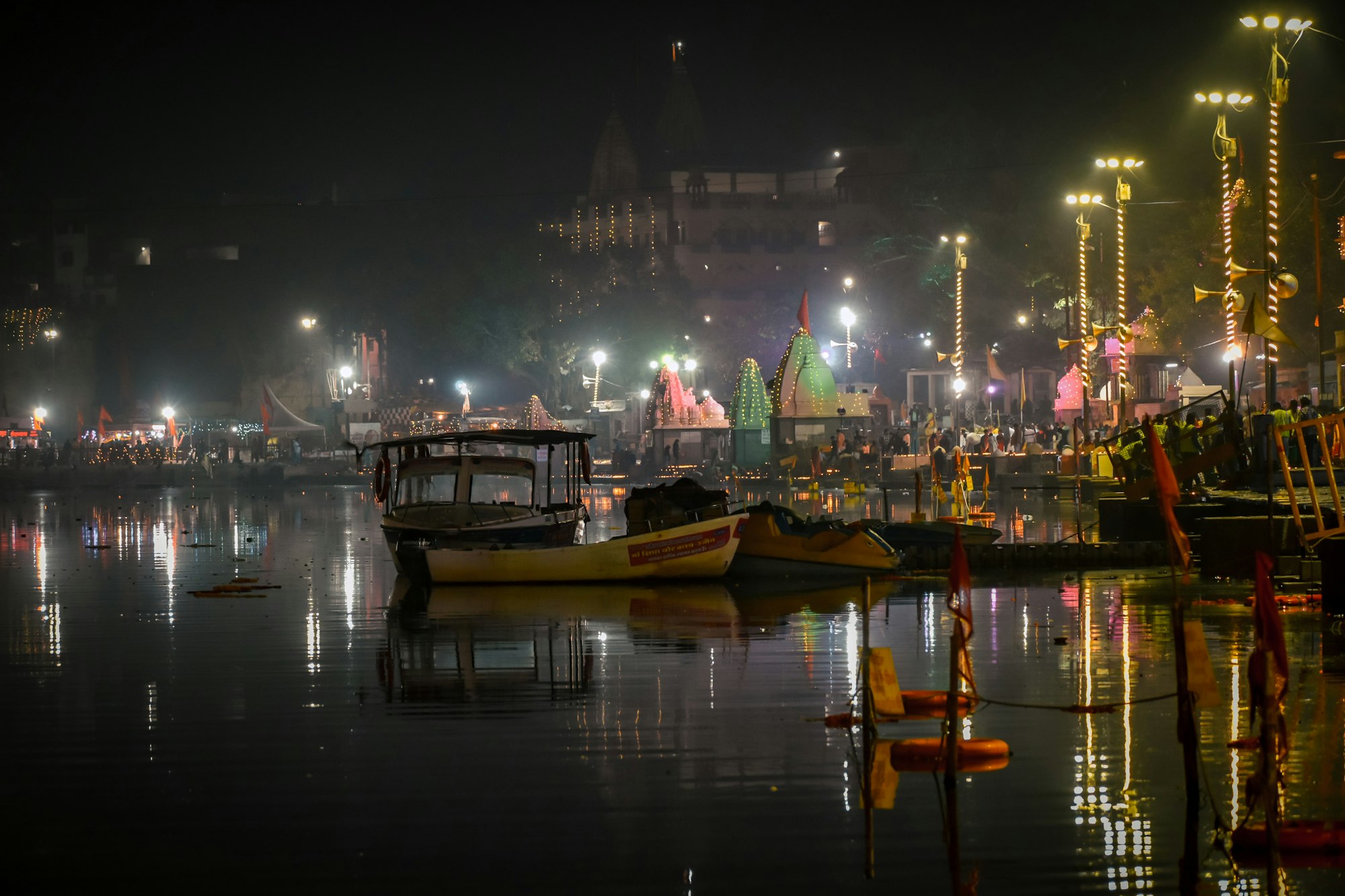
Walk the ghats along the Shipra in the evening, when lamps are lit for the aarti, and visit the Jantar Mantar, the 18th-century observatory built by Jai Singh II.
Mandu
Mandu (Mandav) spreads across a plateau on the edge of the Vindhyas, ringed by walls and gateways. It was the capital of the Malwa sultans in the 15th and 16th centuries, and its ruins are some of the finest Afghan-style architecture in India. The Jahaz Mahal, the ‘ship palace’, stretches between two lakes; Hoshang Shah’s Tomb is built in white marble; and Rani Rupmati’s Pavilion looks south over the Nimar plain towards the Narmada, the setting of the story of Baz Bahadur and Rupmati.
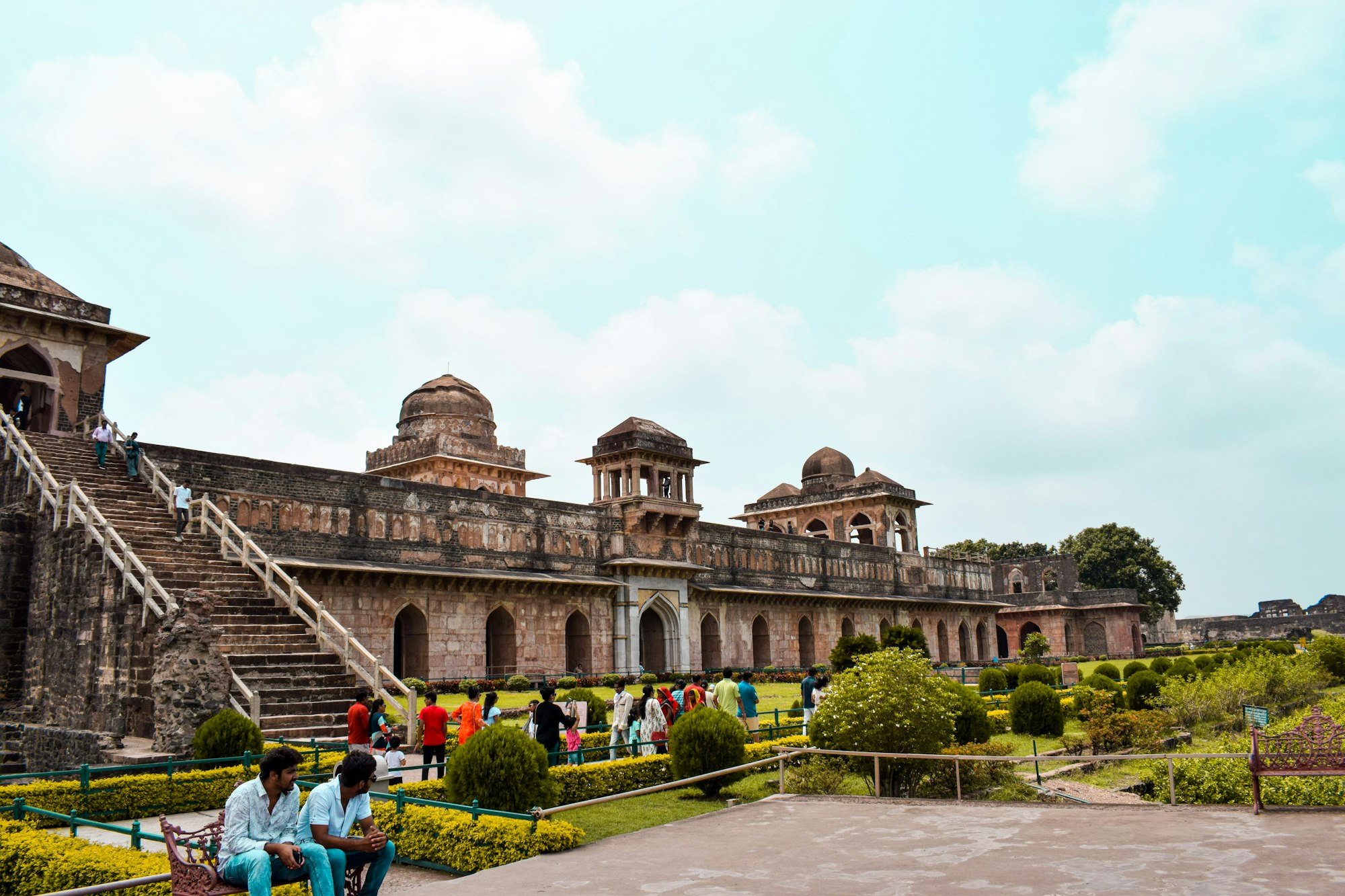
Mandu is at its best in the monsoon and just after, when the plateau turns green and the tanks fill, but it is pleasant through winter too. Stay a night: sunset from Rupmati’s Pavilion is the reason to.
Maheshwar
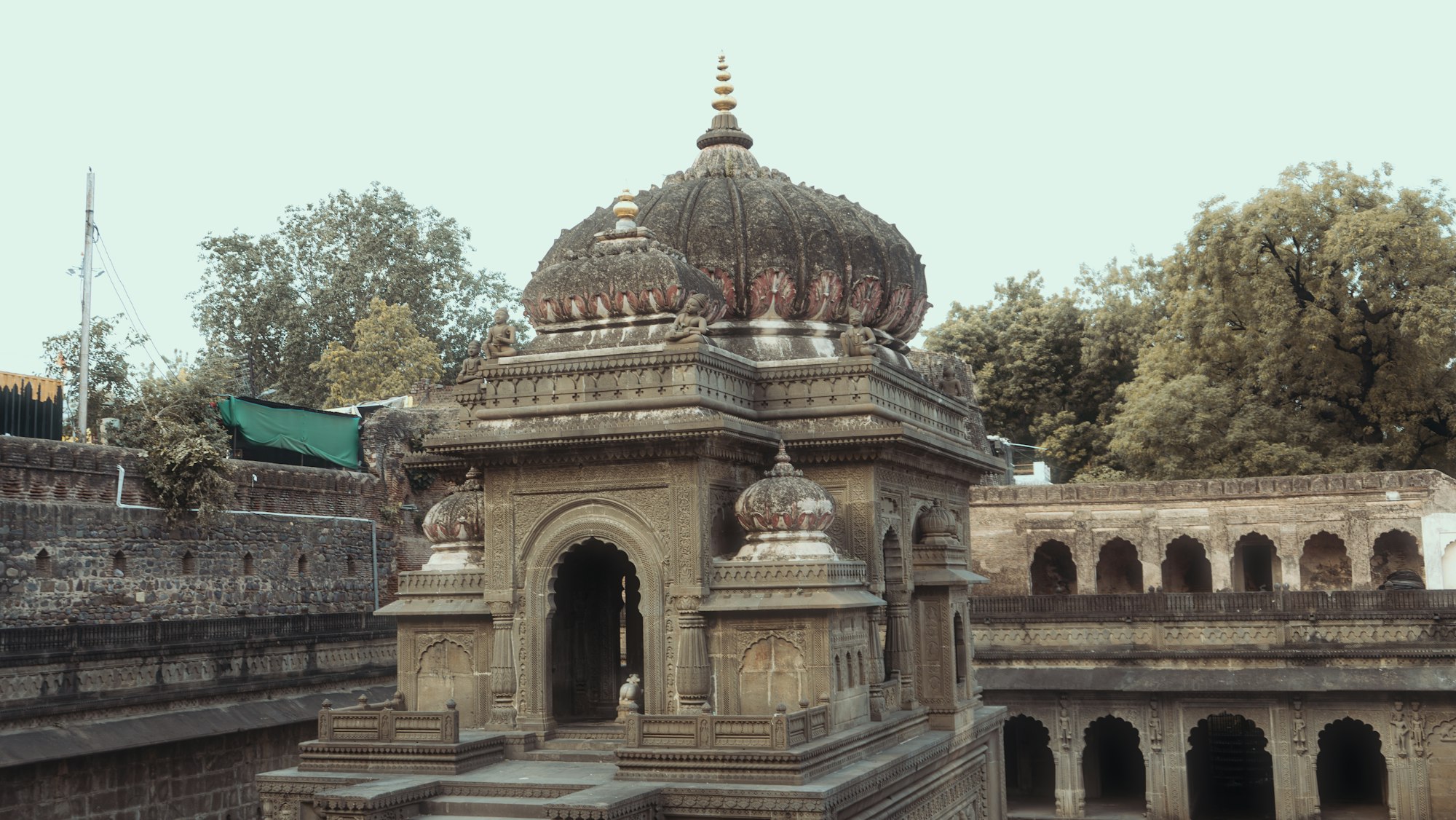
Maheshwar sits on the north bank of the Narmada. It is associated with Ahilyabai Holkar, the 18th-century ruler of the Holkar state, whose fort and temples rise above long stone ghats. Maheshwar is also a weaving town: Maheshwari sarees, light cottons and silk-cotton blends with reversible borders, are still woven on handlooms here.
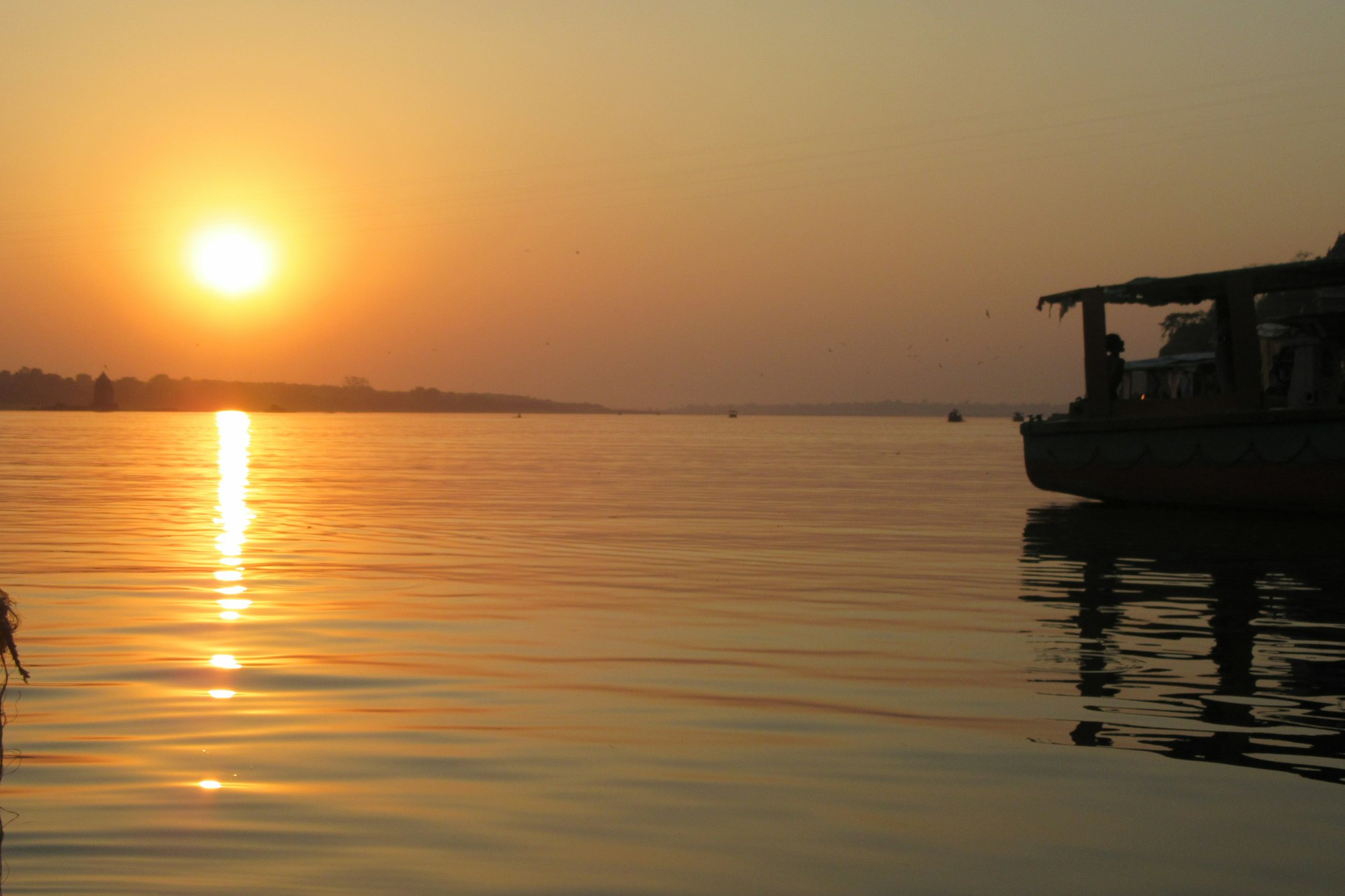
Buy from weavers’ cooperatives or recognised workshops; our guide to handloom sarees and how to tell the real thing explains what to look for. Take a boat on the river at sunset if the water is calm.
Practicalities
- Gateway: Indore’s Devi Ahilya Bai Holkar Airport and railway station. Ujjain is a short drive or train ride from Indore.
- Route: Indore and Ujjain (2 days), Mandu (1 night), Maheshwar (1 night). Mandu to Maheshwar is a drive of a few hours.
- When to go: October to March for comfort; July to September for Mandu’s monsoon greenery.
- Temple etiquette: dress modestly, remove shoes, and follow the rules on phones and photography inside temples.
More in our Madhya Pradesh guide.
Sources and image credits
Facts that can change were checked on 31 October 2026:
- Wikipedia: Mahakaleshwar Jyotirlinga
- Wikipedia: Mandav
- Wikipedia: Maheshwar
- Wikipedia: Indore
- Madhya Pradesh Tourism
Photography (stock images, not the author’s own): via Unsplash, under the Unsplash License: Aakansha Agrawal (Jahaz Mahal, Mandu), Vikram Chouhan (Mahakaleshwar temple, Ujjain), Garv Chaplot (The riverfront at night, Ujjain), Jatin Jangid (Rani Rupmati’s Pavilion, Mandu), Harsh Vardhan Yadav (Riverside temples, Maheshwar), Ameena Tasneem (Sunset on the Narmada, Maheshwar).
Temple darshan arrangements, festival crowds and access can change, especially in Ujjain. Check official temple information before you go.