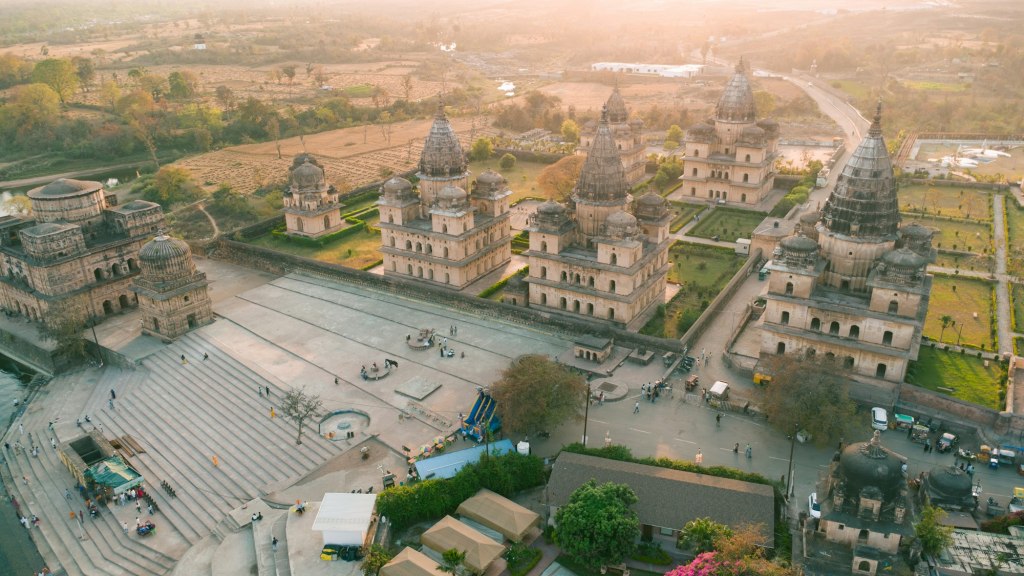
Northern Madhya Pradesh, on the edge of Bundelkhand, is fort country. Two places here repay a slow visit: Orchha, a small riverside town of palaces and temples that feels like a capital in miniature, and Gwalior, a busy city beneath one of India’s great hill forts. They are close enough to see together, and both sit within easy reach of Jhansi.
Orchha
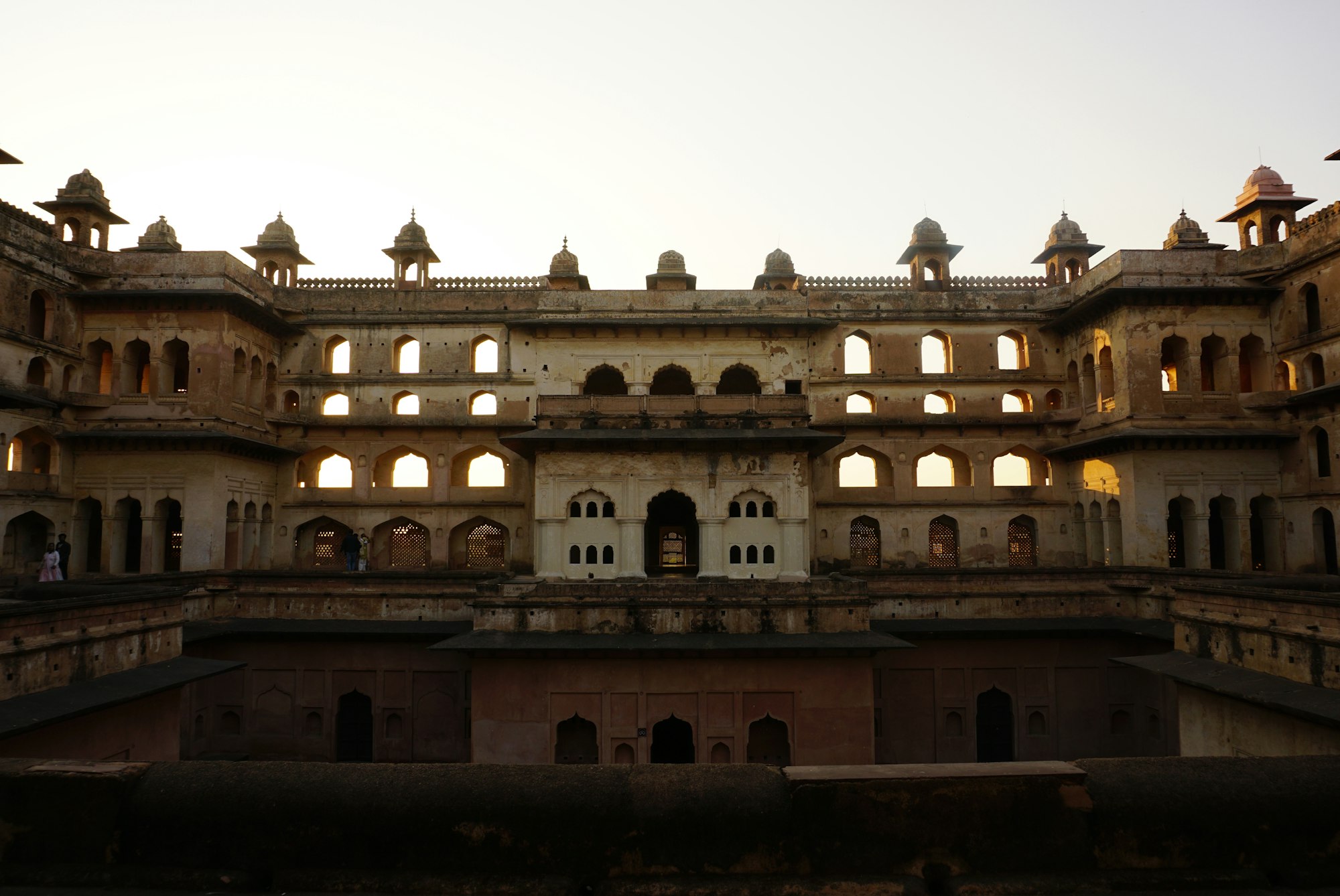
Orchha was founded in the early 16th century by the Bundela chief Rudra Pratap Singh on the banks of the Betwa river. Its palace-fort stands on an island in the river, reached by an old bridge. Inside, the Raja Mahal has painted interiors, and the Jahangir Mahal is a tiered palace of courtyards, balconies and domed pavilions.
In town, the Ram Raja Temple is unusual: Rama is worshipped here as a king, and it is a living temple with daily rituals, so visit respectfully. The tall Chaturbhuj Temple rises behind it. Downstream, a row of chhatris (royal cenotaphs) lines the riverbank; go in the late afternoon, when the light turns them gold.
Orchha is on UNESCO’s Tentative List as the Historic Ensemble of Orchha. It is small and walkable, and staying a night is the best way to enjoy it after the day visitors leave.
Gwalior
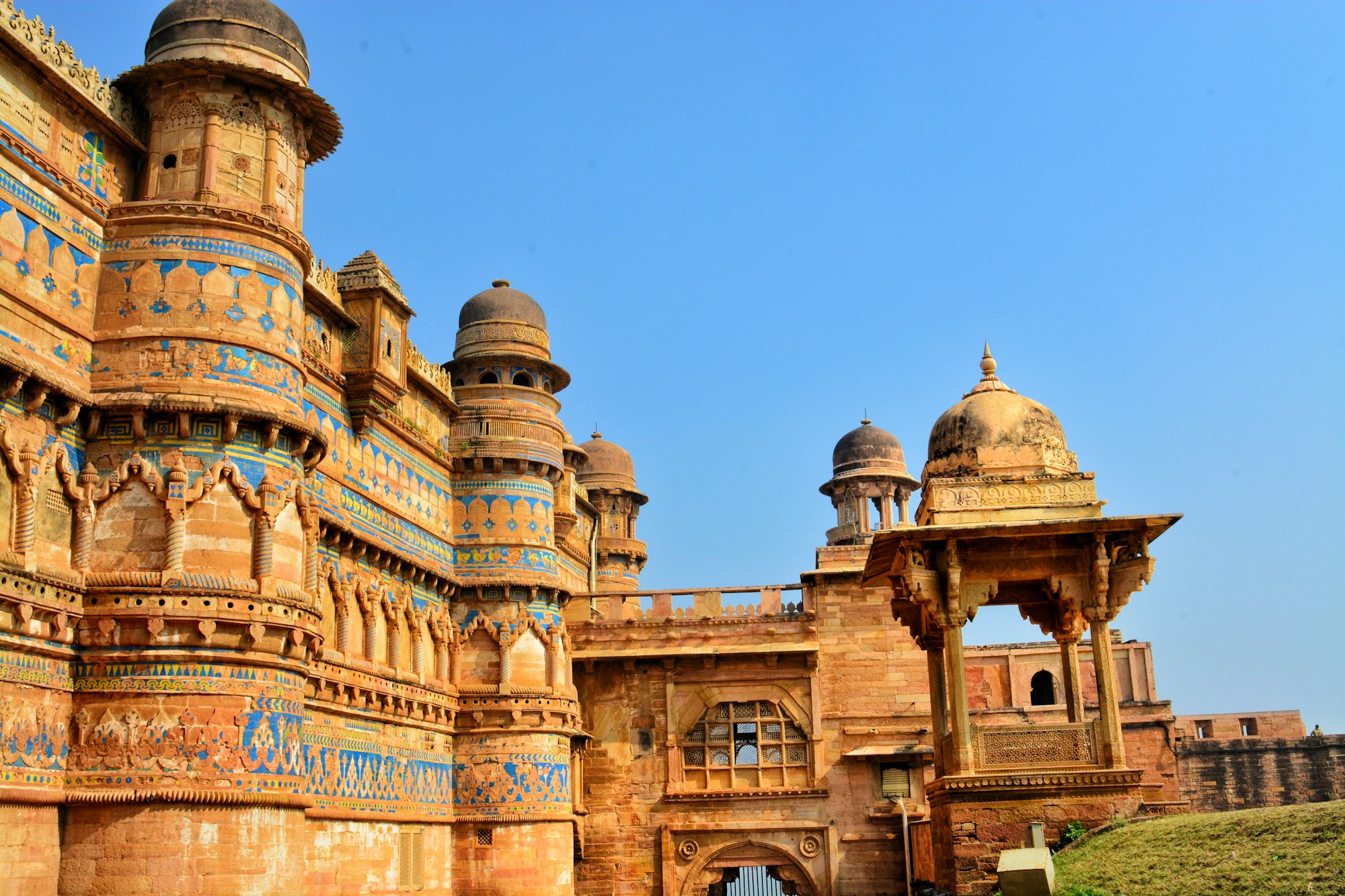
Gwalior Fort runs along the top of a long sandstone hill above the city, with walls and gateways that can be seen from far away. Its highlight is the Man Singh Palace, built by the Tomar ruler Raja Man Singh in the late 15th and early 16th centuries, with round towers and bands of blue, green and yellow tilework.
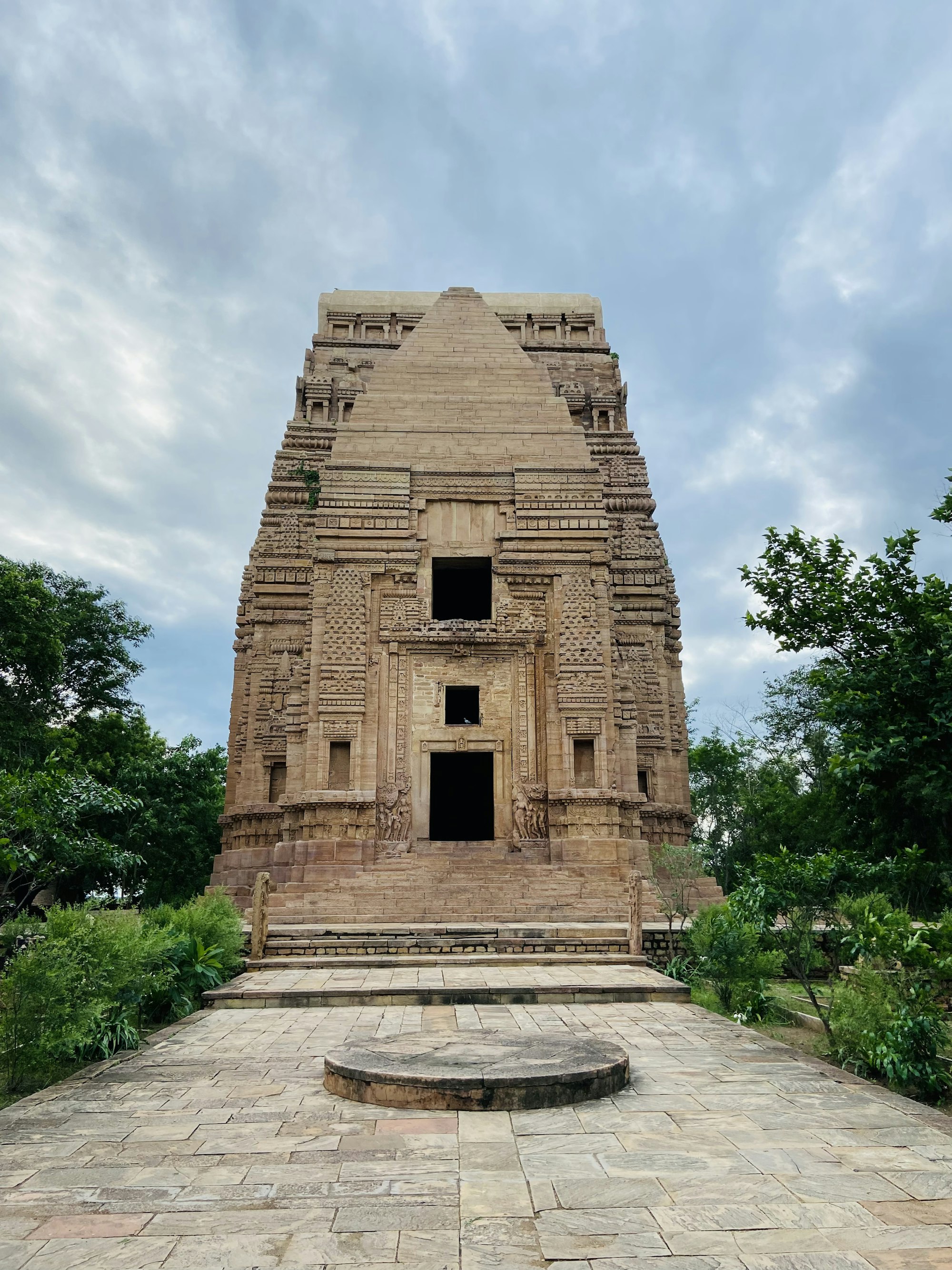
Within the fort walls are older temples too: the tall Teli ka Mandir, and the pair of carved temples known as the Sas-Bahu. On the approach roads, large Jain figures are cut into the rock face. Allow most of a day for the fort.
Gwalior has a long association with Hindustani classical music. The tomb of the singer Tansen, one of the musicians at Akbar’s court, is in the city, and Gwalior was named a UNESCO Creative City of Music in 2023.
Practicalities
- Getting there: Gwalior has an airport and is on a major rail line. Orchha is a short drive from Jhansi, the nearest large railway station.
- How long: a night in Orchha and a full day in Gwalior; add Khajuraho for a longer loop.
- When to go: October to March. Summers are very hot.
- What to wear: comfortable shoes for steep ramps and uneven stone; cover shoulders and knees in temples.
Continue with our Madhya Pradesh guide, or read about Khajuraho.
Sources and image credits
Facts that can change were checked on 31 October 2026:
- Wikipedia: Orchha
- UNESCO Tentative List: The historic ensemble of Orchha
- Wikipedia: Gwalior Fort
- Wikipedia: Gwalior (UNESCO City of Music, 2023)
- Madhya Pradesh Tourism: Gwalior
Photography (stock images, not the author’s own): via Unsplash, under the Unsplash License: Harsh Vardhan Yadav (Orchha from above), Shruti Singh (Raja Mahal, Orchha), Chirag Vashist (Man Singh Palace, Gwalior Fort), Vyshnavi Palagummi (Teli ka Mandir, Gwalior Fort).
Monument access, timings and evening shows can change. Check locally or with Madhya Pradesh Tourism before you visit.