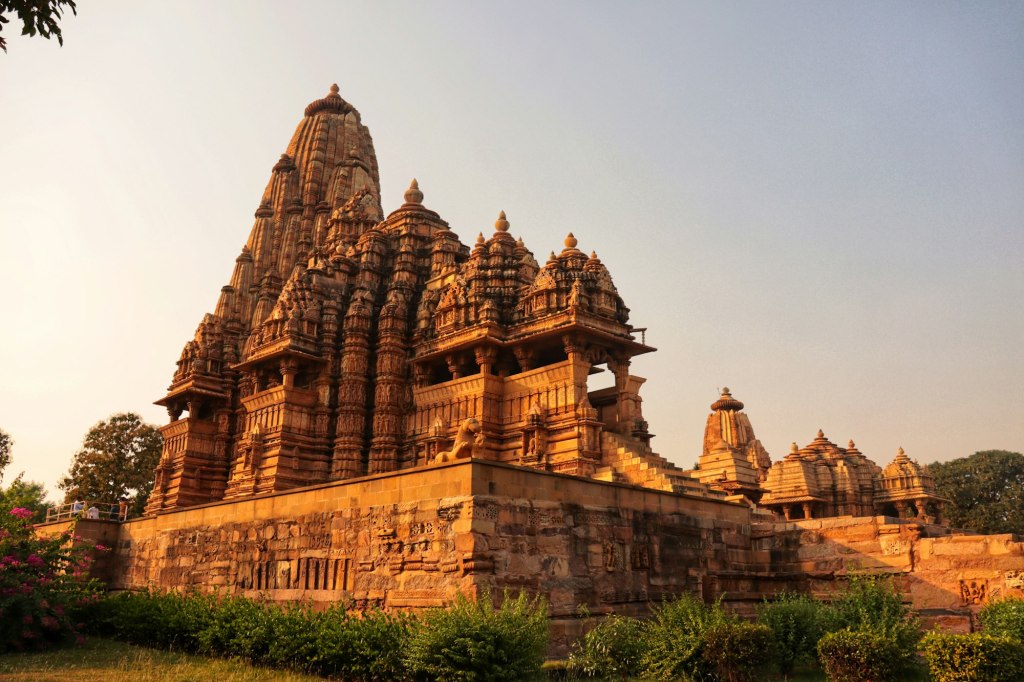
Khajuraho is a small town in the Chhatarpur district of northern Madhya Pradesh, and it would be unremarkable were it not for its temples. Built by the Chandela dynasty, most of them between the late 10th and early 11th centuries, they are some of the most accomplished stone buildings in India: tall, tightly composed spires covered in thousands of carved figures.
Around 85 temples are thought to have stood here by the 12th century. About 25 survive, and together they form the Khajuraho Group of Monuments, inscribed as a UNESCO World Heritage Site in 1986.
More than the famous carvings
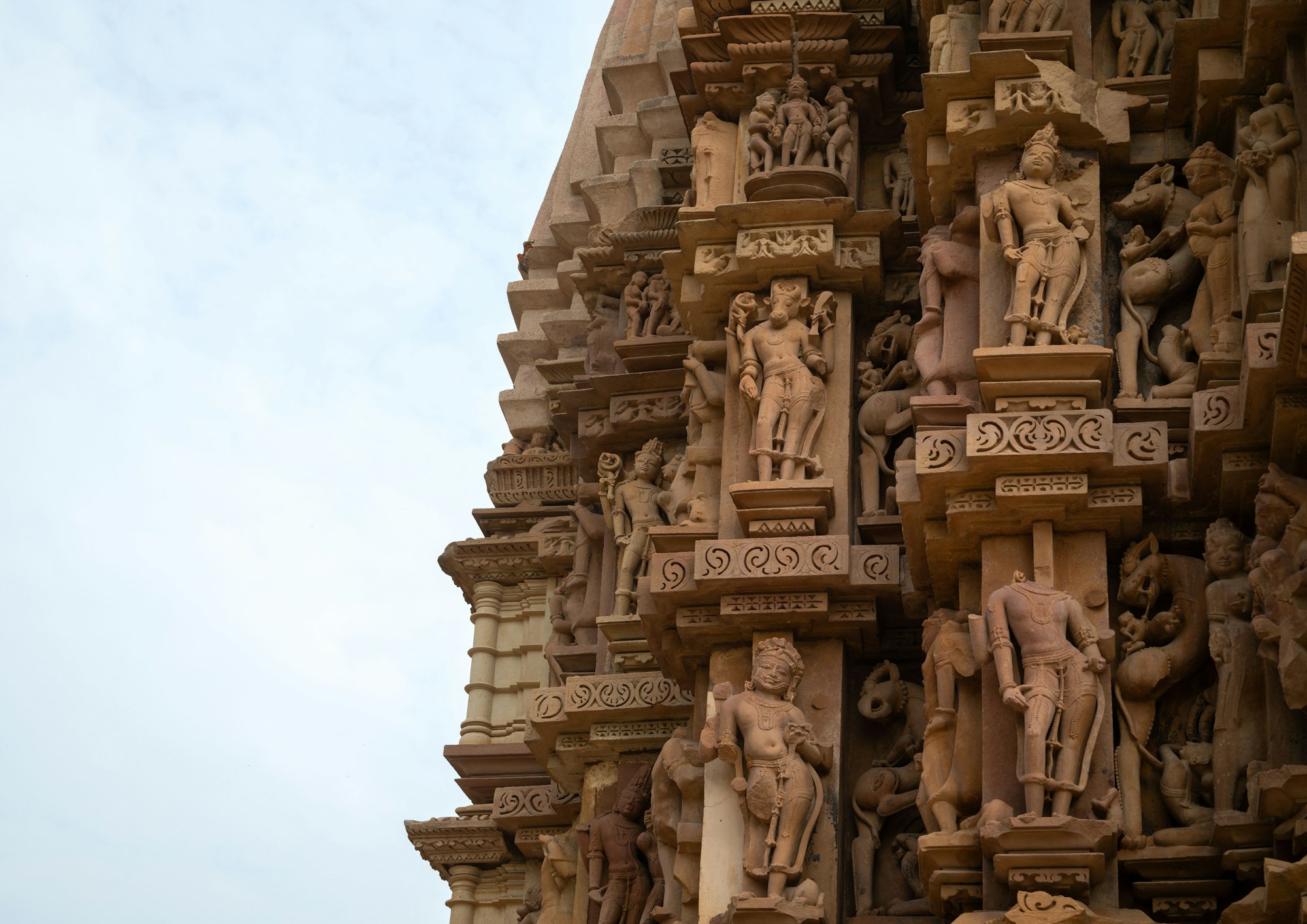
Khajuraho is known for its erotic sculpture, but that is a small part of the whole: by most estimates around a tenth of the carvings. Far more show gods and goddesses, celestial dancers, musicians, warriors, animals and scenes of daily life. The temples were built for both Hindu and Jain worship, and that mix is part of what makes the town worth more than a quick stop.
The three groups
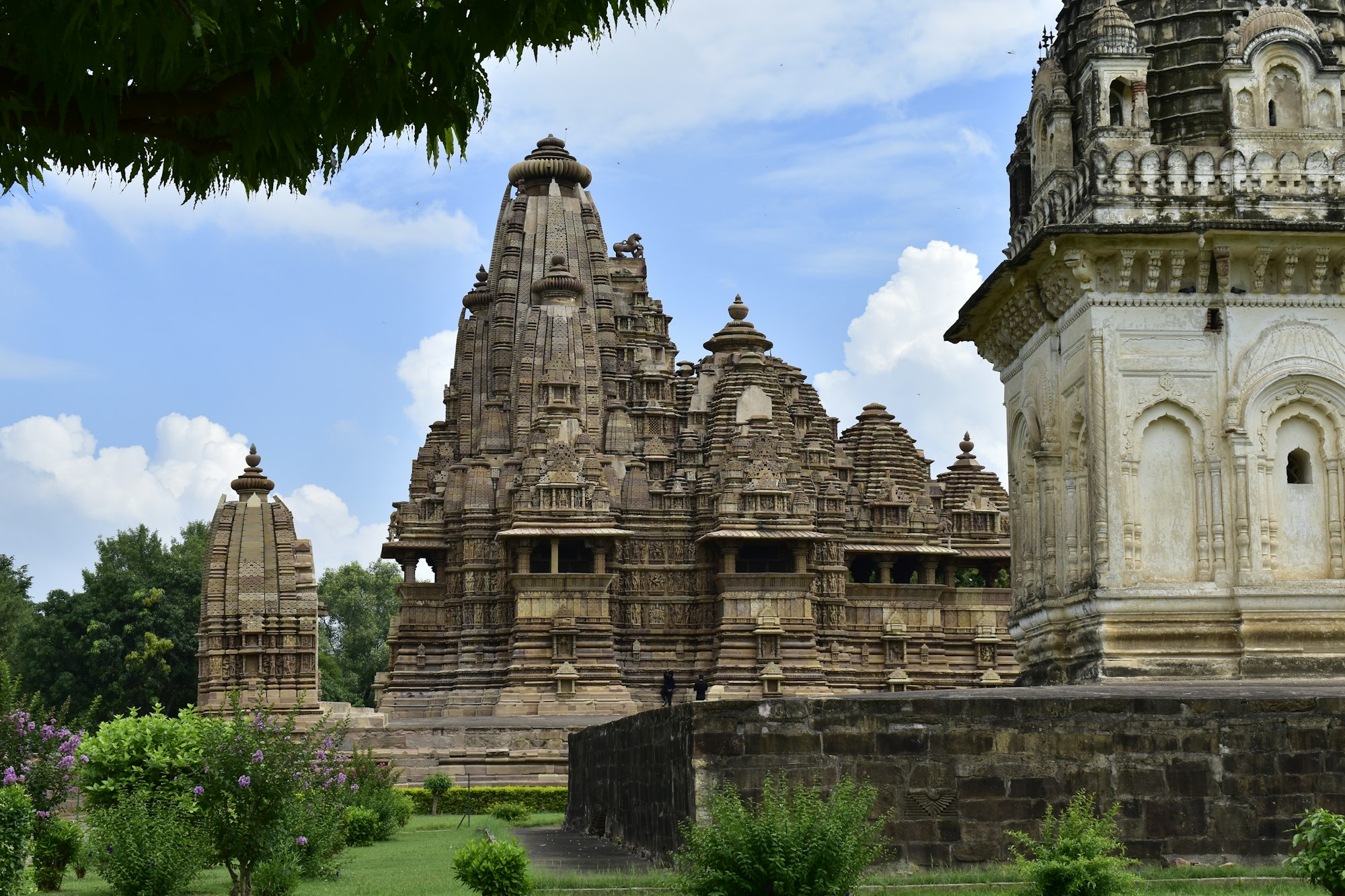
- Western Group: the largest and best-known cluster, set in landscaped grounds. It includes the Kandariya Mahadeva, the largest of the surviving temples, dedicated to Shiva, and the Lakshmana Temple, dedicated to Vishnu. Start here.
- Eastern Group: a short ride away, with the Jain temples, including the Parsvanath and Adinath temples, alongside several Hindu shrines.
- Southern Group: a few scattered temples, including the Duladeo and Chaturbhuj, quieter and further from the centre.
How to see it well
Give Khajuraho at least one full day and, ideally, two nights. See the Western Group in the early morning, when the light is soft and the stone is warm in colour; return to the Eastern and Southern groups later or the next day. Hire a guide approved by the site authority for at least the first visit: the iconography is dense, and a good guide turns a wall of figures into stories.
Walk slowly around each temple’s platform before climbing inside. The best carving is often at eye level on the outer walls.
The Khajuraho Dance Festival
Each February the Western Group becomes the backdrop to the Khajuraho Dance Festival, with performances of Indian classical dance. Madhya Pradesh Tourism lists the 53rd edition for 20 to 26 February 2027; accommodation fills up around those dates.
Practicalities
- Getting there: Khajuraho has its own airport (Civil Aerodrome Khajuraho) and a railway station. Routes and schedules change, so check current services.
- When to go: October to March is the most comfortable. April to June is very hot; the monsoon runs roughly July to September.
- Nearby: Panna Tiger Reserve is close enough for a combined trip; see our tiger reserve guide for how safaris work in Madhya Pradesh.
- Combine with: Orchha and Gwalior to the north-west.
Continue with our Madhya Pradesh guide or the full Central India collection.
Sources and image credits
Facts that can change were checked on 31 October 2026:
- UNESCO: Khajuraho Group of Monuments
- Wikipedia: Khajuraho Group of Monuments
- Madhya Pradesh Tourism: Khajuraho Dance Festival
Photography (stock images, not the author’s own): via Unsplash, under the Unsplash License: Varun Pyasi (Kandariya Mahadeva Temple, Khajuraho), Siddhesh Mangela (Sculpted wall, Khajuraho), Deepak Gupta (Western Group of temples, Khajuraho).
Monument timings, ticketing and photography rules are set by the Archaeological Survey of India and can change. Check at the site or on official channels before you go.