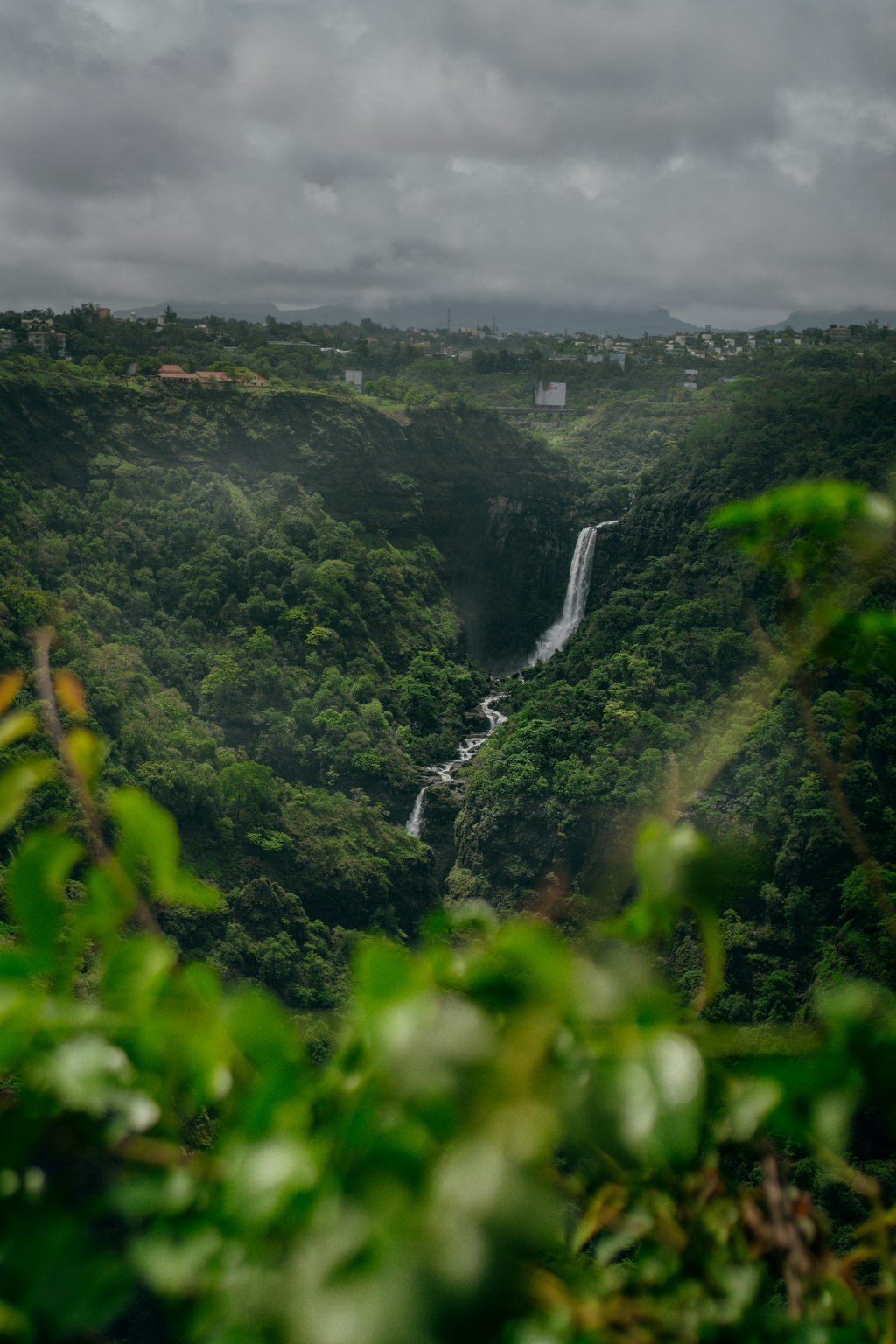
For Mumbai and Pune, Lonavala and Khandala are the default escape: twin hill towns at the top of the Bhor Ghat, on the road and railway that climb the Western Ghats between the two cities. Most visitors come for the viewpoints, the monsoon mist and a box of chikki. Spend a little longer and you find something older and quieter: Buddhist caves cut into the hillsides more than two thousand years ago, and Maratha hill forts with sweeping views.
The caves of Karla and Bhaja
Karla, a short drive east of Lonavala, is one of the great rock-cut Buddhist sites of western India. Incredible India dates the caves from about the 2nd century BCE to the 2nd century CE, with later work up to the 10th century. Cave 8, the great chaitya hall, is described as the largest and best-preserved of its time, with a monolithic stupa and carved figures, and donors’ inscriptions on its walls. A shrine to the goddess Ekveera stands at the entrance and draws many pilgrims.
Bhaja, across the valley near Malavali, is a smaller group of early Buddhist caves with a chaitya hall, monks’ cells and a cluster of stone stupas. Both sites are reached by flights of steps.
Lohagad and Visapur
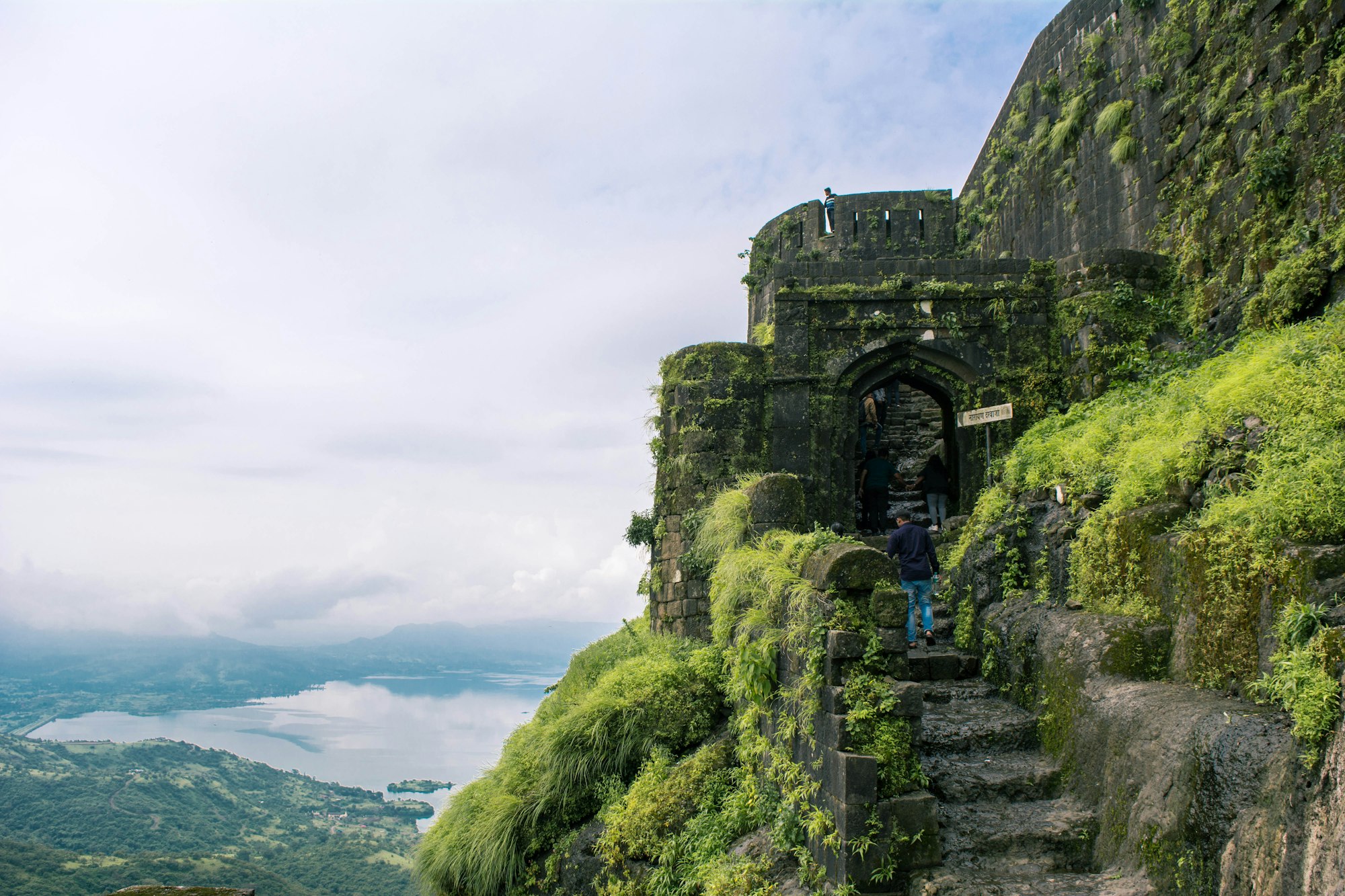
Above Bhaja rise two forts. Lohagad, the “iron fort”, is a popular walk, with gateways, ramparts and a long fortified spur called Vinchukada, the scorpion’s tail. Its neighbour Visapur is larger and less visited. Both give wide views across the Pavana reservoir and the Ghats.
Viewpoints and valleys
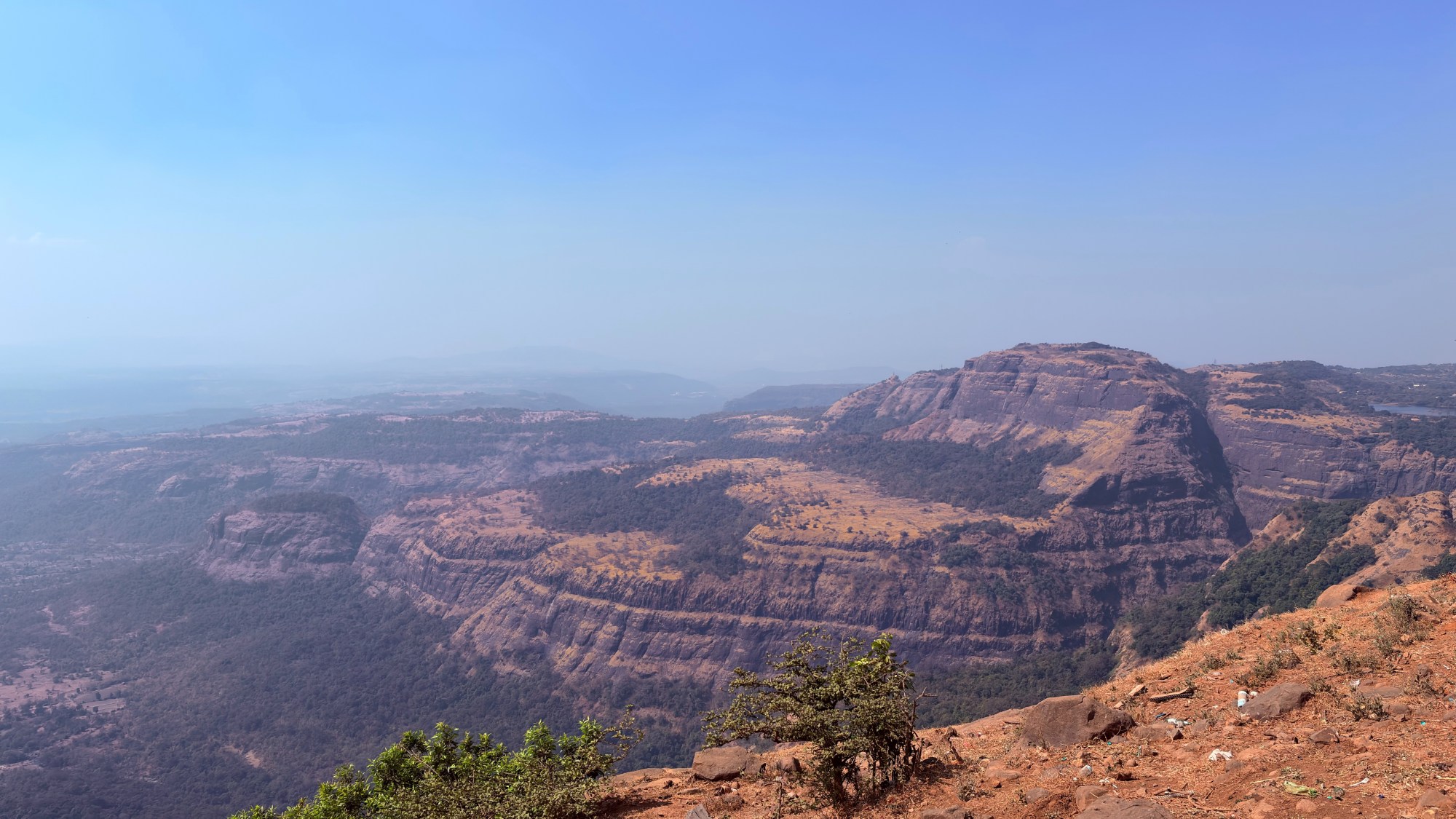
The classic viewpoints, Tiger Point (also called Tiger’s Leap), Lion’s Point and the ridges around Khandala, look out over sheer cliffs and deep valleys. They are spectacular after the monsoon, when the hills are green and the air is clear.
The monsoon: beautiful, but follow the rules
From June to September the Ghats are at their most dramatic, with waterfalls pouring off every ridge. They are also at their most dangerous: rocks are slippery, streams rise fast, and drownings and falls happen every year. In 2025 the Pune district administration issued orders restricting access at sites including the Karla and Bhaja caves, Lohagad, Visapur and Tikona forts, Tiger Point, Lion’s Point and Pavana Dam, and banning swimming in fast-moving water, standing under waterfalls, going to dangerous cliff edges and drinking near water bodies.
- Check whether orders are in force before you go; they are typically issued each June.
- Stay on marked paths, keep well back from edges and never enter fast-flowing water.
- Go with a local guide for fort walks in the rain.
- Avoid weekends if you can: crowds and traffic jams on the ghat roads can be severe.
A two-day plan
- Day one: Karla caves in the morning, before the heat or the crowds; lunch in Lonavala; Bhaja caves in the afternoon.
- Day two: an early walk up Lohagad (and Visapur, if you have the energy); late lunch; sunset at Tiger Point or one of the Khandala viewpoints.
Practical information
- Getting there: Lonavala is on the main railway line between Mumbai and Pune, served by express trains and by Pune’s suburban trains. By road, take the Mumbai–Pune Expressway.
- Getting around: hire a car or taxi for the caves and forts, which are spread out.
- Tickets: the Karla and Bhaja caves are ASI monuments with entry tickets.
- Best time: October to February for clear walking weather; June to September for the monsoon, with care.
- Local taste: Lonavala is known for chikki, a brittle of jaggery with nuts.
Frequently asked questions
How far is Lonavala from Mumbai and Pune?
Lonavala lies on the Mumbai–Pune Expressway and railway, roughly two to three hours from Mumbai and about an hour and a half from Pune, depending on traffic.
Are the Karla caves worth visiting?
Yes. The great chaitya hall at Karla is one of the finest early Buddhist rock-cut halls in India, and it is only a short drive from Lonavala.
Is it safe to visit Lonavala in the monsoon?
It can be, if you stay on marked paths, keep away from cliff edges and fast-flowing water, and follow the district’s monsoon orders. Many accidents happen each year when visitors ignore warnings.
Lonavala or Mahabaleshwar for a weekend?
Lonavala is closer to Mumbai and Pune and better for a short break with caves and forts. Mahabaleshwar is further, higher and better for two or three slower days.
Keep reading
- Into the Western Ghats: Maharashtra’s hill stations, forts and monsoon roads
- Mahabaleshwar and Panchgani
- Ajanta and Ellora: how to visit
- When to visit West India
More escapes from Mumbai and Pune are in our Maharashtra guide.
Sources and image credits
Facts that can change were checked on 8 November 2026:
- Incredible India: Karla Caves
- Incredible India: Bhaja Caves
- Outlook Traveller: Lonavala monsoon restrictions (2025)
Photography: Harshit Suryawanshi via Unsplash (Unsplash License); Kushagra Dhall via Unsplash (Unsplash License); Ankit Panchal via the WordPress Photo Directory (CC0). Stock images, not the author’s own.
Monsoon orders, opening hours and access to forts and waterfalls change each season. Check local notices before you go.